

 Pauline Adamek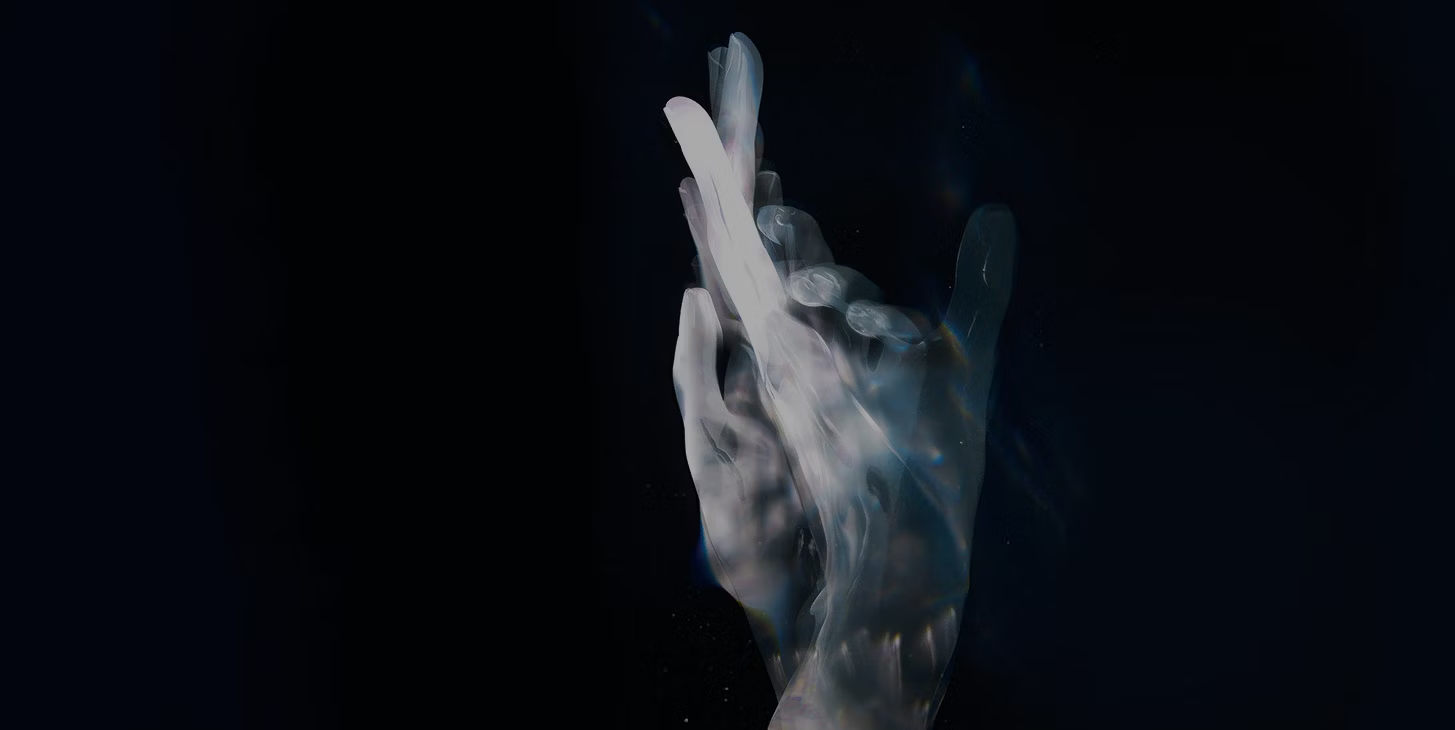
LA Opera’s Off Grand performances this year include the world premiere of Hildegard, a new opera by Sarah Kirkland Snider based on the writings of composer and mystic Hildegard von Bingen, to be presented at The Wallis in Beverly Hills. This production is part of LA Opera’s longstanding partnership with Beth Morrison Projects.
Featuring music and libretto by Sarah Kirkland Snider, the opera touches on a medieval clash of desire and devotion and is based on the extraordinary story of a true visionary. Based on the life and times of a real-life nun, mystic and composer Hildegard von Bingen and her key collaborator – fellow nun Richardis von Stade – the new opera presents an immersive and intimate tale of two genius women finding their voices.
Hildegard
November 5 – 9, 2025
Performances take place at The Wallis Annenberg Center for the Performing Arts
9390 North Santa Monica Blvd., Beverly Hills, CA 90210
Sung in English
Backstory on Saint Hildegard von Bingen, Doctor of the Church:
Hildegard von Bingen (1098–1179) was a German Benedictine abbess who became one of the most influential women of the Middle Ages. She was a polymath, in that she was deeply involved in theology, music, medicine, natural science, and philosophy. A great thinker, she is best known today for her religious visions and the writings that came from them. From early childhood, Hildegard experienced vivid, often symbolic visions that she claimed were divinely inspired. These visions, which began around the age of three, were eventually written down and compiled into several major theological works, most notably Scivias (“Know the Ways“), which gained her widespread recognition.
Aside from her theological contributions, Hildegard was an accomplished composer. Her music, written primarily for use in monastic worship, is notable for its expressive, soaring melodies and deeply spiritual tone. She is one of the few identifiable composers from the medieval period whose work is still performed and recorded today. Her compositions are collected in works such as Symphonia armoniae celestium revelationum.
In addition to her spiritual and artistic work, Hildegard wrote extensively on natural science and medicine. Her texts Physica and Causae et Curae reflect a holistic approach to health, combining observations about the natural world with medical advice, herbal remedies, and theological interpretations. These writings offer insight into medieval understandings of the human body and the environment.
Hildegard was also a leader and reformer within the Church. She founded two monasteries and maintained an extensive correspondence with popes, emperors, and other political and religious figures of her time. Through her letters, she often challenged corruption and moral decay within the clergy and society, asserting a strong, authoritative voice in an era when women’s roles were severely restricted.
In 2012, Hildegard was officially canonized and named a Doctor of the Church by Pope Benedict XVI, a title reserved for saints whose writings have made significant contributions to theology and doctrine. She remains an enduring figure of interest for theologians, historians, musicians, and scholars of women’s history.