
 Pauline Adamek
AFI FEST 2025: The Big Moments, the Breakouts, and the Industry Buzz
The 39th edition of AFI FEST, held October 22–26 in Hollywood, delivered one of its most star-packed and internationally diverse programs in recent years. This year’s festival opened with the world premiere of Springsteen: Deliver Me From Nowhere, Scott Cooper’s intimate, music-driven portrait of Bruce Springsteen during the making of Nebraska. It set a resonant tone for a slate that blended prestige projects with unexpected crowd-pleasers. The closing-night film, Craig Brewer’s Song Sung Blue, starring Hugh Jackman and Kate Hudson, brought a warm, emotional finish to the week with its true-story tale of a Neil Diamond tribute band finding love and resilience.
Throughout the fest, the red carpet hosted a steady parade of major premieres. Noah Baumbach arrived with Jay Kelly, James Vanderbilt unveiled the historical drama Nuremberg, Gus Van Sant rolled out his crime thriller Dead Man’s Wire, and David Michôd debuted Christy. Even the family-friendly side of the industry showed up in force with The SpongeBob Movie: Search for SquarePants, which drew one of the most lively fan turnouts of the week.
AFI FEST also remained a crucial launchpad for rising filmmakers, with its Grand Jury Prizes in the short-film categories, many of which were official Oscar qualifiers, drawing significant attention. Giulia Grandinetti’s Majonezë took the Live Action Short prize with what jurors called a “cinematic punk rock fable” set against the Albanian countryside. In the Documentary Short category, Shanti Rides Shotgun, directed by Charles Frank, won for its intimate portrayal of a beloved New York driving instructor. The Animated Short award went to Forevergreen, a visually rich tale about a bear cub and a tree, from directors Nathan Engelhardt and Jeremy Spears. Several works earned special jury mentions, underscoring the depth of talent across the program. AFI reported a more than 10% increase in ticket and pass sales from the previous year, continuing a steady post-pandemic resurgence.
On the international front, AFI FEST 2025 presented a robust global lineup, featuring films from Iran, Singapore, Armenia, Thailand, and beyond. Titles such as Amoeba, Divine Comedy, Morte Cucina, and My Armenian Phantoms made their U.S. or North American premieres. Auteurs including Fatih Akin, François Ozon, Christian Petzold, Hong Sang-soo, the Dardenne brothers, and Lav Diaz were among the prominent filmmakers represented. The Discovery section introduced rising voices such as Colombia’s Simón Mesa Soto with A Poet and Thailand’s Ratchapoom Boonbunchachoke with A Useful Ghost, reinforcing the festival’s reputation as a launching pad for global breakthroughs.
Programming spotlights added further texture to the schedule. Matthew Shear made his directorial debut with Fantasy Life, a gently comedic character study about anxiety, self-reinvention, and accidental domesticity that emerged as a word-of-mouth favorite. Documentary lovers gravitated toward Cover-Up, a hard-hitting nonfiction film from Laura Poitras and Mark Obenhaus examining journalist Seymour Hersh’s storied and often controversial reporting career. The post-screening conversation with the filmmakers was one of the most packed events of the festival.
One of the signature elements of AFI FEST 2025 was the presence of Guillermo del Toro as Guest Artistic Director. Del Toro curated a special series of four cinematic classics—Barry Lyndon, Fellini’s Casanova, The Duellists, and Arcane Sorcerer. This personally selected line-up illuminated the renowned film director’s cinematic influences while giving festival-goers a rare opportunity to revisit these works on the big screen.
With its blend of prestige premieres, global discoveries, filmmaker conversations, and rising talent, AFI FEST 2025 reaffirmed its standing as a key fall festival with one foot in Hollywood tradition and the other firmly planted in bold, international cinema. The week offered a dynamic snapshot of where filmmaking is headed, and who will be leading it next.
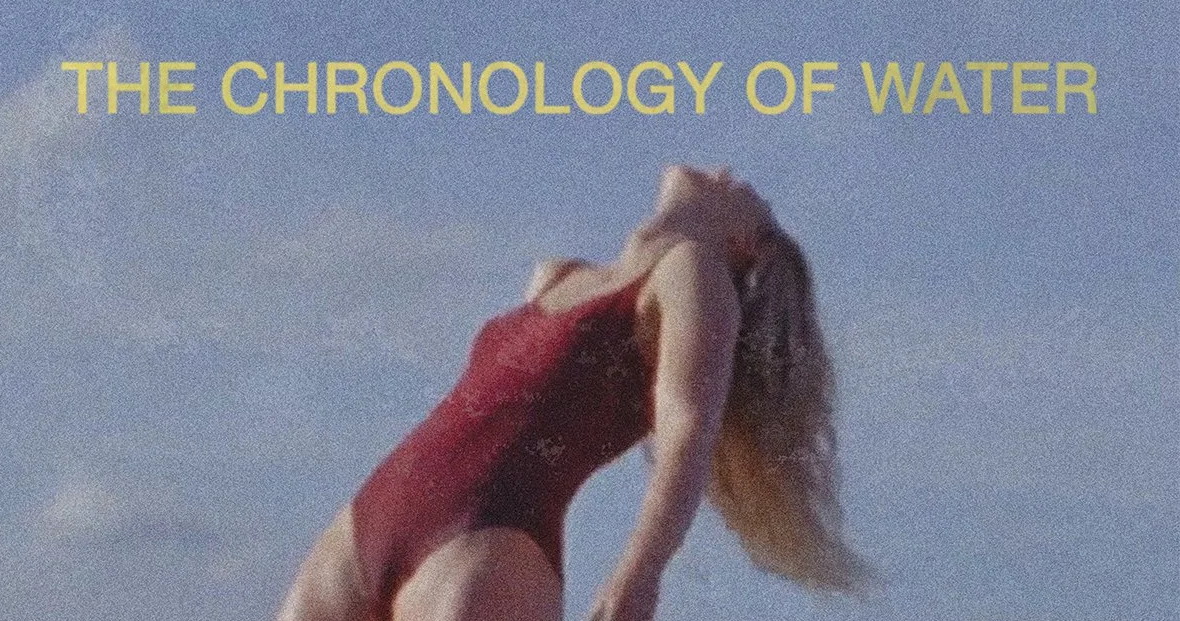
Special focus on The Chronology of Water.
Kristen Stewart’s feature directorial debut, The Chronology of Water, has quickly become one of the most talked-about literary adaptations on the festival circuit. Based on Lidia Yuknavitch’s celebrated memoir, the film takes on the book’s searing emotional core and experimental structure, translating a story of trauma, desire, and artistic rebirth into a cinematic language that feels just as raw and unbound as its source.
Rather than rely on a conventional plot, The Chronology of Water unfolds as a series of associative, memory-driven fragments. Stewart embraces the memoir’s refusal to move in straight lines, crafting a film that constantly shifts – much like its title, until the resulting cinematic experience is fluid, unstable, and continually reshaping itself. At its center of the story is a woman attempting to reconstruct her identity after surviving childhood abuse, family turmoil, addiction, and heartbreak. Through fractured recollection and sensory detail, the film captures the process of rebuilding a life from pieces that don’t always fit neatly together.
Starring Thora Birch in one of her most vulnerable roles to date, the film explores the body as both battleground and source of power. Sexuality, particularly queer sexuality, courses through the narrative, portrayed not as spectacle but as an essential part of self-discovery. Addiction and recovery are treated with the same unvarnished honesty that defines Yuknavitch’s writing, allowing the film to inhabit the messy, nonlinear truth of healing.
Stewart has claimed that she was drawn not simply to the story but to the shape of the memoir, the unusual way Yuknavitch breaks narrative open and puts it back together on her own terms. In adapting it for the screen, she sought to honor that form rather than sand off the rough edges to satisfy mainstream expectations. The result is a film that feels less like a biopic and more like a lived interior experience, one that moves through dream states, ruptures, and moments of clarity. It’s raw and it feels real.
If the memoir is an act of survival through language, then the film becomes an act of survival through images. The Chronology of Water asks audiences not simply to watch a life but to inhabit its textures and embrace all its chaos and its sensuality. Here, Stewart delivers one of the most ambitious and fiercely personal adaptations of the year, a work that gives cinematic body to a voice that has already galvanized readers.
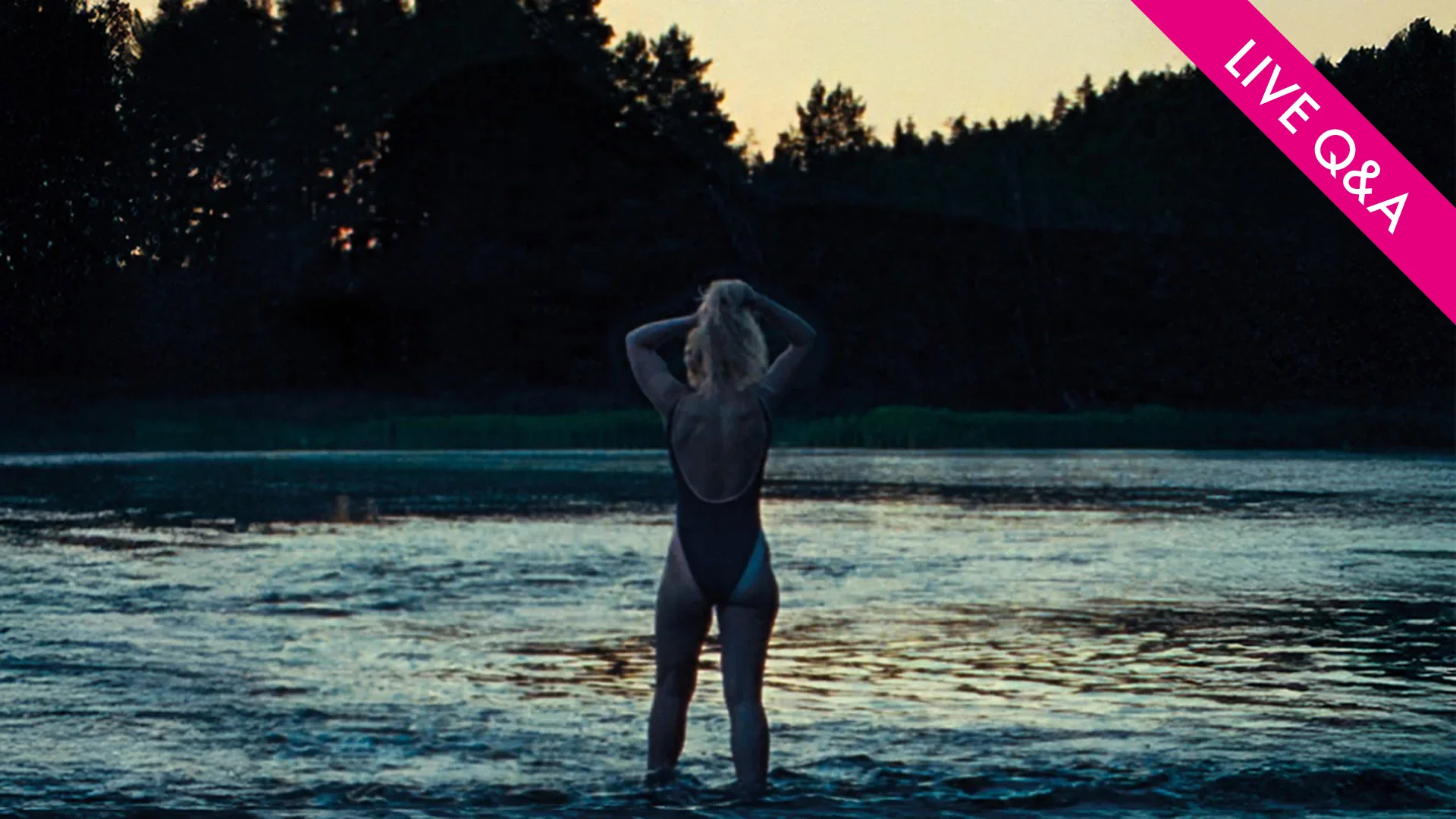
“It Should Be a Movie” Kristen Stewart and Thora Birch on Turning a Radical Memoir Into Cinema
For the post-screening Q&A, actress Thora Birch and writer–director Kristen Stewart discussed the long, winding path that brought their new film from a short, adolescent experiment to a fully realized feature. We learned that the journey to get the project onscreen was anything but easy.
“For fuckin’ ever!” Kristen Stewart on wanting to direct this movie
Asked when she first knew she wanted to make films, Stewart laughed at the simplicity of the answer, and revealed it was ever since she was a little kid. Her mother worked as a script supervisor, always returning home from long shoots with her work bag, Polaroid camera, and her stopwatch – tools of a profession that Stewart describes as “a dead art now.”
“I was like, What are you guys so fucking involved in? You’re never here, but for such a good reason. As a kid, you don’t understand the bullshit hierarchy. You just think, They’re all making a movie. And I thought, Whatever I can do to be here, I’m doing that. So if the question is when did I want to do this? The answer is: Forever. For fucking ever.”
Eight years of obstacles
Stewart’s short film Come Swim made its premiered in 2017. Her first feature film is thematically connected, and therefore grew from that seed, but it took eight long years to materialize. The actor/filmmaker was asked what stood in the way. “It’s an unbelievable privilege to even be upset about not being able to make a movie,” Stewart said. “But being an actor had absolutely nothing to do with getting this made. Nobody could have willed this thing into existence from inside the system.”
What ultimately helped was her persistence, as well as friends who became weary of hearing her complain about how hard it was to get this film off the ground. “I met people who finally said, Okay, let’s connect you with people who can actually realize this,” Stewart recalled.
The resulting film was built independently, outside the standard American system. She adds, “On paper, it’s a movie about stuff that sucks. Really sucks. But watching this person excavate her voice is such a thrill. I was giddy about finding the pictures for it. And yet it was impossible to make for a million reasons. The movie has the body of a woman, and it’s been attacked in all the same ways.”
Unexpected champions in unlikely places
Among the people who helped bring the project to life were Ridley Scott’s production company, Scott Free, and French producer Charles Joubert ( known for Personal Shopper, Clouds of Sils Maria, On the Road). Stewart laughs when telling the story: “Charles couldn’t even read the script. He was like, What the fuck is this? But then he said, I love you, and I can’t hear you talk about this anymore, so I’ll find you people in Latvia who can help you make this movie for absolutely nothing.” The film spans four decades, yet the team pulled it off “with Ritz crackers and floss,” as she put it. When Joubert finally saw the completed film, he admitted his relief. The risk had paid off.
Why this memoir demanded cinema
The film adapts a memoir Stewart describes as structurally bold and emotionally raw. Thompson asked why she felt compelled to fight for it. “It should be a movie,” Stewart said simply. “It’s about reorganizing details. It’s atmospheric and hyper-specific at the same time.” She describes the rare quality of the writing: confessional, personal, but crafted in a way that defies assumptions about memoir—especially memoir written by women.
“When women talk about themselves, it gets dismissed as unserious,” she said. “But the shape of her telling—the way she redesigns narrative and shows how malleable reality is—felt cinematic. The film is faithful not to the details but to the structure: how the story breaks and reforms itself.” Movies, she believes, can save lives just as literature does. And this book, more than most, felt like it was asking to become cinema. “It could have its own body, its own memory, its own life.”
Thora Birch on trusting the form—and the filmmaker
For co-star Thora Birch, the screenplay arrived as something unusual. She found it something she had to feel her way into. “I understood it immediately as more of a poem,” she said. “A punk-rock, art-house poem that reflects the female experience more than a lot of people want to admit.” Birch was candid about initial confusion: “At first I wasn’t totally sure how to approach the character. But once I realized I was existing inside someone’s memories, it became freeing.” The actress had her own response to the original memoir, but she was equally driven by trust. “There was this blind faith that Kristen was the person to tackle it. I was excited to see how her voice would bring life to this visceral story.”
The distribution rights to The Chronology of Water have been acquired by The Forge. The film is scheduled to be released in the United States in limited theaters in December 2025, before going for a wider release in January 2026.