


 Pauline Adamek
Making its highly anticipated world premiere this past weekend, Sarah Kirkland Snider’s new opera Hildegard, about an important medieval composer and mystic, proved a dazzling experience. Musically, dramatically, and visually, the work was an astonishing achievement.
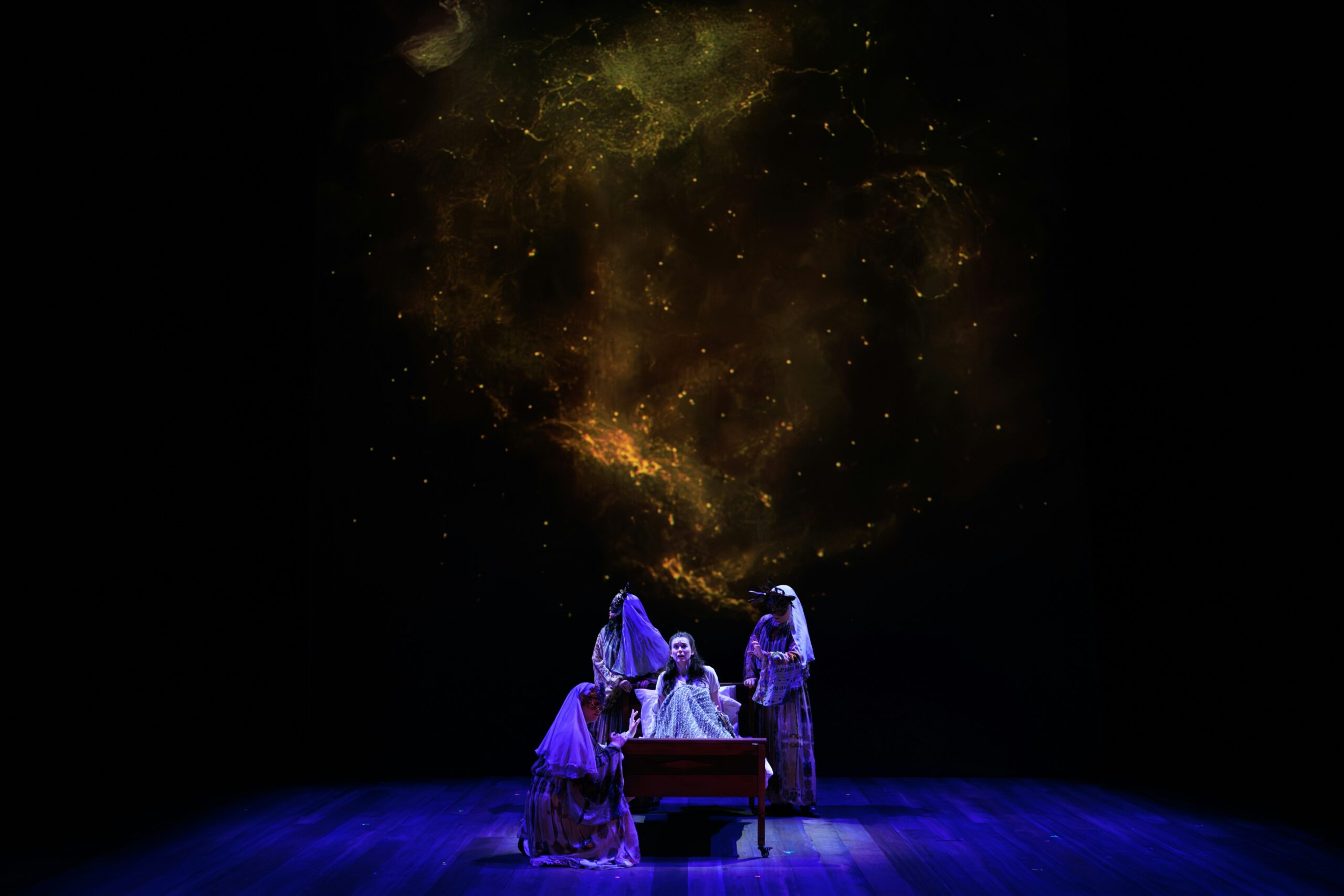
With music and libretto created by Snider, paired with shimmering visual projection design created by Deborah Johnson, the mesmerizing production exquisitely captured the struggle of two gifted women who were determined to make their voices heard in a world that demanded their silence. Ultimately, Hildegard examines the tension between spiritual calling and human constraint.
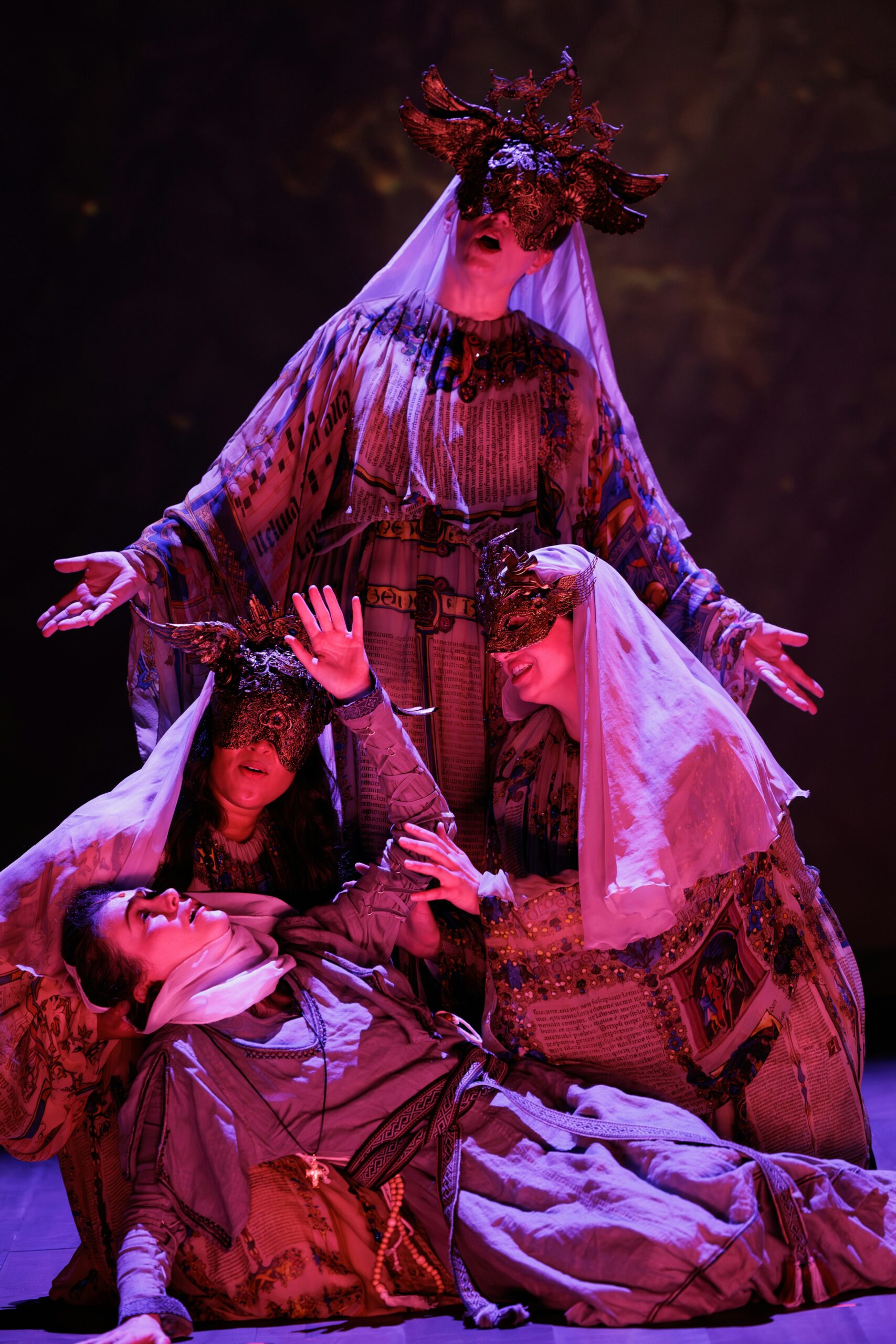
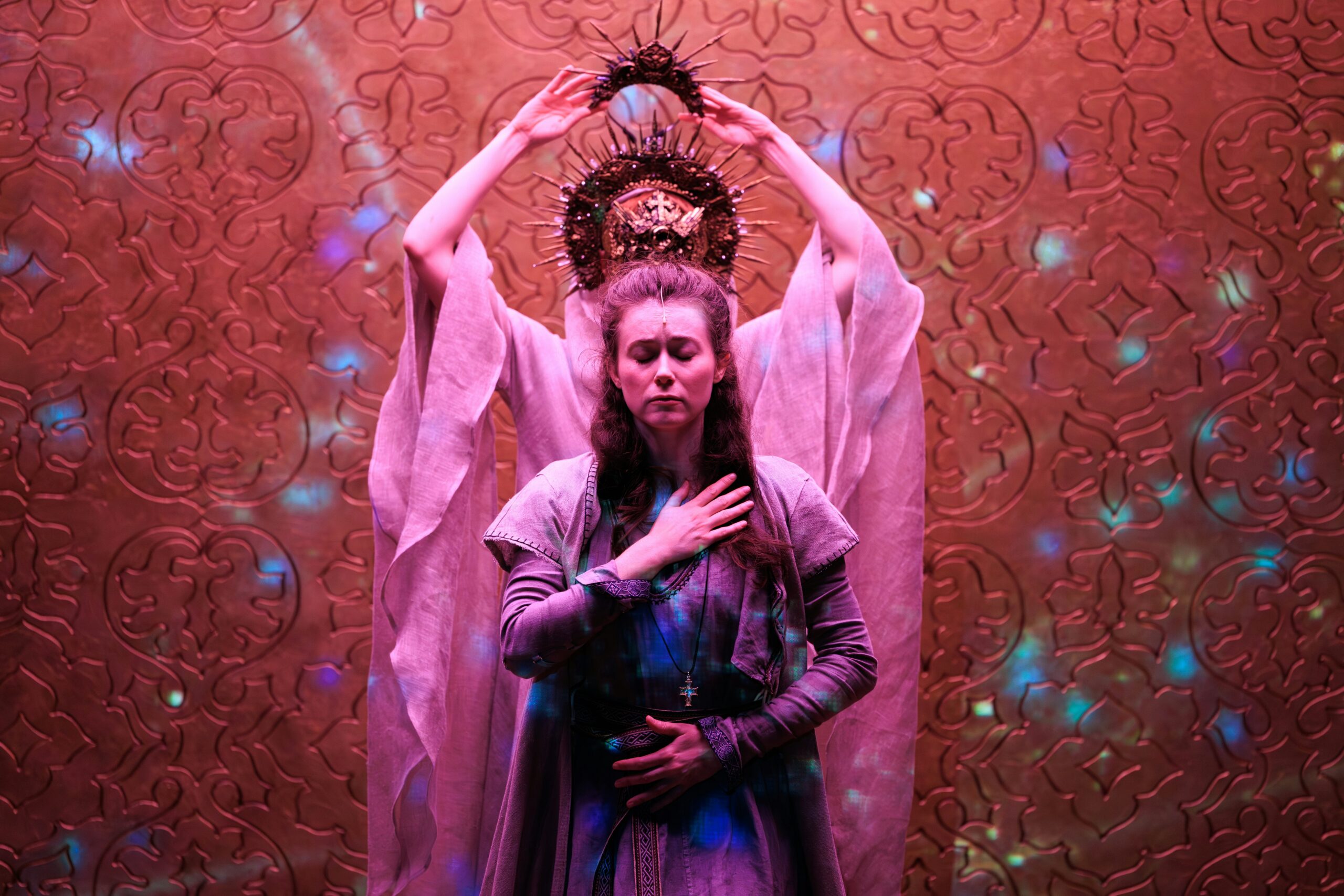
Snider’s score weaves ancient medieval chants and contemporary harmonies into a luminous tapestry that felt both timeless and utterly new. The remarkable story of Hildegard von Bingen was brought to life through these richly drawn, emotionally complex characters and their stories. Portraying Hildegard, Nola Richardson’s pure soprano soared with conviction and vulnerability, and was perfectly complemented by Mikaela Bennett’s performance as Richardis. Elkhanah Pulitzer’s superb direction, supported by the stunning projections and simple yet elegant staging and scenic design, transformed the stage into a heavenly realm of spiritual wonder. Occasionally we were brought back down to earth by the clacking sound of the wheels as scenery pieces were dragged into place, but that’s just a minor quibble compared to the splendor and emotionality of the experience.
Bold, intimate, and deeply poignant, Hildegard proved a triumphant piece and confirms Snider as a major new voice in contemporary opera.
Presented over three days at The Wallis in Beverly Hills, this production was part of LA Opera‘s longstanding partnership with Beth Morrison Projects (marking their 17th collaboration to date), and one of LA Opera’s Off Grand performances.
About the subject:
A true polymath, Hildegard von Bingen (1098–1179) was a German abbess, composer, writer, and trailblazer whose influence spanned music, theology, and science. She composed hundreds of songs, wrote groundbreaking and influential texts, and documented profound mystical visions. Significantly, Hildegard asserted her voice within an ecclesiastical hierarchy overwhelmingly ruled by men, where women’s authority was seldom recognized. Her life is a story of extraordinary creativity, leadership, and courage, demonstrating how one person can shape art, thought, and culture. While better known in academic and musical circles, her legacy is increasingly becoming recognized worldwide as a pioneering figure whose work continues to inspire. Other works exploring the same topic, such as the large-scale immersion dome-projection experience Her Mind’s Eye, are currently being developed in Europe.
Set in 1147, Snider’s new opera Hildegard traces the obstacles that a German Benedictine abbess faces as she interprets inspiration from God. At grave risk of excommunication, she sets out to document her visions, enlisting her fellow nun Richardis von Stade to illustrate the manuscript. As the pair develop a transformative partnership that awakens them in ways both profound and unexpected, the two women must confront the powers that would see them erased from history rather than making it. More broadly, Hildegard is about the desire for connection to divinity, to humanity and to our deepest sense of self – and the conflicts that compete therein.



 Terry Morgan