
 Pauline Adamek
Vive la France!
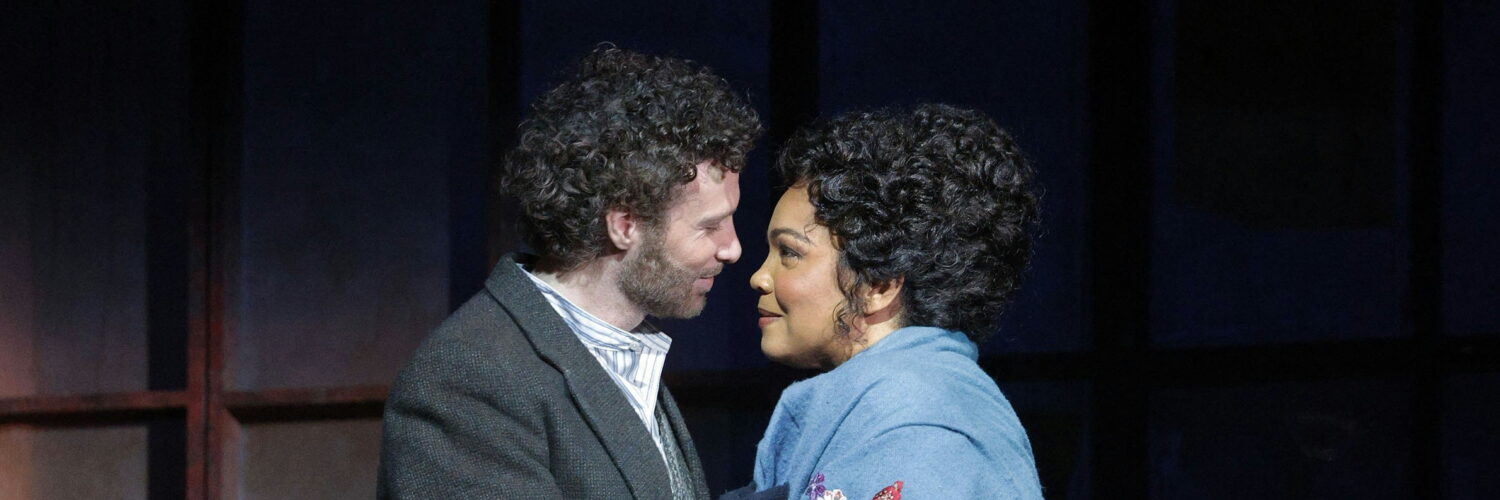
Possibly one of the most romantic and beloved operas of all time, Giacomo Puccini’s grand Parisian romance La Bohème is once again given the classic treatment in LA Opera’s revival production. A raucous group of bohemian artists take over the LA Opera stage as they outwit their landlord, swindle a free dinner, and fall in and out of love. The bittersweet story unfolds in mellifluous Italian, and over four acts that span a harsh winter in 1840s Paris.
Resident Conductor Lina González-Granados leads a star-studded cast, including Italian tenor Oreste Cosimo in his U.S. debut as the lovestruck poet Rodolfo and audience favorite Janai Brugger as the sweet but sickly Mimì.
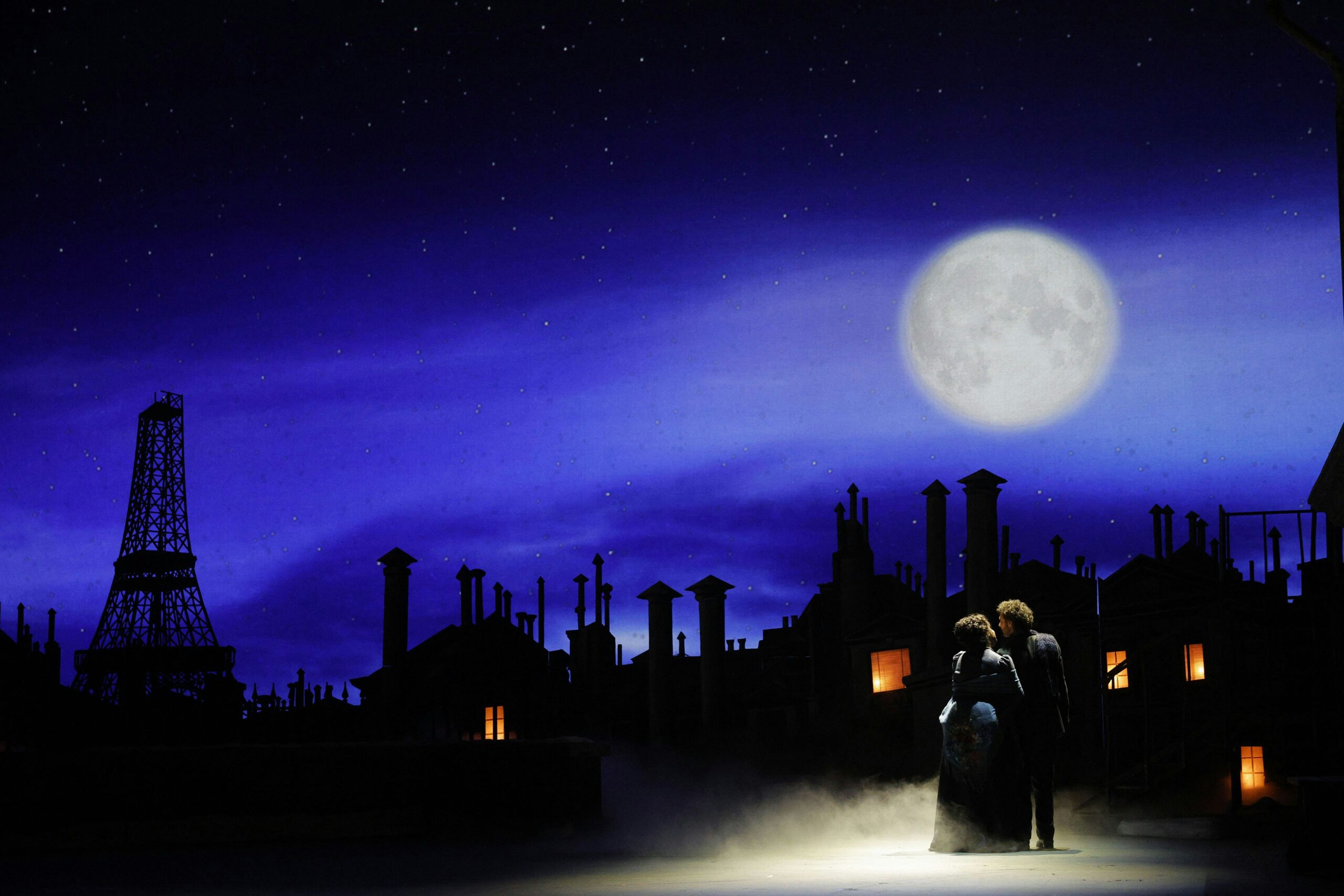
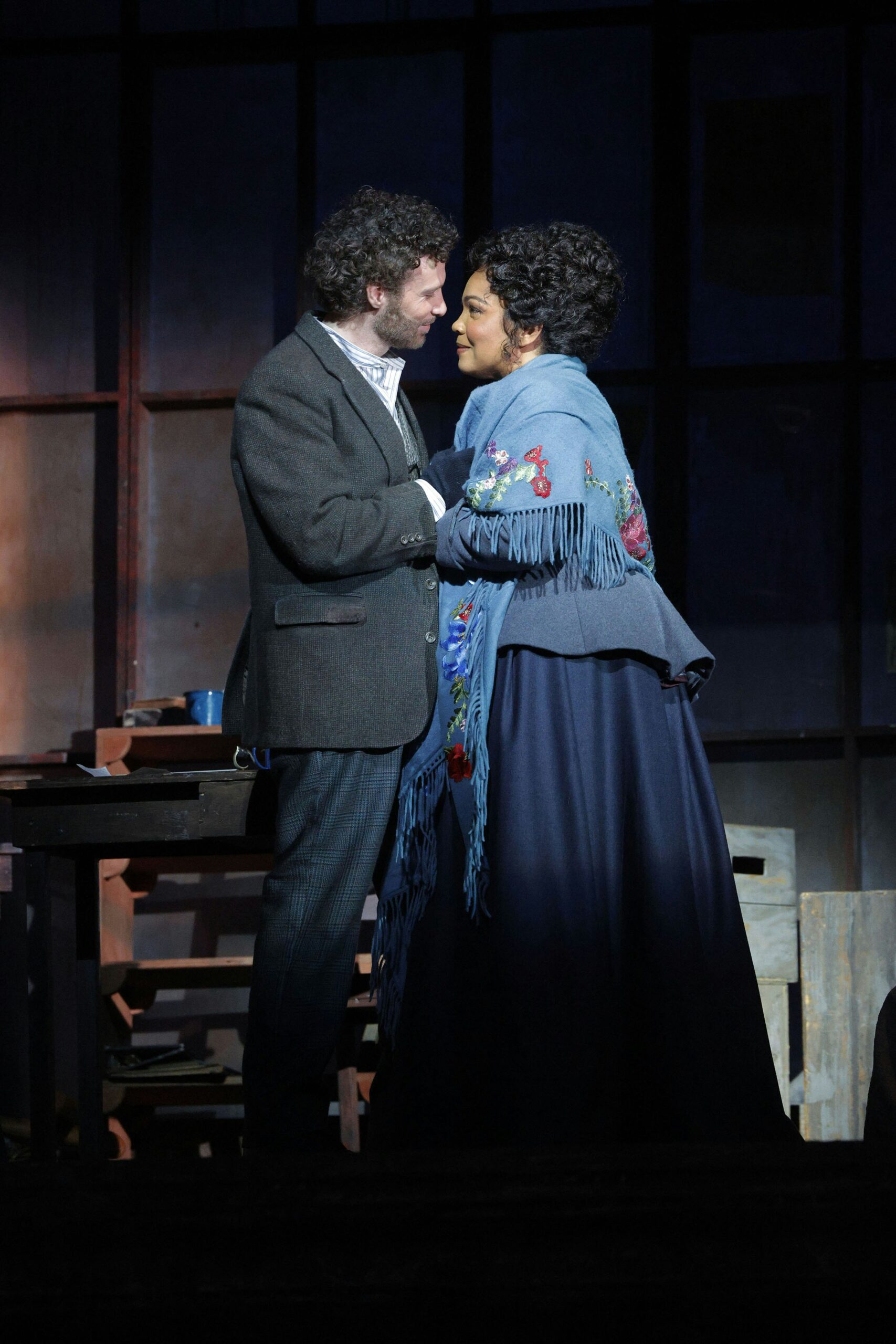
Pictured above: The Act Two finale in LA Opera’s 2025 production of La Bohème. Photo: Cory Weaver.
Opening night of La Bohème at the Dorothy Chandler Pavilion, on November 22, marked a significant moment in LA Opera’s prestigious 40th anniversary season. This production is a revival of the renowned Herbert Ross production, a staging that has long been cherished in the company’s history for its nostalgic depiction of Puccini-era Paris and its emotionally resonant storytelling. A true crowd-pleaser, the emotional core of this grand operatic work resonates with both longtime opera aficionadi and newcomers. The staging evoked the period setting with authenticity, relying on Ross’ classic design to transport audiences to the charming streets of 19th-century Paris while focusing on the human relationships that drive the story.
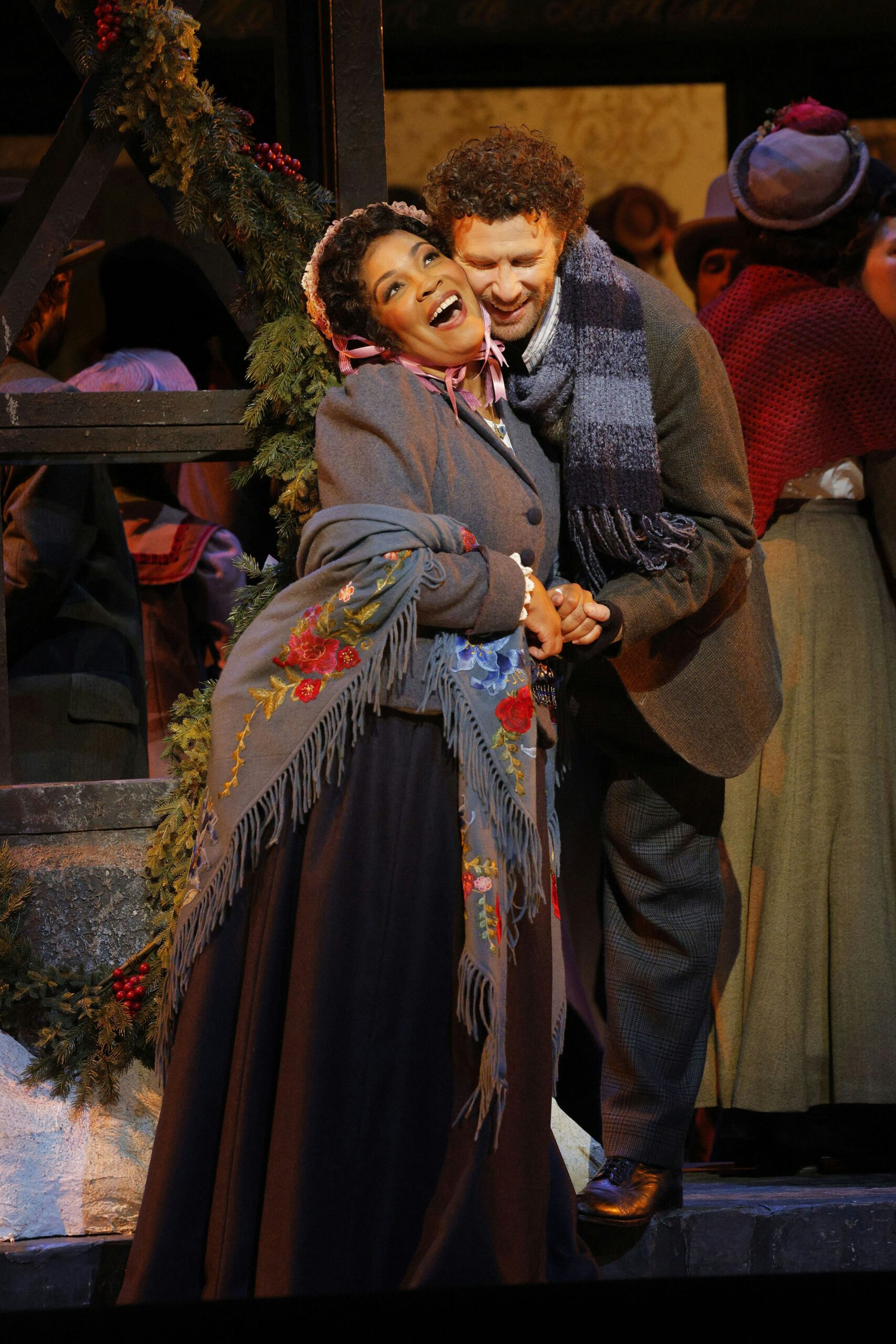
Janai Brugger made her role debut as Mimì, bringing both vocal strength and dramatic sensitivity to the sweet and sympathetic character. Gihoon Kim took on best pal Marcello, and Erica Petrocelli appeared as the bubbly and desirable Musetta, rounding out a cast that feels like it had been carefully selected for both experience and natural chemistry.
Brugger has performed a variety of roles for LA Opera over the years, showcasing her versatility as a soprano. Her appearances have included Musetta in La Bohème, Pamina in The Magic Flute, Servilia in La Clemenza di Tito, and Susanna in The Marriage of Figaro. Earlier in her career, she also appeared as Barbarina in Le Nozze di Figaro and as the Page in Rigoletto during her time as a Young Artist, highlighting her early promise and ongoing presence on the LA Opera stage.
Playing Rodolfo for this, his U.S. debut, Italian tenor Oreste Cosimo brought a warmth and richness to his interpretation of the role, and while his voice occasionally struggled to project over the orchestra, his lyrical expressiveness and nuanced phrasing made for an engaging performance.
This production leaned heavily on tradition, which meant it featured both strengths and potential challenges. The Herbert Ross staging is welcome for its nostalgic appeal. Above all, we benefitted from careful attention to musical and dramatic detail, ensuring that the libretto’s emotional resonance remained at the forefront.
Now under the direction of Brenna Corner for this revival, the evening did not disappoint. The scenic design was created by Gerard Howland, giving the stage a richly textured sense of Bohemian-era Paris, with its dimly lit garrets, narrow streets, and cozy cafés, each space carefully grounded in late‑19th-century realism. The lush costumes were designed by Peter J. Hall, with additional costumes created by Jeannique Prospere, whose work brought a layered authenticity to the cast: tattered bohemian garb for the struggling artists that contrasted with more refined pieces for society characters, all in palette and tailoring that evoked the world of Puccini’s Paris. Illuminating the action, lighting designer Pablo Santiago used soft amber washes and theatrical shadows to heighten both the intimacy of the garret and the melancholy of the street scenes. Together, this creative team supported the emotional core of the production, pairing nostalgic realism with dramatic warmth in a staging that felt timeless yet deeply personal.
Overall, LA Opera’s 2025 La Bohème presented a celebration of tradition, artistry, and emotional storytelling. It may not have offered radical reinterpretation, but it delivered the power of Puccini’s music and the enduring charm of his characters. For audience members seeking a faithful yet heartfelt experience, this revival provided an evening of operatic elegance, nostalgia, and the timeless magic of love and loss in the streets of Paris.
La Bohème is one of the most accessible operas of all time, so it’s no surprise that it’s appeared on the Dorothy Chandler stage in numerous seasons over the past few decades. In fact, this 2025 production marks the 10th time that La Bohème is being presented by LA Opera.
To honor the history of this incredible opera and to celebrate the company’s 40th anniversary, you can view a photo essay of La Bohème LA Opera productions throughout the years, starting with 1987.
Also, go here to read James Conlon’s detailed essay all about timeless opera heroines.
Under the baton of resident conductor Lina González‑Granados, this beautiful and affecting production delivered a sensitive and nuanced interpretation of Puccini’s classic score, balancing the intimacy of the artist’s garret with the sweeping orchestral moments that have defined the tragic opera’s romantic appeal since its debut in 1896.
Background:
The rich history of Giacomo Puccini’s La Bohème begins in the late 19th century. L Puccini composed the opera between 1893 and 1896, inspired by the novel Scènes de la vie de bohème (1851) by Henri Murger, which depicted the lives, loves, and struggles of a group of young bohemians living in Paris. Puccini, who was drawn to stories that combined romance with social realism, worked with librettists Luigi Illica and Giuseppe Giacosa to adapt Murger’s episodic tales into a cohesive four-act opera, carefully shaping characters such as Rodolfo, Mimì, Marcello, and Musetta into fully realized operatic figures. The libretto emphasizes both the humor and tragedy of young love, creating a balance between comic relief and poignant drama that would become a hallmark of Puccini’s style.
La Bohème premiered at the Teatro Regio in Turin, Italy, on February 1, 1896. Despite a modestly mixed reception at first—some critics noted the opera’s sentimental qualities and its focus on ordinary, struggling characters rather than heroic or mythic figures—the audience response was largely enthusiastic, and the opera quickly gained popularity. Within months, it was staged in major Italian cities and soon after spread internationally, with performances in London, New York, and Paris. Its memorable arias, duets, and ensemble pieces, including Rodolfo’s “Che gelida manina” and Mimì’s “Mi chiamano Mimì,” quickly became celebrated for their lyrical beauty and emotional depth. Over time, La Bohème solidified Puccini’s reputation as a master of verismo opera, capturing both the intimacy of individual lives and the universality of love and loss. Its combination of relatable characters, evocative Parisian settings, and Puccini’s signature melodic richness has ensured that La Bohème remains a central work in the operatic repertoire, performed regularly by opera houses around the world.
La Bohème by Giacomo Puccini
Conductor: Lina González-Granados
Original Production: Herbert Ross
Director: Brenna Corner
Mimi: Janai Brugger
Rodolfo: Oreste Cosimo
Musetta: Erica Petrocelli
Marcello: Gihoon Kim
Colline: William Guanbo Su
Schaunard: Emmett O’Hanlon
Benoit/Alcindoro: Rod Gilfry
LA Opera revival
Performance Dates, Times and Address:6 performances remain at the Dorothy Chandler Pavilion, located at 135 North Grand Avenue, Los Angeles, CA 90012:
-
Saturday, November 22, 2025 – 7:30 PM
-
Sunday, November 30, 2025 – 2:00 PM
-
Thursday, December 4, 2025 – 7:30 PM
-
Saturday, December 6, 2025 – 7:30 PM
-
Wednesday, December 10, 2025 – 7:30 PM
-
Sunday, December 14, 2025 – 2:00 PM
Running time: approximately two hours and 30 minutes, including one intermission.
Sung in Italian with English subtitles
Pre-show talks by Jeremy Frank take place in Stern Grand Hall one hour before every performance. Read Music Director James Conlon’s essay on La Bohème here.
More information about the production is available here.
Tickets:
Tickets begin at $27.50 and are on sale now. Tickets can be purchased online at LAOpera.org, by phone at 213.972.8001, or in person at the LA Opera box office at the Dorothy Chandler Pavilion (135 N. Grand Avenue, Los Angeles CA 90012). For disability access, call 213.972.0777 or email LAOpera@LAOpera.org.
About LA Opera:
Los Angeles is a city of enormous diversity and creativity, and LA Opera is dedicated to reflecting that vibrancy by redefining what opera can be. Through imaginative new productions, world premiere commissions, and inventive performances that preserve foundational works while making them feel fresh and compelling, LA Opera has become one of America’s most exciting and ambitious opera companies.
In addition to its mainstage performances at the Dorothy Chandler Pavilion, the company explores unusual repertoire each season through the LA Opera Off Grand initiative, featuring performances in a variety of venues throughout Los Angeles. The LA Opera Connects initiative offers a robust variety of educational programming and community engagement offerings that reaches people throughout every corner of Los Angeles County. Learn more at LAOpera.org.

 Terry Morgan