
 Pauline Adamek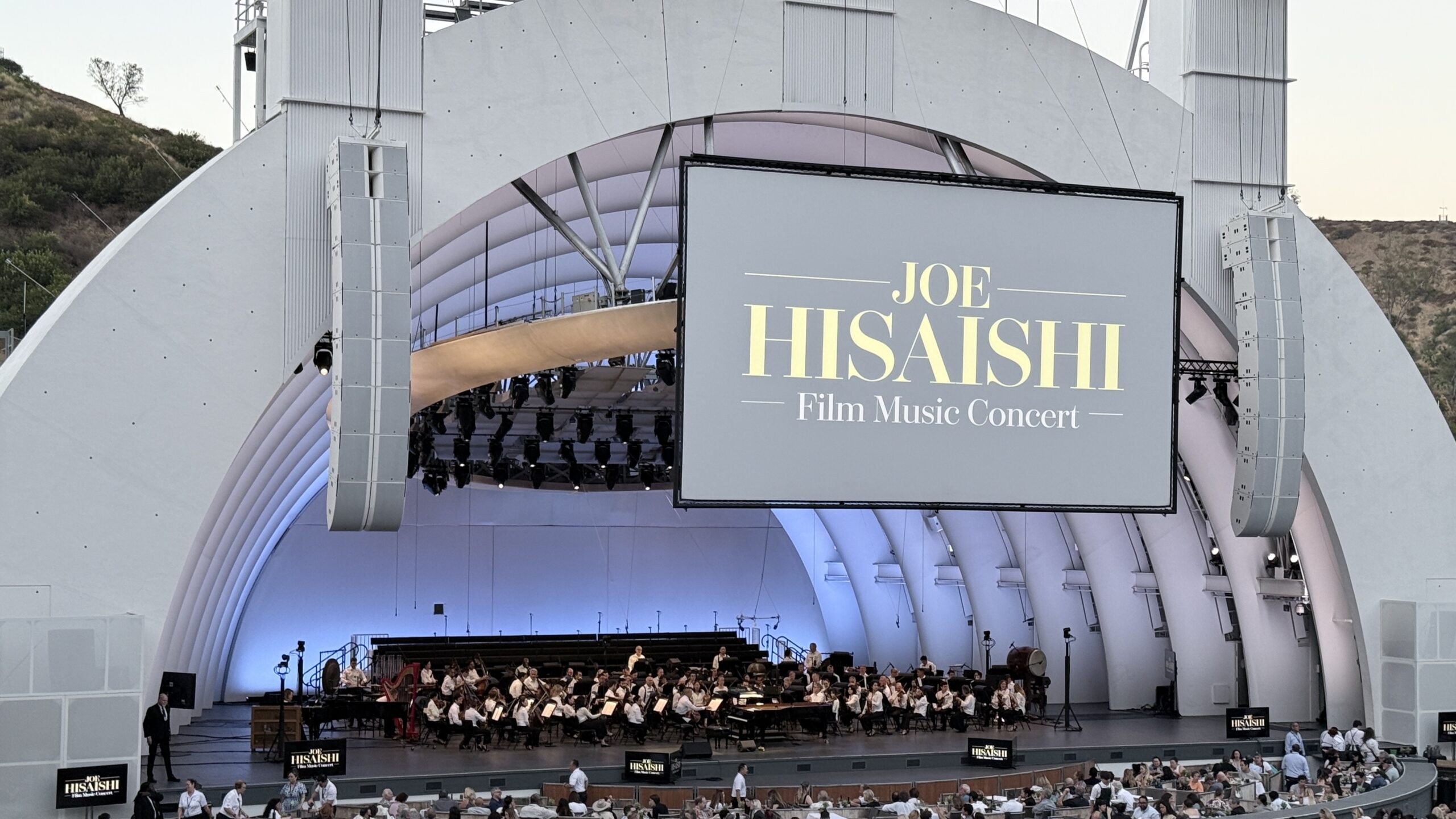
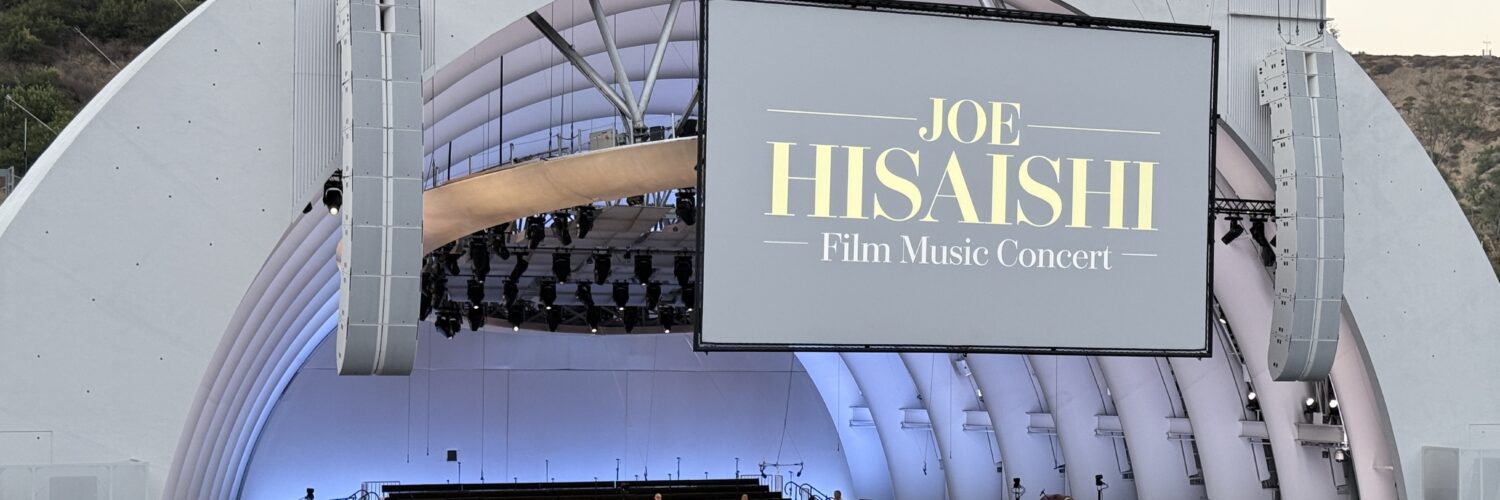
On the first of three sold-out evenings, composer Joe Hisaishi was welcomed to the Hollywood Bowl by an enthusiastic audience that reflected the remarkable reach of his music. Lifelong classical concertgoers sat alongside Studio Ghibli devotees, families, and younger fans who had grown up with his unforgettable film scores. The atmosphere was one of genuine anticipation rather than mere nostalgia, as an eager crowd had gathered to experience music that has become part of their lives.
Beginning with a swift, 45-minute set, Hisaishi devoted the first half of the evening to showcasing the breadth of his career as a film composer. As the musicians of the Los Angeles Philharmonic played the opening medley of themes, a lengthy roll of credits appeared on screen documenting Hisaishi’s international concert tour, listing performances from around the world over the past several years. It served as a reminder of the extraordinary journey these concerts have taken, bringing his music to audiences across Europe, North America, and Asia.
The opening program offered a fascinating survey of his work beyond Studio Ghibli, beginning with his modern orchestral score for Buster Keaton’s classic silent film from 1926 The General. Other compositions highlighted his collaborations with directors such as Takeshi Kitano and Claude Miller. It was a reminder that Hisaishi’s career encompasses far more than animation.
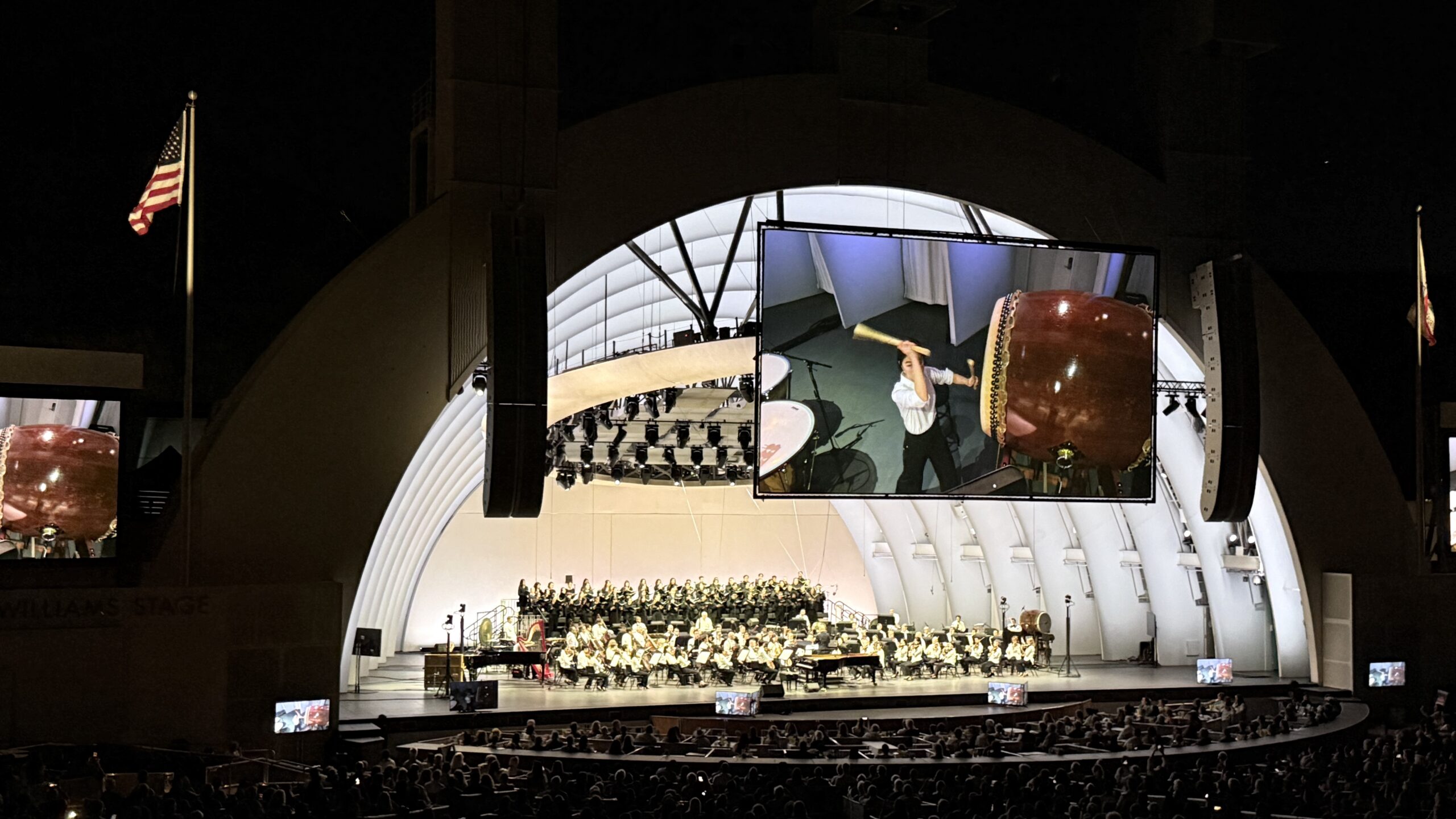
Throughout the evening, the Los Angeles Philharmonic responded to Hisaishi’s understated conducting with remarkable sensitivity. His gestures are economical, never theatrical, allowing the orchestra’s rich colors to emerge naturally. The strings produced the lush, emotionally expansive sound so characteristic of his writing, while sparkling woodwind flourishes, glowing brass, and shimmering percussion gave the music its unmistakable sense of wonder. Particularly memorable were the lyrical solo flute passages and the warm, noble sound of solo oboe and of French horns, which carried many of the evening’s most expressive melodies.
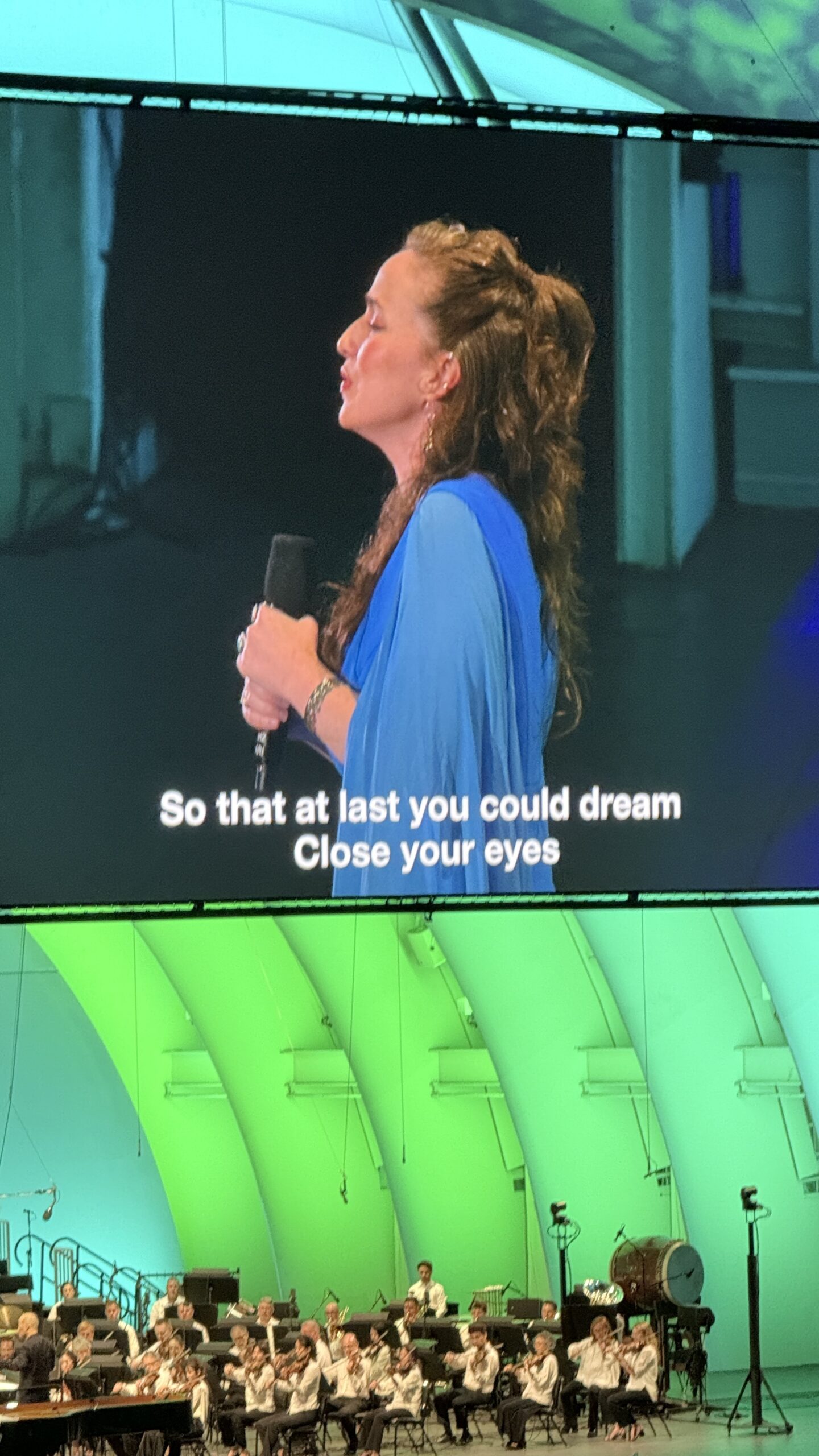
Black-and-white scenes from Buster Keaton’s The General unfolded on the large screens while Hisaishi’s orchestral score accompanied the dramatic and comedic antics. Adding another dimension was soprano Ariadne Greif who appeared in an elegant blue gown, singing in French while English subtitles were projected above the audience. The visual contrast between her vivid presence on stage and the monochrome film created a striking theatrical effect.
The mood shifted with Le Petit Poucet. The orchestra revealed Hisaishi’s gift for melody, with long lyrical phrases unfolding effortlessly over delicate orchestral textures.
The program then turned to Hisaishi’s celebrated collaborations with Japanese filmmaker Takeshi Kitano. Music from Sonatine introduced a more introspective atmosphere before Brother plunged into darker territory with dramatic, driving themes that reflected the film’s gangster setting. For Hana-bi, Hisaishi left the podium to perform at the piano himself, shaping the score’s romantic and reflective melodies with understated elegance. The music’s themes of friendship and quiet resilience resonated deeply in the balmy open-air setting.
The most exhilarating transition came during Kids Return. Its energetic, restless score found Hisaishi once again seated at the piano before, at the conclusion of his solo, he sprang to his feet and returned immediately to the podium to conduct the orchestra through the final moments – a seamless display of his dual role as composer, pianist, and conductor.
After a concise 45-minute first half and a 25-minute intermission, the stage underwent a dramatic transformation. More than sixty members of the chorus filed into place behind the orchestra, signaling the beginning of the evening many had been waiting for. These were California State University, Fullerton University Singers.
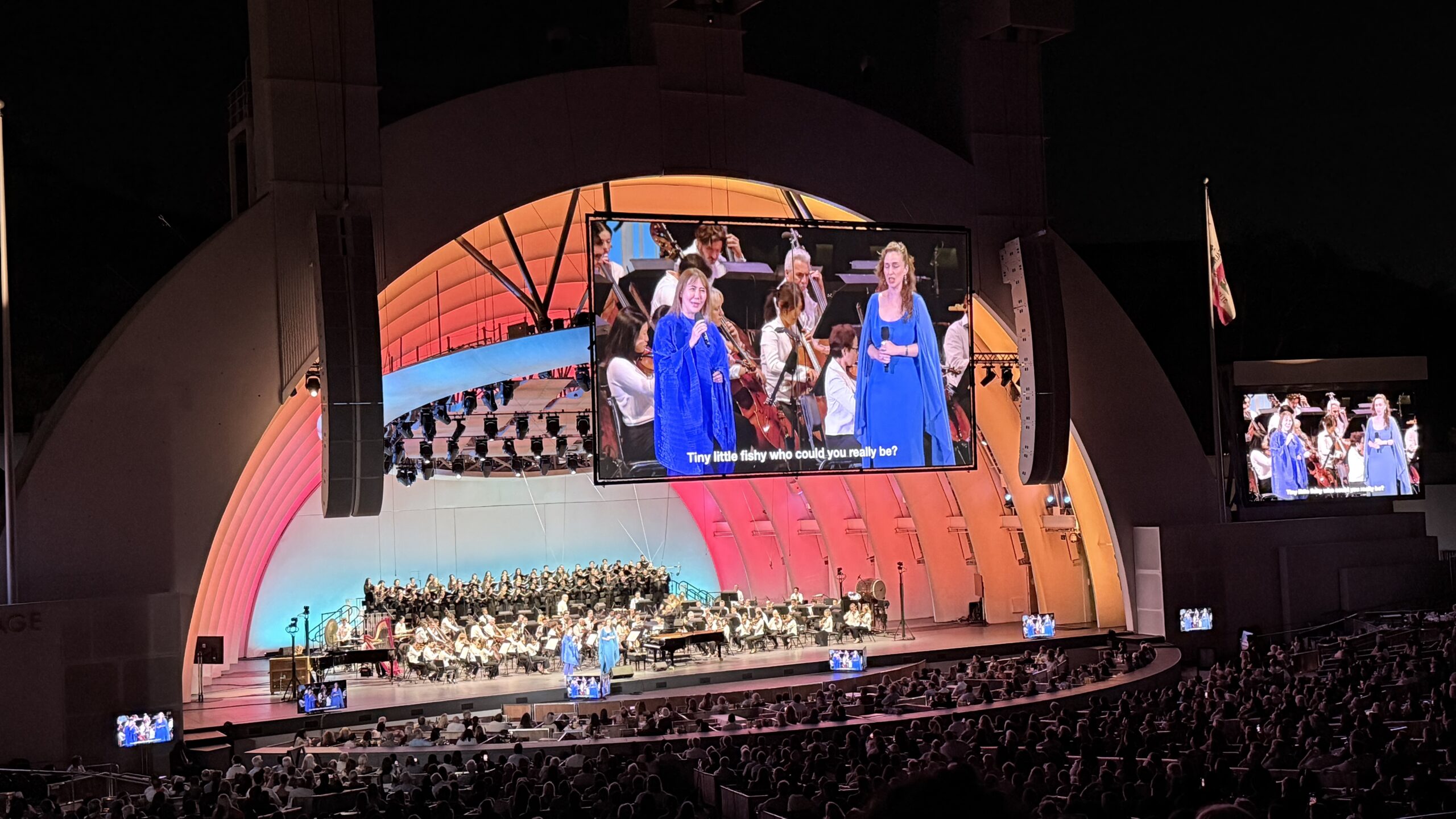
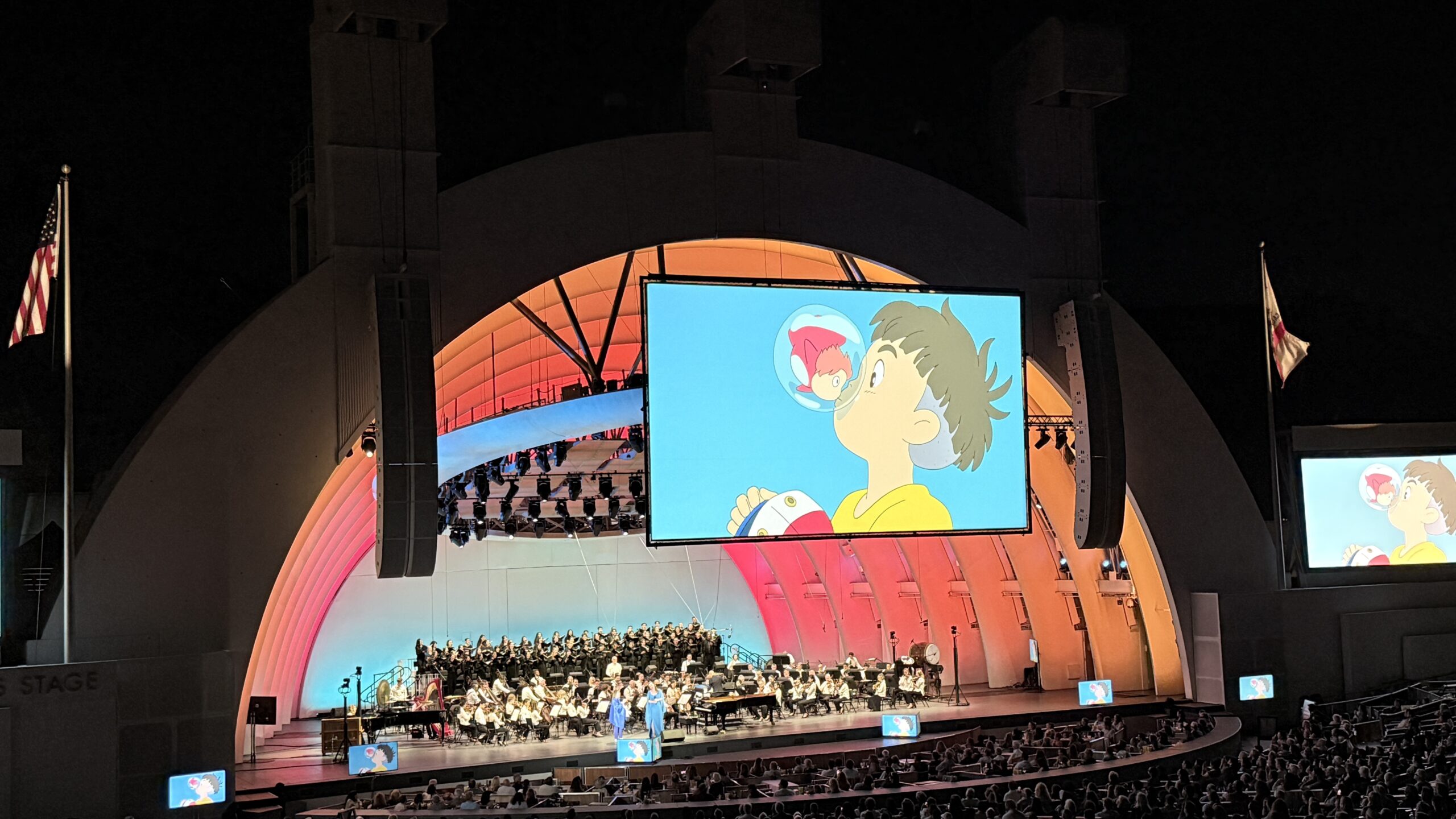
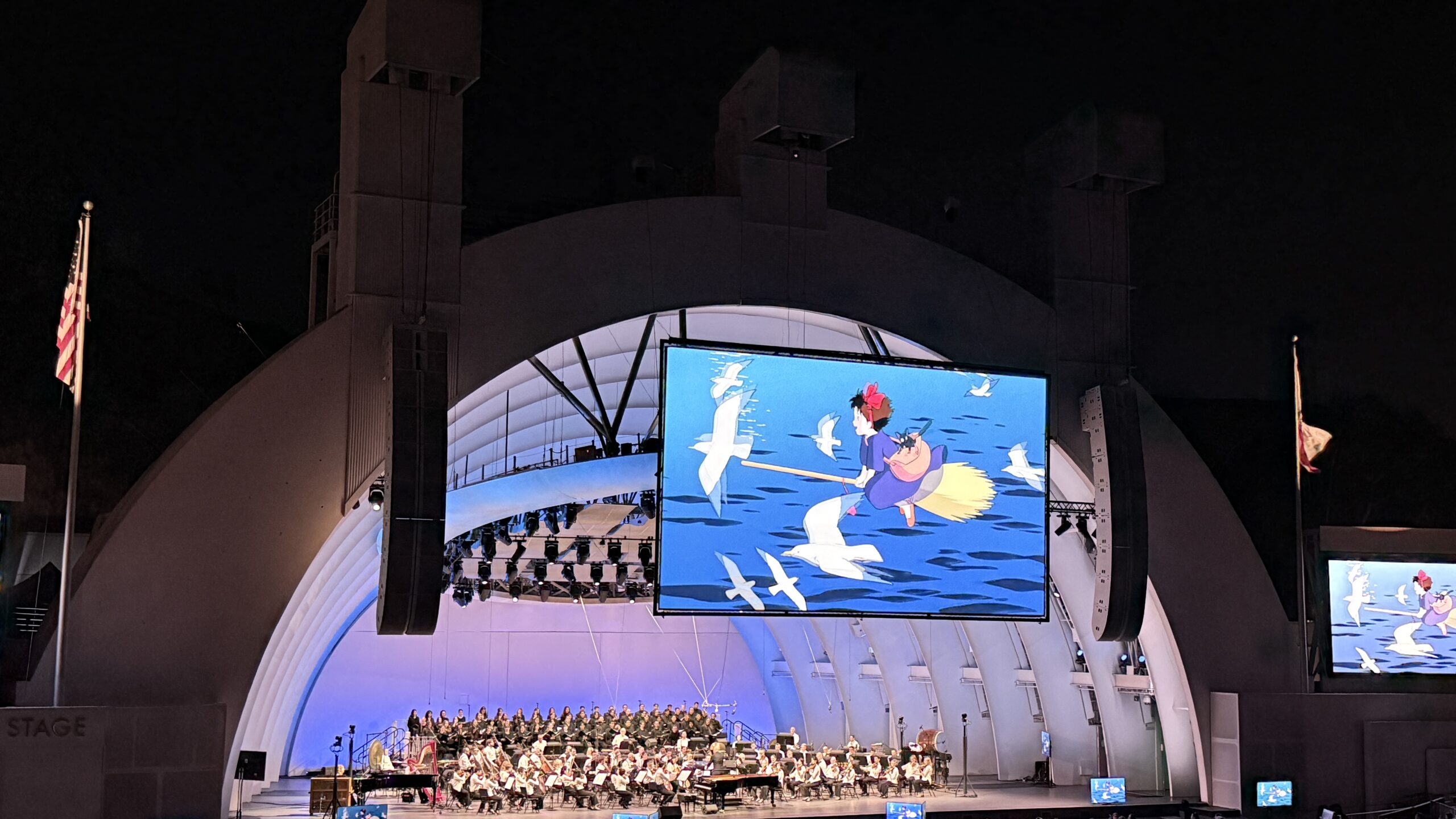
The second half unfolded with four expansive Studio Ghibli medley suites, celebrating Hisaishi’s enduring partnership with Hayao Miyazaki. Familiar themes from My Neighbor Totoro, Princess Mononoke, Kiki’s Delivery Service, Ponyo, Howl’s Moving Castle, and Spirited Away flowed seamlessly from one to another. Vocalist Mai Fujisawa performed selected numbers, her ethereal voice adding another layer of warmth and intimacy to music already rich with emotion.
Fujisawa (also known professionally as Mai) is a Japanese soprano and singer and also Joe Hisaishi’s daughter. She has frequently performed as the featured vocalist in his concerts and recordings. Hence, Hisaishi created a carefully curated film-music journey with different vocal colors and traditions, rather than a single vocalist carrying the entire evening.
Hearing these scores performed live by the Los Angeles Philharmonic revealed subtleties often hidden within the films themselves. Delicate woodwind solos floated effortlessly through the Bowl, strings swelled with cinematic grandeur, and the brass added brilliance without ever overpowering the music’s essential lyricism. Hisaishi’s signature style – lush, emotional themes punctuated by sparkling orchestral flourishes – was on full display.
One of the evening’s greatest joys was its balance. While the second half delivered the beloved Studio Ghibli music that many had come to hear, the first half offered a broader portrait of Hisaishi as an artist. By including works written for Keaton, Miller, and Kitano, the program celebrated not only a composer of animated classics but a musician whose career spans silent cinema, live-action drama, and the contemporary concert hall.
Joe Hisaishi has often said that film music should be able to stand on its own in the concert hall. At the Hollywood Bowl, it did exactly that. Supported by the exceptional musicianship of the Los Angeles Philharmonic, the voices of a superb chorus, and an audience that greeted every familiar melody with heartfelt enthusiasm, the evening was both a celebration of cinema and a testament to the enduring power of orchestral music.
As the concert drew to a close, that sense of shared history became especially poignant.


 Terry Morgan