
 Pauline Adamek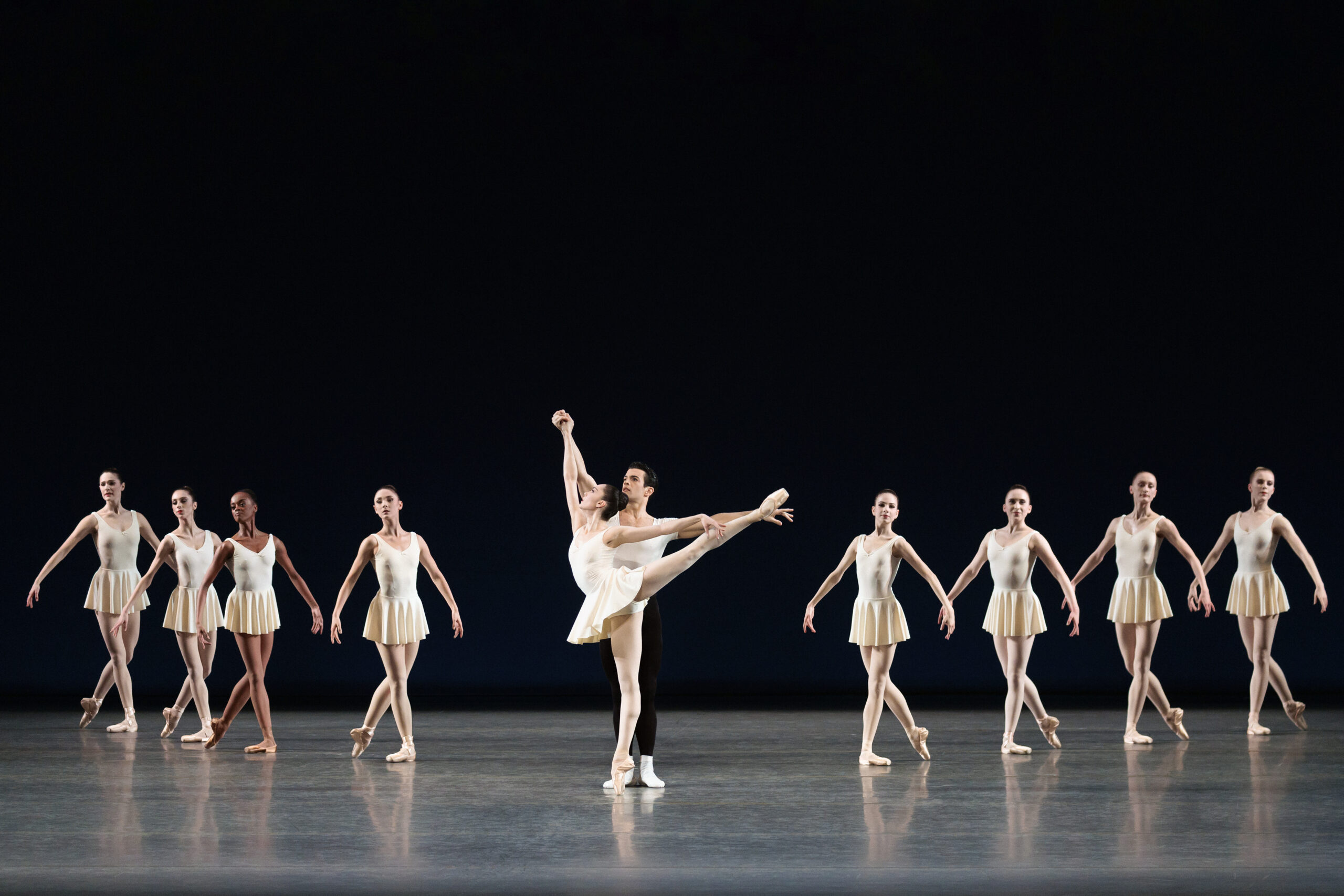
Back in Los Angeles for the first time in 22 years, New York City Ballet made a celebrated return to the Dorothy Chandler Pavilion with two distinctly different mixed-repertory programs. Together, they showcased the company’s evolution from the classic works of founders George Balanchine and Jerome Robbins to those of acclaimed contemporary choreographers Christopher Wheeldon and Tiler Peck.
Program B last Sunday evening gave Balanchine aficionadi ample reasons to rejoice, wherein the acclaimed ballet company offered two beloved classic Balanchine works – Concerto Barocco from 1941 and Allegro Brillante from 1956 – paired with two acclaimed modern masterpieces – This Bitter Earth from 2012 and Concerto for Two Pianos from 2024.
For the Concerto Barocco as well as Allegro Brillante (from 1956),” City Ballet musicians accompanied the dancers, led by their own Andrew Litton.
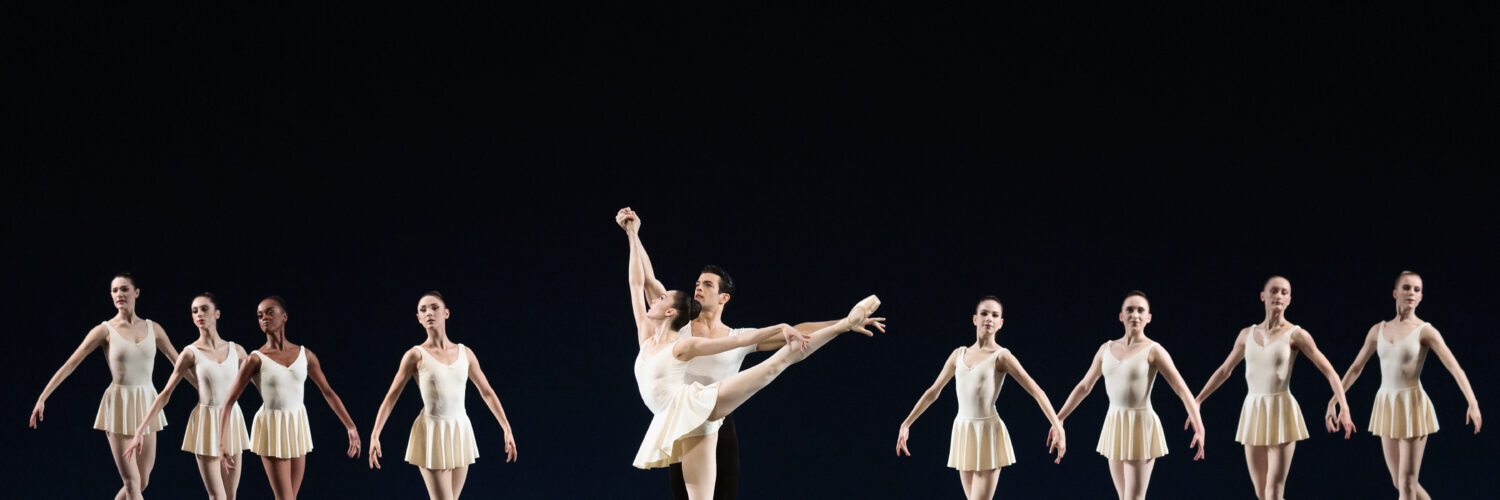
Above image: Mira Nadon and Gilbert Bolden and company in Concerto Barocco, choreography © The George Balanchine Trust. New York City Ballet, David H. Koch Theater, Lincoln Center, Thursday, January 23, 2025, 7:30pm. Credit Photo: Erin Baiano.
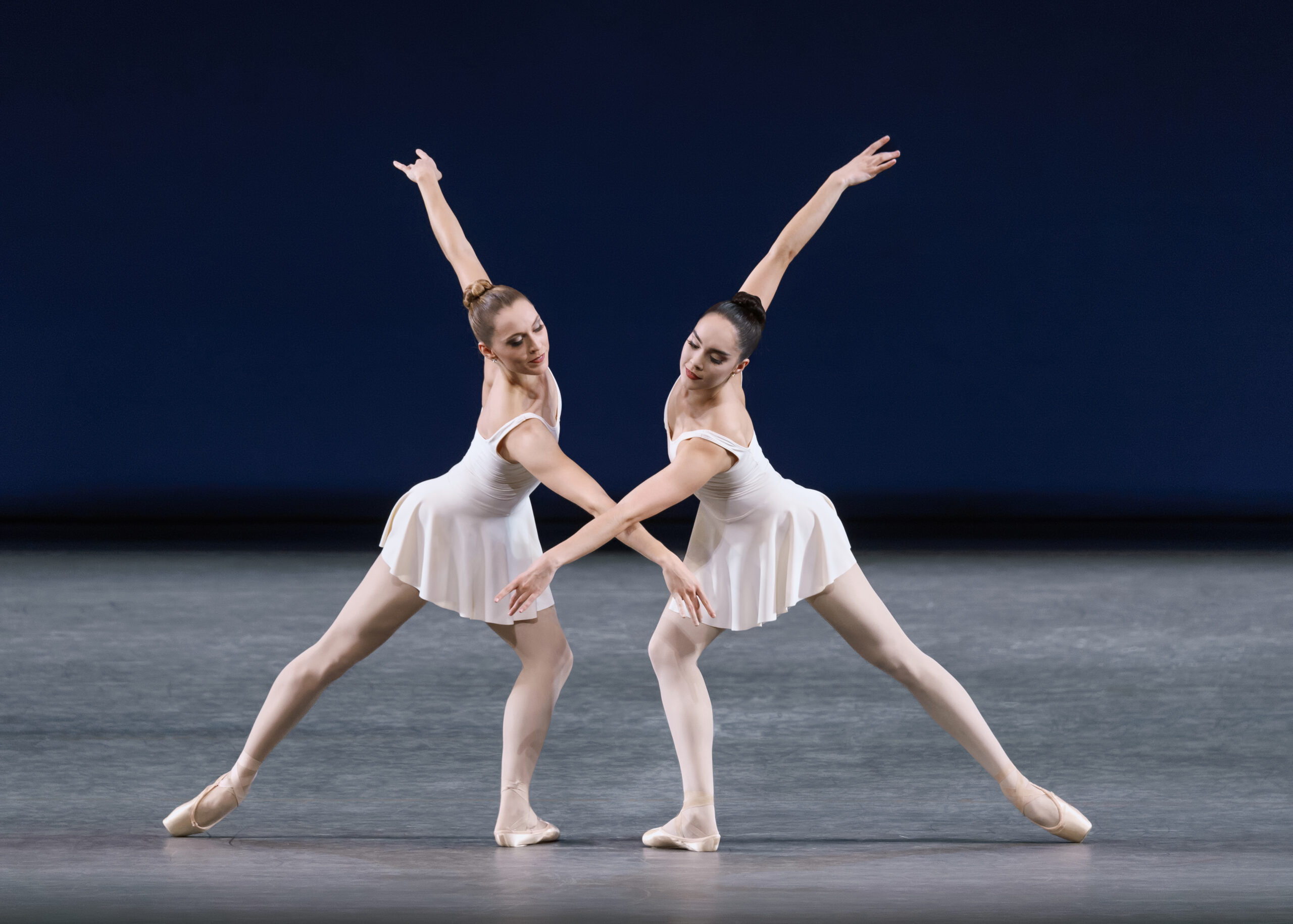
Above image: Isabella LaFreniere, left, and Mira Nadon in Concerto Barocco, choreography © The George Balanchine Trust, New York City Ballet 75th Anniversary Season, David H. Koch Theater, Lincoln Center, Friday, October 13, 2023, 8pm. Credit Photo: Erin Baiano.
Concerto Barocco (1941)
- Choreographer: George Balanchine
- Music: Johann Sebastian Bach
One of Balanchine’s greatest achievements and a cornerstone of twentieth-century ballet, Concerto Barocco remains one of the purest expressions of neoclassical ballet. Set to Johann Sebastian Bach’s Concerto for Two Violins in D minor, the ballet strips away scenery and narrative, leaving only music and movement in perfect conversation. Rather than telling a story, the choreography gives visual form to Bach’s three-movement composition. Two principal ballerinas embody the two solo violin parts in a work celebrated for its purity, elegance, and seamless union of music and dance.
The choreography is architectural in its precision, with intricate patterns and crystalline lines that make the dancers seem to embody Bach’s counterpoint.
In this recent Los Angeles performance, Mira Nadon and Isabella LaFreniere danced the two principal violin roles with striking musicality and clarity, their contrasting qualities beautifully reflecting Bach’s intertwining melodies. Supported by the impeccably synchronized corps de ballet and sensitive partnering from Gilbert Bolden III, every arabesque, crossing, and formation revealed Balanchine’s extraordinary ability to make choreography seem like a visible expression of the score. More than eighty years after its premiere, Concerto Barocco remains a timeless demonstration of the perfect union between music and dance.
Especially thrilling was the joyful finale where the dancers appeared to conclude the strenuous ballet in double-quick time!
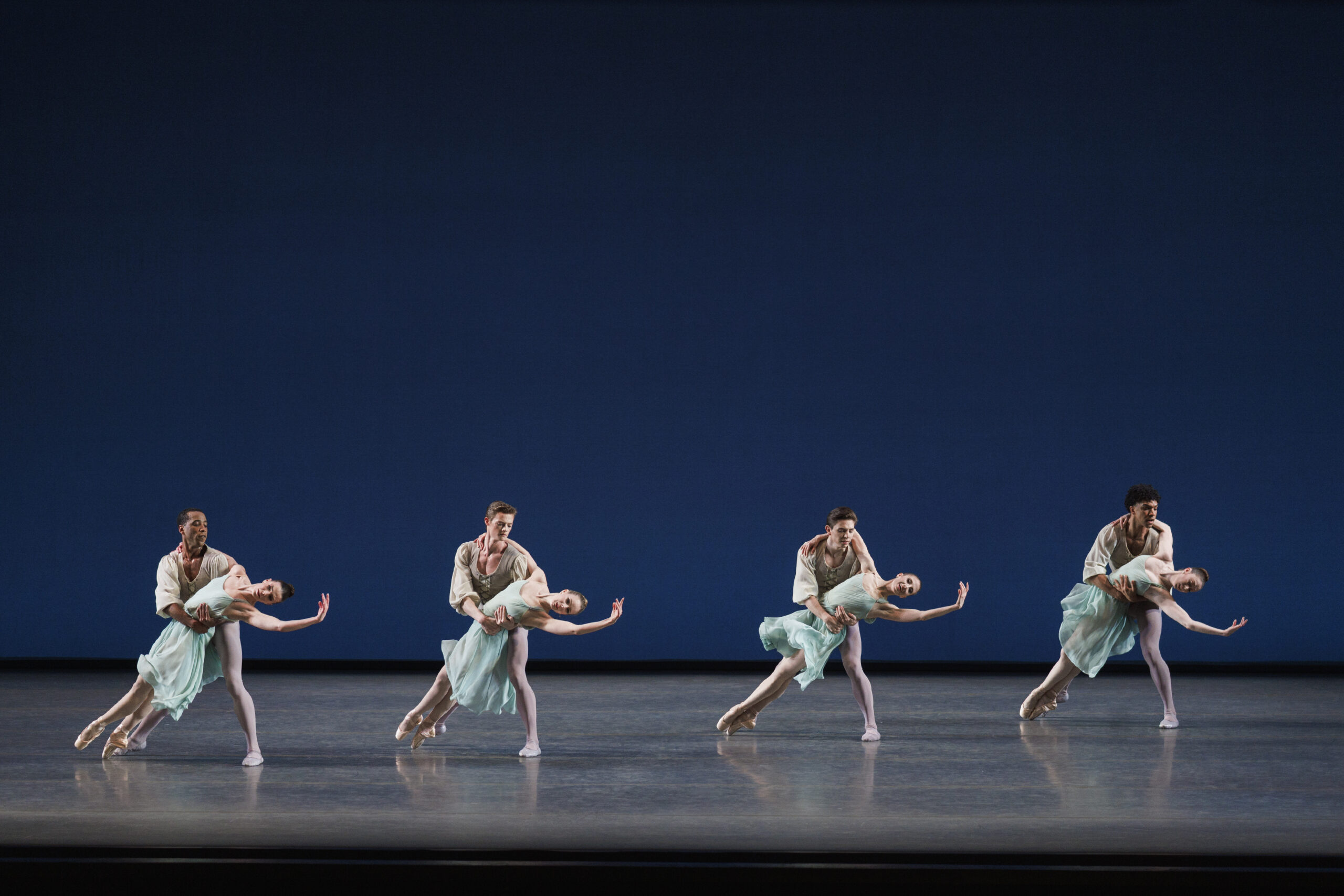
Above image: Allegro Brillante, choreography © The George Balanchine Trust. New York City Ballet, David H. Koch Theater, Lincoln Center, Thursday, January 23, 2025, 7:30pm. Credit Photo: Erin Baiano.
Allegro Brillante (1956)
- Choreographer: George Balanchine
- Music: Pyotr Ilyich Tchaikovsky
A brilliant showcase of classical technique. The piece is fast, joyous, technically demanding, and proved an ideal demonstration of New York City Ballet’s extraordinary speed and precision, which – frankly – is what the company is renowned for worldwide.
George Balanchine’s Allegro Brillante is often described as the distilled essence of his choreographic style. Set to Pyotr Ilyich Tchaikovsky’s exuberant Piano Concerto No. 3, the ballet is a dazzling display of classical technique and musicality. Balanchine famously remarked that it contained “everything I know about classical ballet” in just thirteen minutes – and that feels entirely believable when watching this extraordinary work unfold.
In the June 28 performance, the New York City Ballet danced with effortless brilliance, capturing both the athletic vitality and joyful exuberance that truly define this exquisite ballet. Led by Indiana Woodward and Joseph Gordon, the performance combined sparkling technical precision with remarkable ease. The rapid footwork, expansive jumps, and crystalline ensemble work never appeared rushed, instead conveying an exhilarating sense of freedom and confidence. More than a virtuosic showpiece, Allegro Brillante affirmed why Balanchine’s choreography remains the gold standard of neoclassical ballet: technically formidable, musically exhilarating, and endlessly alive.
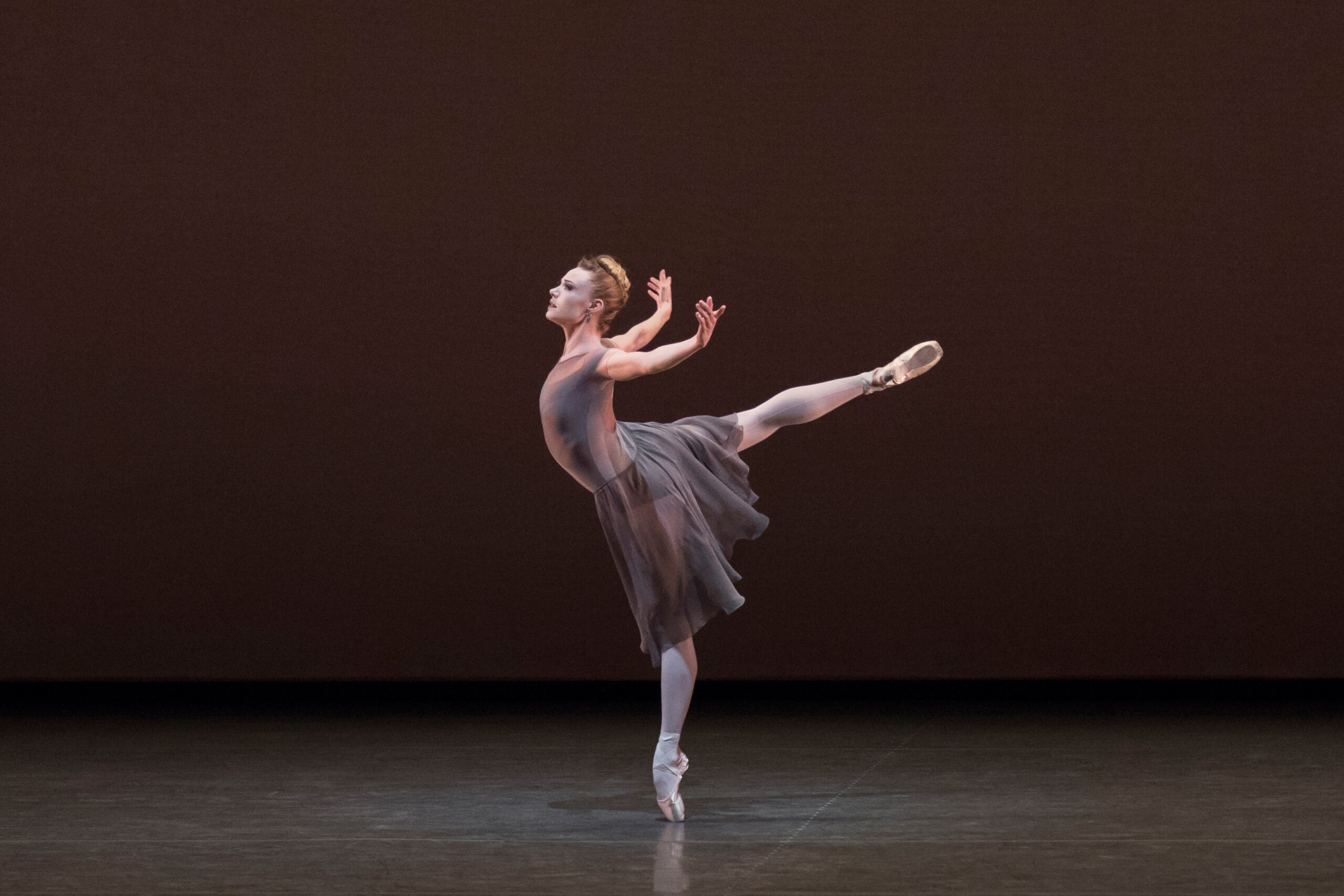
This Bitter Earth
Choreography by Christopher Wheeldon
New York City Ballet
Credit Photo: Paul Kolnik.
studio@paulkolnik.com
This Bitter Earth (2012)
- Choreographer: Christopher Wheeldon
- Music: Max Richter with Dinah Washington singing “This Bitter Earth”
A deeply emotional duet exploring love, vulnerability, and loss. Combining Richter’s “On the Nature of Daylight” string-infused and melancholy composition with Washington’s soulful and haunting vocal recording, it has become one of Wheeldon’s most beloved short works and is often performed at galas around the world.
The piece proved to be one of the emotional highlights of Program B at the Dorothy Chandler Pavilion, performed by Sara Mearns and Gilbert Bolden III. Originally created as a duet within Wheeldon’s larger work Five Movements, Three Repeats, it certainly stands perfectly on its own as an intimate pas de deux. The resulting ballet unfolds less as a story than as an emotional landscape – evoking love, loss, resilience, and hope.
Importantly, Wheeldon’s choreography is remarkable for its restraint. Rather than filling the stage with virtuosic displays, he strips ballet to its emotional essentials. The duet is built around fluid partnering: long, suspended lifts, gentle counterbalances, and continuous movement that seldom breaks the musical line. Mearns seemed to melt through each phrase, while Bolden’s quiet, unwavering partnering provided both strength and reassurance. Their bodies moved as though carried by the music itself, never forcing emotion but allowing it to surface naturally through touch, weight, and breath.
What makes Wheeldon’s choreography so affecting is its simplicity. The dancers repeatedly find one another, separate, and reconnect, suggesting that love is not something possessed but something continually rediscovered. There are no dramatic confrontations or obvious climaxes. Instead, every hand is thoughtfully placed (heart-achingly so!), every suspended embrace and every lingering pause feels momentous. You gain the sense that Wheeldon trusts that the smallest gestures can carry the greatest emotional weight, and in doing so has created a ballet that feels profoundly human.
Sara Mearns brought extraordinary emotional depth to the role. She danced with an openness that made every movement feel lived rather than performed, while Gilbert Bolden III matched her with calm, sensitive partnering that never drew attention to itself, yet was indispensable to the work’s emotional impact. Emotional and just marvelous to experience.
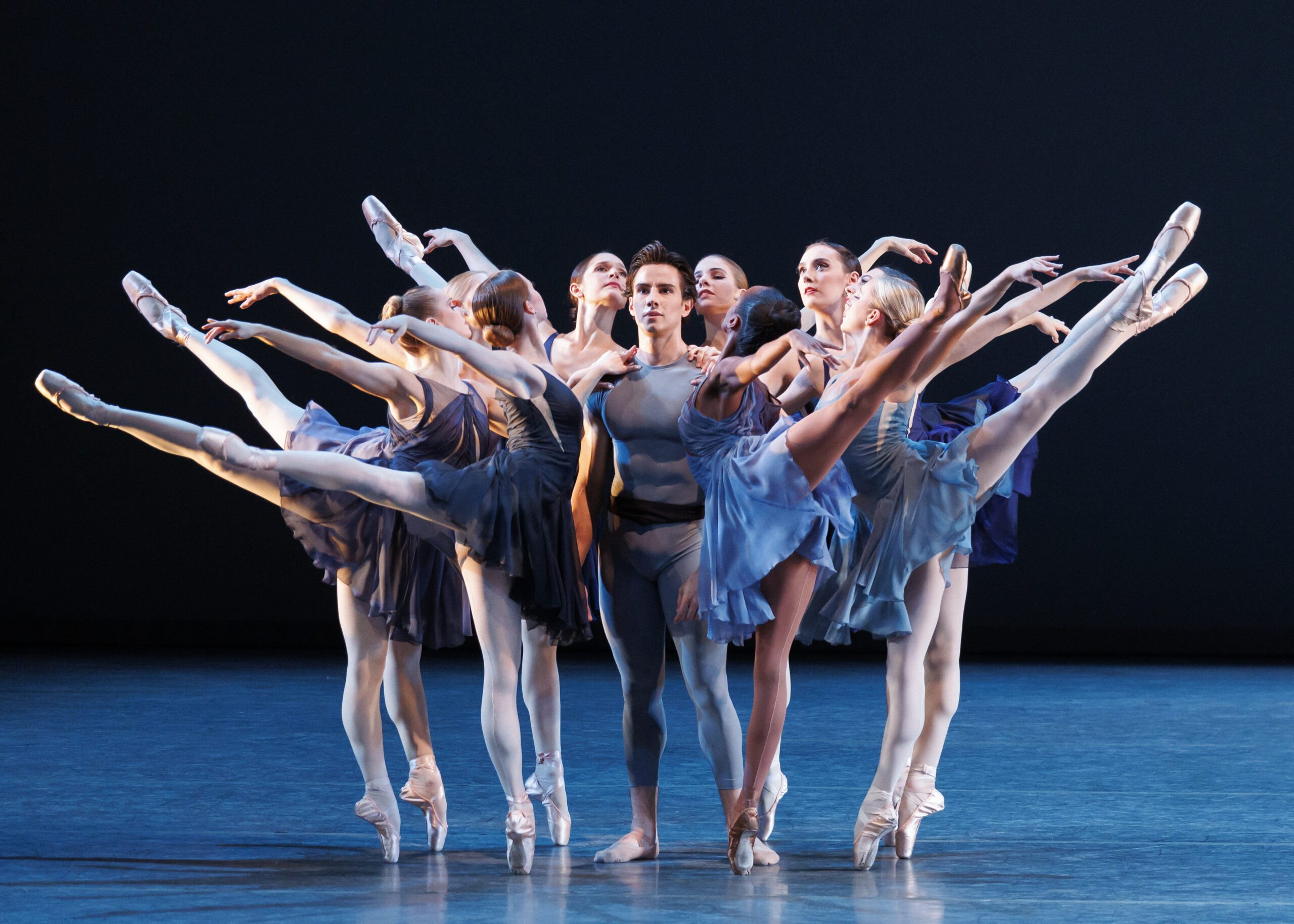
Above image: Roman Mejia and company in Concerto for Two Pianos, choreography by Tiler Peck, music by Francis Poulenc, costumes by Zac Posen, costumes supervised by Marc Happel, lighting by Brandon Stirling Baker. New York City Ballet Fall Fashion Gala ’24, David H. Koch Theater, Lincoln Center, Wednesday, October 9, 2024. Credit Photo: Erin Baiano.
Concerto for Two Pianos (2024)
- Choreographer: Tiler Peck
- Music: Francis Poulenc
- Pianists – Hanna Kim and Stephen Gosling
One of the newest additions to the repertory – and the first ballet Tiler Peck created for New York City Ballet – Concerto for Two Pianos is set to Poulenc’s sparkling concerto. The piece emphasizes intricate musicality, buoyant partnering, and joyful movement. Critics have praised how naturally the choreography mirrors the score.
Tiler Peck’s Concerto for Two Pianos brought a fresh, contemporary energy to the program while remaining firmly rooted in the New York City Ballet’s musical tradition. Set to Francis Poulenc’s witty and effervescent concerto, the ballet is bright, playful, and rhythmically alive. Peck’s choreography responds to every shift in the score with quicksilver footwork, buoyant lifts, and intricate ensemble patterns that feel both spontaneous and meticulously crafted.
In the June 28 Los Angeles performance, the dancers embraced the ballet’s youthful vitality with infectious energy and crisp musical precision. The work flowed effortlessly between intimate partnering and lively ensemble passages, its conversational style reflecting the interplay of Poulenc’s two pianos. While unmistakably contemporary in its movement vocabulary, the ballet also pays affectionate tribute to the speed, clarity, and musicality that define the Balanchine tradition, making it a fitting and engaging finale to an outstanding evening of dance.
India Bradley, in particular, dazzled with her grace, precision and elegance. Notably, her gold-toned pointe shoes complemented her costume to perfection!
Overall impression:
Program B offered a balanced evening of dance that combined historic masterpieces with emotionally rich and newly created works, representative of the New York City Ballet’s classical identity, offering a broader cross-section of what has made New York City Ballet one of the world’s premier ballet companies.
It was thrilling to experience the company’s defining Balanchine style alongside two outstanding modern works. Program B provided a comprehensive introduction to the company’s artistic heritage.
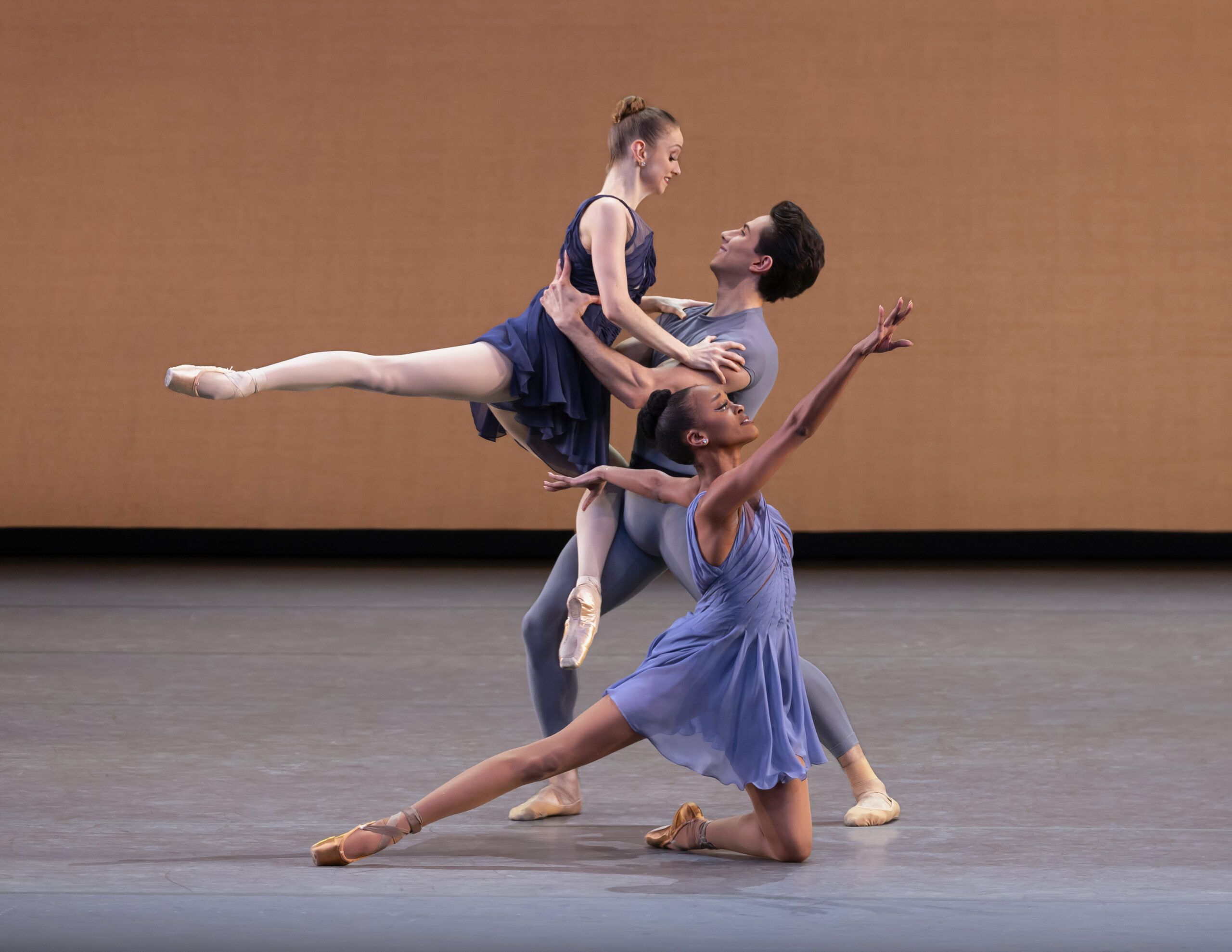
Above image: Clockwise from left: Emma Von Enck, Roman Mejia, and India Bradley in Concerto for Two Pianos, World Premiere, choreography by Tiler Peck, music by Francis Poulenc, Costumes by Zac Posen, Lighting by Brandon Stirling Baker, New York City Ballet, David H. Koch Theater, Lincoln Center. Thursday, February 1, 2024, 7:30pm. Credit Photo: Erin Baiano.
BACKGROUND
New York City Ballet’s 2026 engagement at the Dorothy Chandler Pavilion marked the company’s first appearance in Los Angeles in more than two decades. The return carried particular historical resonance, reconnecting Los Angeles audiences with a company that had been absent from the city’s stages for twenty years.
Its previous visit came in October 2004, when the company presented a week-long season at the Music Center as part of a Southern California tour that also included performances in Orange County.
The 2004 engagement reflected New York City Ballet’s dual artistic identity at the time: a reverence for the legacy of founder George Balanchine alongside an embrace of emerging choreographic voices. Much of the repertory celebrated Balanchine during the centennial year of his birth, with landmark works including Symphony in C, Stravinsky Violin Concerto, and Jewels. These classics were paired with Christopher Wheeldon’s then-new ballets Polyphonia and After the Rain, signaling the company’s commitment to expanding its repertory while remaining rooted in its distinctive neoclassical tradition.
That long absence inevitably heightened expectations for the 2026 return. For many audience members, it was the first opportunity in a generation to experience New York City Ballet’s singular style in person – its exceptional musicality, speed, and architectural clarity. The engagement therefore represented more than another touring stop; it was the restoration of a long-interrupted relationship between one of America’s defining ballet companies and the Los Angeles dance community.
New York City Ballet:
George Balanchine was the co-founder and artistic architect of the New York City Ballet. He revolutionized classical dance with a fast, musical, and stripped-down style that emphasized precision, speed, and athleticism. His works remain the foundation of the company’s repertoire and continue to shape ballet companies around the world.
Jerome Robbins was the company’s co-founding choreographer and one of the most influential dance-makers of the 20th century. Equally at home in ballet and Broadway, he brought a deeply human, theatrical quality to classical dance, creating ballets celebrated for their psychological insight, expressive storytelling, and musical sensitivity. Together, Balanchine and Robbins established the New York City Ballet as one of the world’s leading ballet companies, defining its distinctive artistic identity through their complementary visions.
George Balanchine:
George Balanchine is one of the most influential choreographers in the history of ballet and is widely regarded as the “Father of American ballet.” Importantly, he transformed ballet into a distinctly American art form.
Before Balanchine, much of ballet’s prestige was centered in Europe, especially Russia and France. Born in Saint Petersburg in 1904, which was then the capital of the Russian Empire, Balanchine entered the Imperial Ballet School in 1913, where he trained in ballet and music. After emigrating to the United States in 1933 at the invitation of Lincoln Kirstein, he helped establish an American ballet tradition that wasn’t simply an imitation of European styles. Together they founded the School of American Ballet in 1934 and later the New York City Ballet in 1948. These institutions became two of the world’s leading centers for ballet training and performance.
He pioneered “neoclassical” ballet; Balanchine respected classical ballet technique but stripped away many of the elaborate storylines and theatrical decorations that had become common.
Balanchine’s choreography emphasized:
- Musicality—the dancers seemed to embody the music itself
- Speed and athleticism
- Clean lines and geometric formations
- Minimal scenery and costumes that kept attention on movement
- Plotless ballets in which dance was the primary focus rather than narrative
- Balanchine Foundation styles
His partnership with Igor Stravinsky reshaped dance
One of the greatest artistic collaborations of the 20th century was between Balanchine and composer Igor Stravinsky. Balanchine created groundbreaking choreography for works including, Apollo, Agon and Stravinsky Violin Concerto. Rather than merely illustrating the music, his choreography revealed its structure visually, creating a close dialogue between dance and composition.
He created an enormous repertoire
Balanchine choreographed more than 400 works during his illustrious career. Among his most enduring ballets are Serenade; Concerto Barocco; The Four Temperaments; Symphony in C; Jewels and George Balanchine’s The Nutcracker, which helped make The Nutcracker a beloved annual holiday tradition in the United States.
He influenced dancers worldwide
Balanchine developed a distinctive performance style characterized by extremely fast footwork, long, extended lines, precision and synchronization and exceptional musical sensitivity. Today, major ballet companies around the world continue to stage his works, and many dancers train specifically in the “Balanchine technique.”
Balanchine’s influence extends beyond the ballets he created. He fundamentally changed how ballet is taught, choreographed, and presented, particularly in the United States. His institutions continue to train dancers, and his works remain central to the repertoires of leading companies worldwide.
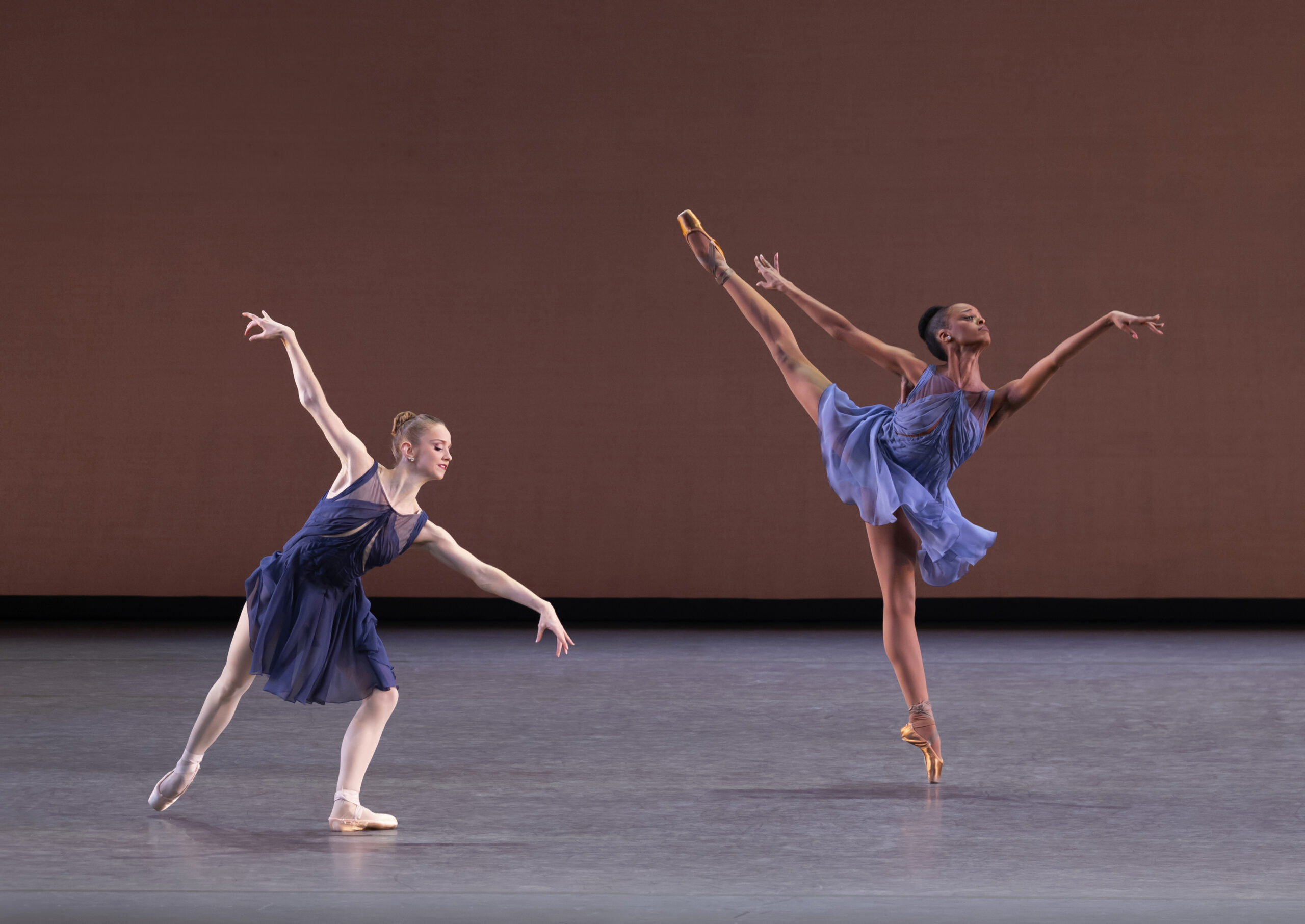
Above image: Emma Von Enck and India Bradley in Concerto for Two Pianos, World Premiere, choreography by Tiler Peck, music by Francis Poulenc, Costumes by Zac Posen, Lighting by Brandon Stirling Baker, New York City Ballet, David H. Koch Theater, Lincoln Center. Thursday, February 1, 2024, 7:30pm. Credit Photo: Erin Baiano.
2025/2026 season of Glorya Kaufman Presents Dance at The Music Center
New York City Ballet at The Music Center’s Dorothy Chandler Pavilion.
NYCB performed two distinct programs:
- Program A: Signs, Red Angels, A Suite of Dances, The Times Are Racing
-
Program B: Concerto Barocco, Allegro Brillante, This Bitter Earth, Concerto for Two Pianos
Program A
Performances: June 24–26, 2026 (Wednesday–Friday evenings)
This program leans strongly toward contemporary ballet, athleticism, and innovative movement.
Signs (2022)
- Choreographer: Gianna Reisen
- Music: Philip Glass
- Style: Contemporary ensemble ballet
This is one of the newest works in the repertoire. Set to Glass’s minimalist piano music, it features constantly shifting formations that resemble waves or currents. Solos and duets emerge naturally from the ensemble before dissolving back into it, emphasizing fluidity rather than narrative.
Red Angels (1994)
- Choreographer: Ulysses Dove
- Music: Richard Einhorn
A high-energy quartet famous for its explosive athleticism. Originally created for four women, the ballet combines powerful jumps, aggressive partnering, dramatic lighting, and an electric violin score. It’s one of Dove’s signature works and represents a bold departure from traditional classical ballet.
A Suite of Dances (1994)
- Choreographer: Jerome Robbins
- Music: Johann Sebastian Bach
An intimate solo for a male dancer performed alongside an onstage cellist. Rather than dazzling with virtuosity alone, it showcases musicality, humor, reflection, and the personality of the performer. It’s often considered one of Robbins’ most human and quietly moving ballets.
The Times Are Racing (2017)
- Choreographer: Justin Peck
- Music: Dan Deacon
Perhaps the most contemporary work on the program. Nicknamed the “sneaker ballet,” dancers wear street clothes and sneakers rather than pointe shoes and tutus. The choreography incorporates influences from skateboarding, social dance, and urban movement while maintaining classical precision. It’s fast, youthful, and exhilarating.
Overall impression: Program A highlights New York City Ballet’s adventurous side—minimalism, modern movement, athleticism, and innovative choreography.
Program B
Performances: June 27–28, 2026 (Saturday and Sunday)
This program balances beloved Balanchine classics with two acclaimed modern masterpieces.
Concerto Barocco (1941)
- Choreographer: George Balanchine
- Music: Johann Sebastian Bach
One of Balanchine’s greatest achievements and a cornerstone of twentieth-century ballet. Rather than telling a story, the choreography visually interprets Bach’s Double Violin Concerto. Two principal ballerinas represent the solo violins in a work celebrated for its purity, elegance, and perfect union of music and dance.
Allegro Brillante (1956)
- Choreographer: George Balanchine
- Music: Pyotr Ilyich Tchaikovsky
A brilliant showcase of classical technique. Balanchine reportedly described it as containing “everything I know about classical ballet in thirteen minutes.” It is fast, joyous, technically demanding, and an ideal demonstration of New York City Ballet’s speed and precision.
This Bitter Earth (2012)
- Choreographer: Christopher Wheeldon
- Music: Max Richter with Dinah Washington singing “This Bitter Earth”
A deeply emotional duet exploring love, vulnerability, and loss. Combining Richter’s “On the Nature of Daylight” with Washington’s soulful recording, it has become one of Wheeldon’s most beloved short works and is often performed at galas around the world.
Concerto for Two Pianos (2024)
- Choreographer: Tiler Peck
- Music: Francis Poulenc
One of the newest additions to the repertory and the first ballet Tiler Peck created for New York City Ballet. Set to Poulenc’s sparkling concerto, it emphasizes intricate musicality, buoyant partnering, and joyful movement. Critics have praised how naturally the choreography mirrors the score.

 Terry Morgan