
 Pauline Adamek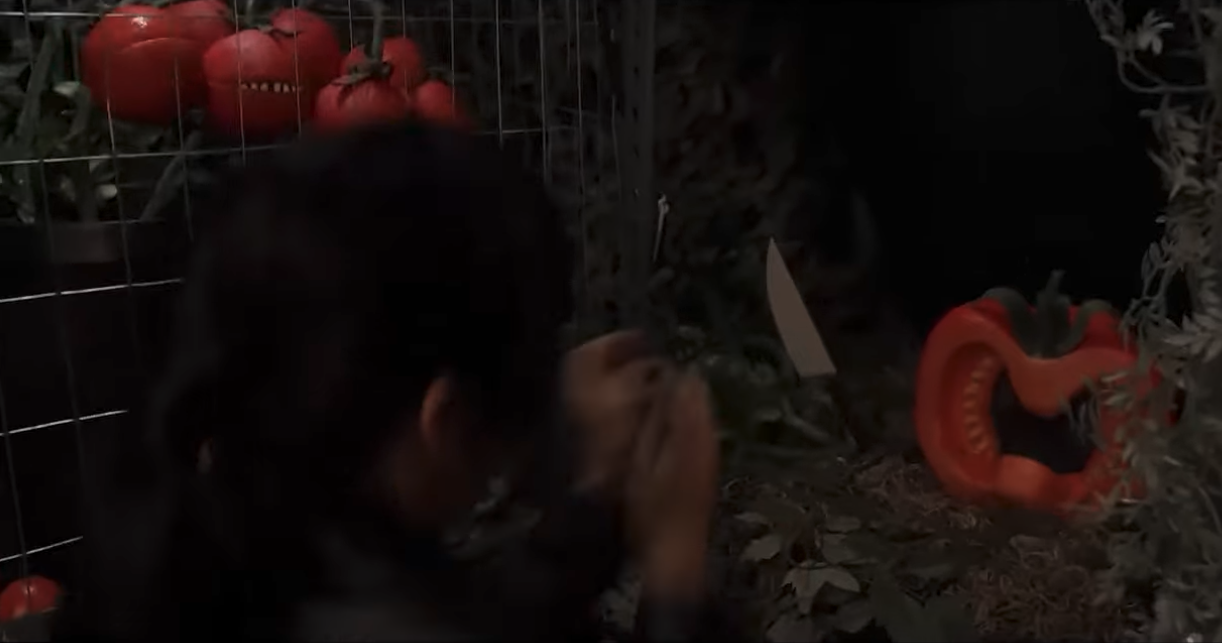
A new installment of the beloved schlocky Killer Tomatoes franchise is back with a fifth feature film, Attack of the Killer Tomatoes: Organic Intelligence. Both gruesome and delicious, the madcap nonsense is directed by David Ferino, with original creators Costa Dillon and J. Stephen Peace involved as executive producers. This new film features a string of comedy stars including David Koechner, John Astin, Dan Bakkedahl, Daniel Roebuck, Eric Roberts, Catherine Corcoran, Vernee Watson and others.
The original film from 1978 gleefully spoofed the campy, cheaply produced B-movies of the 1950s and ’60s and was made on a budget of less than $100,000. The basic storyline involves tomatoes becoming sentient by unknown means, mutating into murderous fruits and retaliating against humanity. This new film updates the franchise’s ongoing premise to the present day, bringing the 1978 cult comedy into the age of AI, biotechnology, corporate tech, and genetically engineered food, while preserving the franchise’s deliberately ridiculous sense of humor as well as its clearly low budget production values. So much more than simply rewarmed leftovers of the original “tomatoes attack humanity” notion, the filmmakers are using the franchise’s traditional tongue-in-cheek absurdity to poke fun at contemporary technology.
This latest comedy drama sensibly preserves the best aspects of the original work, with its commitment to low-budget absurdity, corny parody, self-awareness, and the sheer ridiculousness of taking a tomato apocalypse seriously.
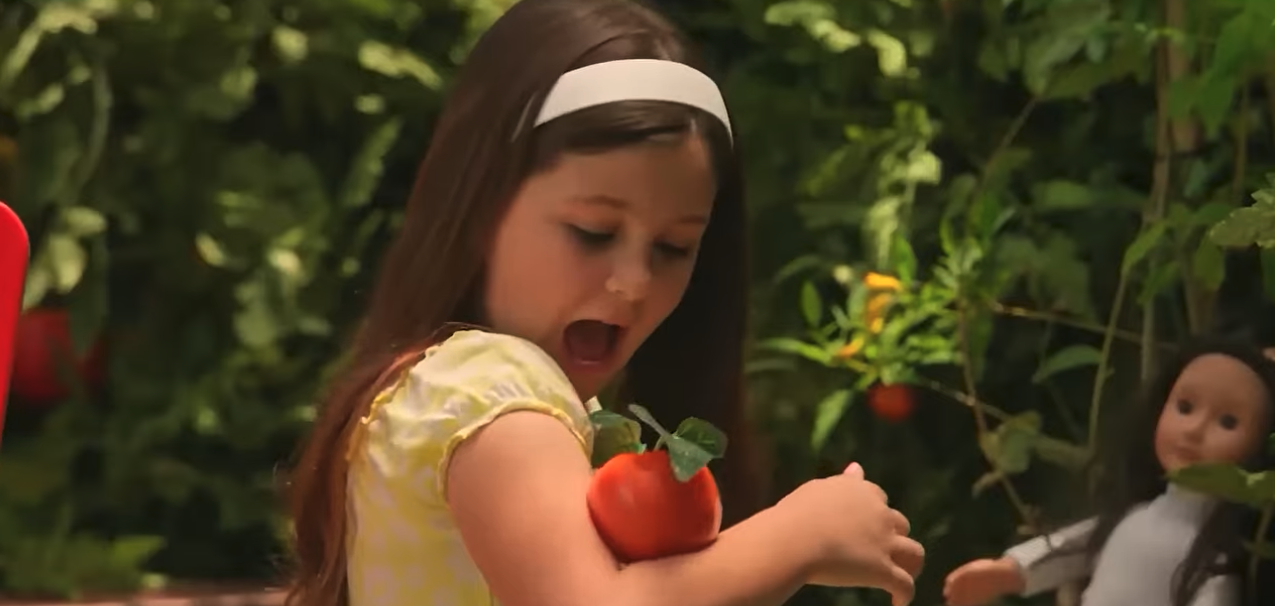
Arrogant and ambitious, Kate Patel (Samantha Bailey) is the genius CEO of (the fictional company) VegIntel and the inventor of MyTomato™. Described as the world’s first organic-intelligence platform powered by bioneural feedback, it’s a revolutionary organic-intelligence solution that’s designed to tackle the problems that artificial intelligence can’t solve. But when Kate’s scientific breakthrough unleashes a new generation of increasingly intelligent vicious tomatoes, the battleground becomes one that pits artificial intelligence against organic intelligence. Wilbur Finletter (Dan Bakkedahl), the franchise’s veteran anti-tomato crusader, is drawn back into the conflict, while intrepid investigators Angela (Noor Razooky) and Chad (Zachary Roozen) become caught up in the escalating tomato threat. Returning to the mayhem is Professor Mortimer Gangreen (John Astin), the mad scientist from the earlier films. The ensemble also includes Daniel Roebuck as Admiral Grant, Eric Allan Kramer as Dimitri, Josh Stone as Bush, and London Stubblefield as a Military Officer.
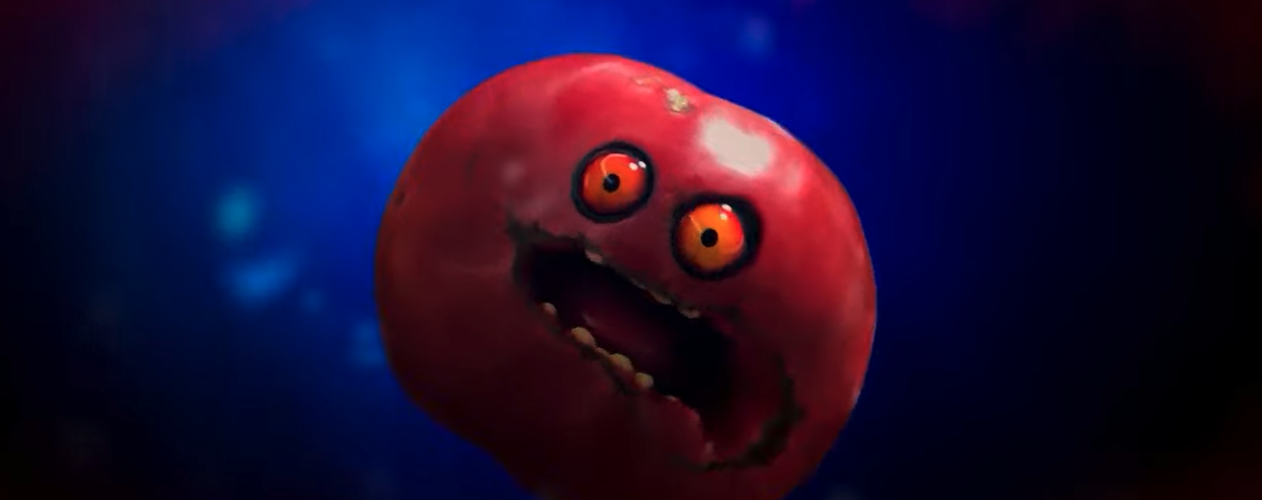
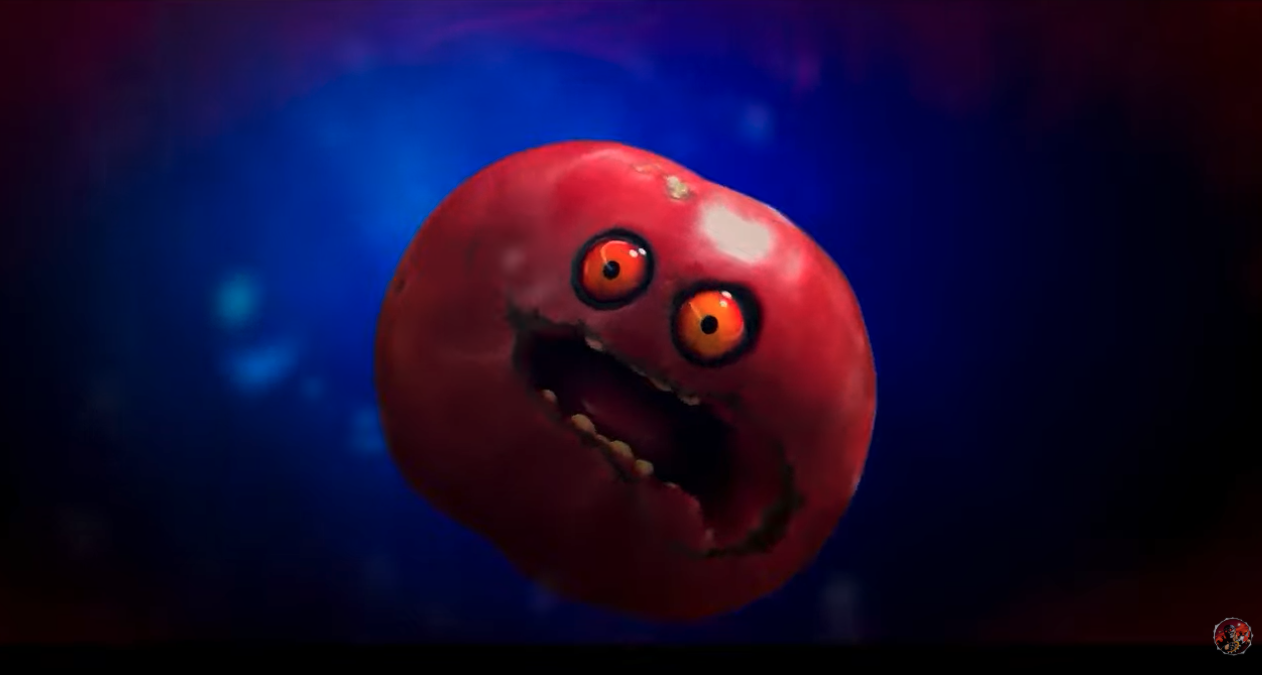
Embracing its low budget, make-do roots, the movie relies mainly on delightfully hokey practical special effects, combining live action with animation and kooky puppetry. A special delight are the hostile carrots! The occasional indulgence of CGI effects is well applied and never detracts from the film’s intentionally schlocky ethos.
Attack of the Killer Tomatoes: Organic Intelligence essentially asks “What happens when biological life becomes intelligent enough to compete with AI?” And because this is Attack of the Killer Tomatoes, the answer is apparently, “Tomatoes become terrifying!”
The movie takes aim at some of the biggest obsessions – and anxieties – of the modern tech world, including AI, Silicon Valley-style startups, biotechnology, genetic engineering, corporate promises to “solve humanity’s problems,” technological hubris, and our growing fears about intelligent machines. But in true Killer Tomatoes fashion, the ultimate technological nightmare isn’t a rogue robot or supercomputer – it’s produce.
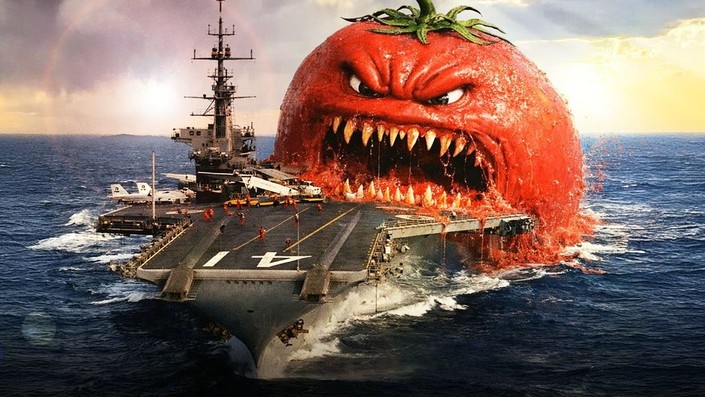
Filming took place around Southern California, particularly in Los Angeles, Long Beach and the San Diego area. Some sequences filmed aboard the historic aircraft carrier the USS Midway in San Diego. Attack of the Killer Tomatoes: Organic Intelligence was given a special screening at the USS Midway Museum in San Diego last February, and that screening was tied to a charitable event benefiting veteran programs.
Speaking after the film’s premiere in Los Angeles last night, when asked what the biggest challenge was in working with the giant practical tomatoes, the cast members laughed and explained that the hardest part was imagining the tomatoes were actually real, since much of the time they were essentially looking at nothing and had to use their imagination to react to them. “The tomato stuff was so corny. It was fun. I had a good time doing it, and I had a great cast to work with.” Added another cast member, “I think the hardest part for me was getting tomatoes splashed on me. It was the most emotional part for me.”
Recalls Noor Razooky, who plays Angela, “My favorite set was Gangreen’s Lab, because we had real puppeteers working back there. I think some of them had worked on The Muppets. So, in Gangreen’s Lab, when you see the cherry tomato, the green toxic-waste radioactive tomato, and the carrots – those were all being operated by puppeteers. It was the coolest thing ever. I felt like a child in there. I wanted to spend more time there, but our schedule was so tight. Everything was just go, go, go, go, go. So I would smile and enjoy the moment, and then we’d have to move on to the next scene.”
When asked how supportive the city of San Diego was for their film, director David Ferino said the production received tremendous support from every city where they filmed – including Long Beach, Los Angeles, and San Diego – but that San Diego held a special place in the filmmakers’ hearts. He noted that Top Gun and Attack of the Killer Tomatoes are two films that San Diego particularly considers its own, making it meaningful to bring the new movie back to some of the original locations. Returning to those places allowed the cast and crew to “live, eat, and breathe” the spirit of the original film, he said, calling the experience especially meaningful. “Sorry for the sincere answer,” he joked.
Backstory:
The Attack of the Killer Tomatoes franchise is one of those bizarre Hollywood stories where a deliberately stupid joke somehow turned into a decades-long cult property. The whole thing began with Costa Dillon, John DeBello, and Stephen Peace, three young filmmakers who came up with the idea after seeing a movie called Attack of the Mushroom People. They wondered how much more ridiculous a monster movie could be, and settled on killer tomatoes. The basic joke was that tomatoes were so ordinary and harmless that treating them like a civilization-threatening monster was inherently funny.
They first made a short Attack of the Killer Tomatoes film while at UC Davis, and eventually expanded the idea into a feature. The 1978 movie was produced for roughly $100,000, which was an extremely small budget even for an independent film. Rather than simply making a conventional monster movie, the filmmakers turned the limitations into part of the joke. The movie deliberately parodied the cheap effects, melodrama, government panic, news broadcasts, musical numbers, continuity errors, and over-the-top seriousness of old B-movies.
The tomatoes somehow become sentient and attack humanity, while the government treats the crisis with the utmost seriousness. Much of the humor comes from the contrast between the absurd premise and the straight-faced way characters respond to it. The movie was not a critical success, but it found an audience through midnight screenings, college audiences, and eventually home video. VHS was particularly important because it allowed bizarre low-budget movies like this to develop cult followings long after their theatrical runs ended.
There’s also a great bit of movie-business history surrounding the original. At one point, a theater chain wanted a large number of prints of Attack of the Killer Tomatoes! and gave it a significant theatrical opportunity. According to the filmmakers, one of the movies affected by its unexpected success was Star Wars. In other words, there really was a moment when a theater had to decide whether to give screens to George Lucas’s space opera or a movie about homicidal tomatoes.
The sequel didn’t happen immediately. The property got an unexpected boost from television when Muppet Babies used the concept in an Attack of the Silly Tomatoes segment. That exposure helped get the attention of New World Pictures, which approached the filmmakers about making another movie. The creators weren’t initially eager to return to the material, but the financial opportunity eventually changed their minds. Ten years after the original, the tomatoes returned.
Return of the Killer Tomatoes! arrived in 1988 and is arguably the movie that transformed the original joke into a genuine franchise. Instead of simply repeating the first movie, the sequel expands the mythology surrounding the Great Tomato War and introduces characters such as Dr. Gangreen and Tara, a tomato who has been transformed into a human-looking woman. It also features a very young George Clooney as Matt Stevens, a pizza-delivery guy who becomes involved in the tomato crisis. Clooney’s presence is probably the most famous piece of trivia associated with the series today.
The sequel also took the self-parody considerably further. The original was primarily making fun of monster movies and cheap filmmaking, while Return started making fun of Hollywood itself, particularly the way successful movies generate increasingly ridiculous sequels. The movie constantly acknowledges its own absurdity, so it isn’t merely a comedy about killer tomatoes; it’s also a comedy about making a sequel to a movie about killer tomatoes.
The franchise then took an even stranger turn when it became a Saturday-morning cartoon. Attack of the Killer Tomatoes: The Series premiered on Fox Kids in 1990 and ran for two seasons. The cartoon expanded the characters and mythology considerably, following young hero Chad Finletter and characters such as Tara Boumdeay, F.T., and the villainous Dr. Putrid T. Gangreen. It transformed what had been an intentionally ridiculous B-movie into a fairly conventional children’s adventure-comedy while retaining the basic tomato mythology and self-aware humor.
The franchise continued with Killer Tomatoes Strike Back! in 1991 and Killer Tomatoes Eat France! in 1992. There were also video games, comic books, books, merchandise, and various attempts to keep the property alive. By that point, the killer tomatoes had gone from being a one-joke parody of monster movies to an entire fictional universe with recurring characters and its own mythology.
One of the more unusual aspects of the franchise is that its original creators remained closely associated with it. Stephen Peace eventually moved into California politics, serving in the state legislature and Senate. So one of the people responsible for inventing a movie about killer tomatoes eventually had a career as an actual California politician, which feels almost like something the franchise itself would have written.
The reason Attack of the Killer Tomatoes has endured is probably that the concept is almost impossible to make unfunny. The title itself is the joke, and the filmmakers understood that. Rather than trying to convince audiences that killer tomatoes were genuinely frightening, they embraced the ridiculousness and kept escalating it. The franchise also benefited enormously from the timing: it arrived during the late-1970s explosion of irreverent comedy and B-movie parody, then found a second life through VHS, cable television, and eventually children’s animation.
So the basic story is that three filmmakers came up with an intentionally stupid monster-movie premise, made a $100,000 independent film, watched it become a cult hit, turned it into a George Clooney movie, turned that into a Fox Kids cartoon, and then kept expanding the property for decades. It’s a remarkably successful career for a joke that essentially begins with the question: “What if tomatoes were the monsters?”

Select cities release information:
UltraStar Mission Valley San Diego, CA Opens August 7
D’Place River Village Cinemas Bonsal, CA (San Diego) Opens August 7
Hollywood Blvd Cinema Woodridge, IL (Chicago) Opens August 7
Yippee Ki Yay Mother Video Racine, WI (Milwaukee) Opens August 7
UltraStar Coronado Village San Diego, CA Opens August 8
Cinema Village New York City, NY Opens August 9
Cinemart Cinemas Forrest Hills, NY (NYC) Opens August 9
Alpine Cinemas Bayridge, NY (NYC) Opens August 9
Cinema Arts Center Huntington, NY (NYC) Opens August 9
Lumiere Theater Los Angeles, CA Opens August 10
Schulman’s Movie Bowl Grille Sherman, TX (Dallas) Opens August 14
Schulman’s Movie Bowl Grille Corsicana, TX (Dallas) Opens August 14
Schulman’s Movie Bowl Grille Bay City, TX (Houston) Opens August 14
Smodcastle Cinemas Atlantic Highlands, NJ Opens August 14
Gardena Cinema Gardena, CA (LA) August 14, double feature with original Attack of the Killer Tomatoes film
Sunray Cinemas Tampa, FL Opens August 28
Shankweiler’s Drive-In Orefield, PA (Allentown) September 1, double feature with original Attack of the Killer Tomatoes film
Art Theater Long Beach Long Beach, CA (LA) September 11, double feature with original Attack of the Killer Tomatoes film


 Terry Morgan