

 Pauline Adamek
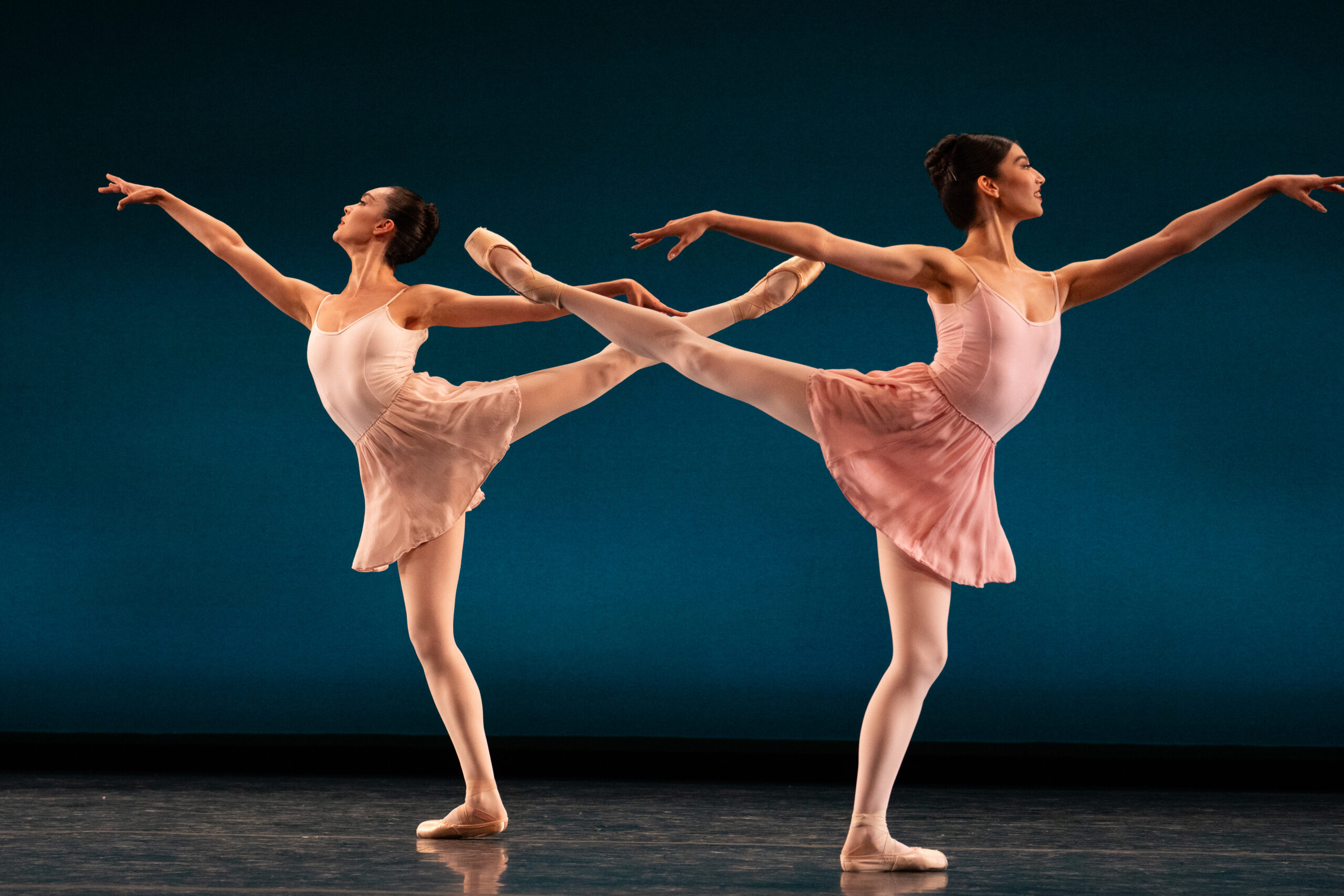
Launching their sweeping 2026–2027 season of Glorya Kaufman Presents Dance at The Music Center, the first event – Ballet Festival: Jerome Robbins – brought three distinct programs to the Ahmanson Theatre at The Music Center over three dates in late October.
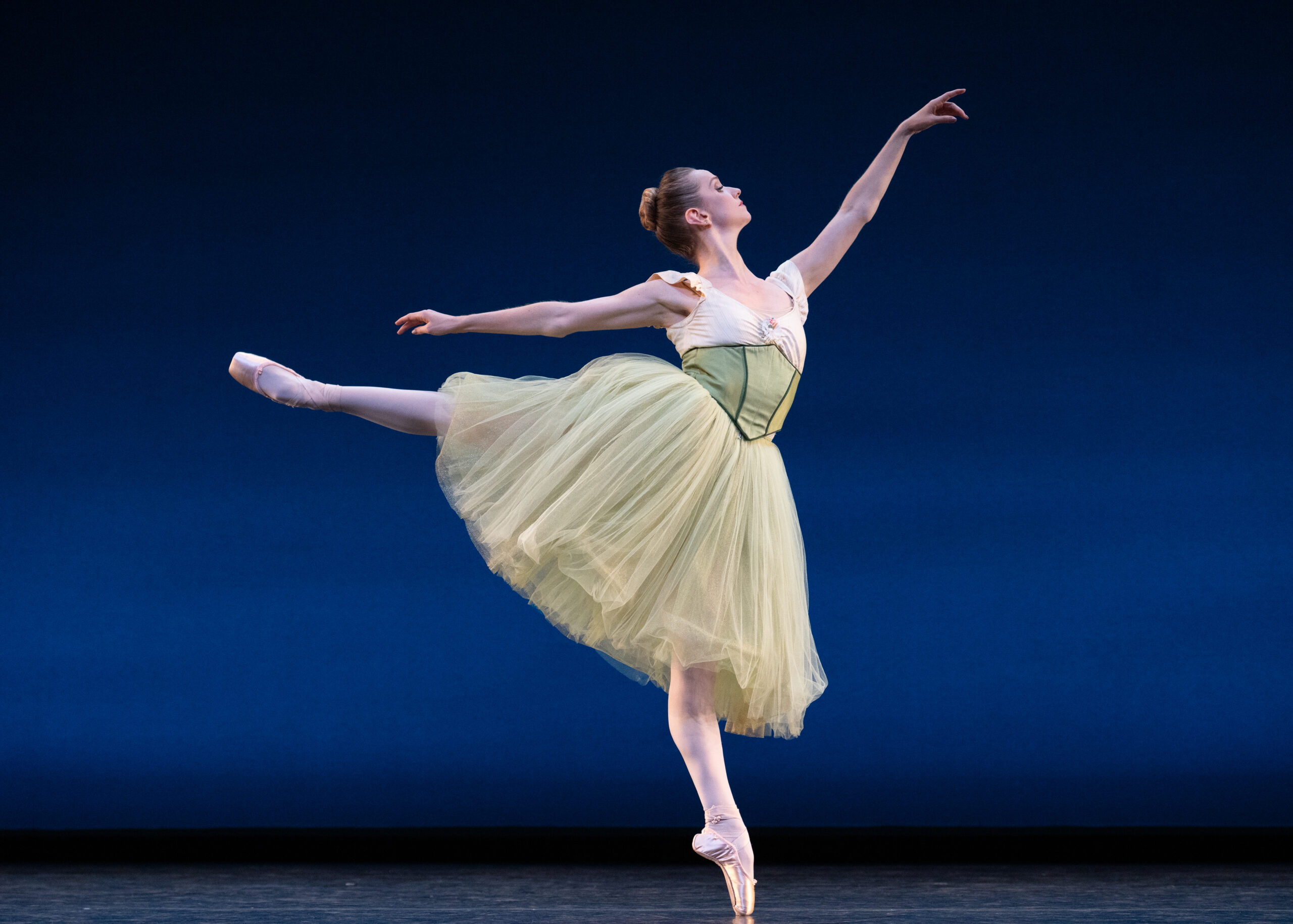
Presented as a Joyce Theater Production and curated by New York City Ballet Principal Dancer Tiler Peck, the festival assembled an impressive roster of dancers from NYCB, San Francisco Ballet, Paris Opera Ballet and other major companies to to celebrate the choreographic legacy of Jerome Robbins. (Above photo by Steven Pisano.)
The Friday performance, Program A, featured four works by Robbins, accompanied by live chamber music. Superb lighting was designed by Ronald Bates and Jennifer Tipton, and recreated by John Cuff. The fabulous flowing costumes credited to Florence Klotz, Santo Loquasto and Anthony Dowell contributed to the visual elegance of the evening.
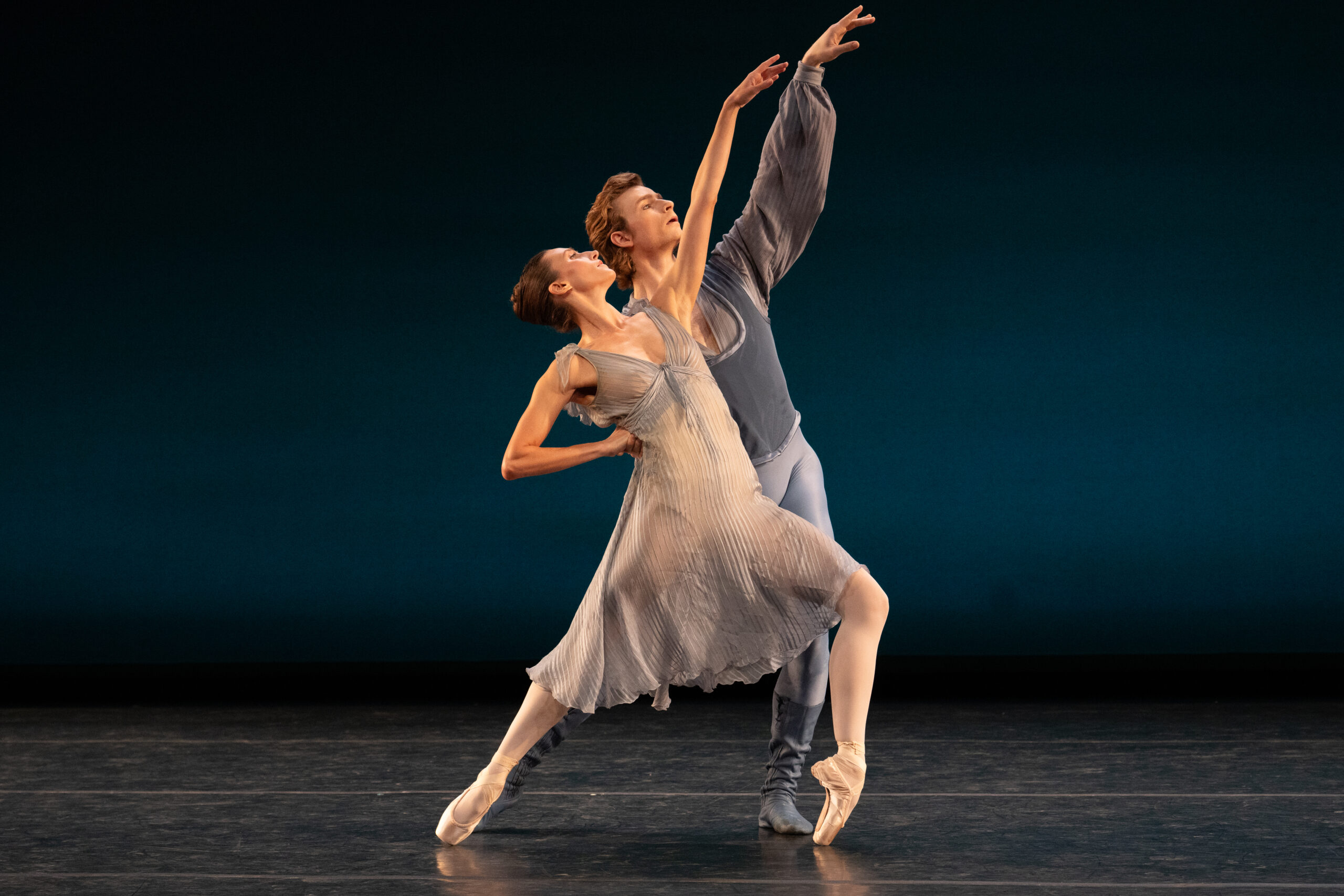
Program A: The Works
Four Bagatelles — featuring Emma Von Enck and David Gabriel.
Concertino — featuring Taylor Stanley and Dominika Afanasenkov, with additional performers.
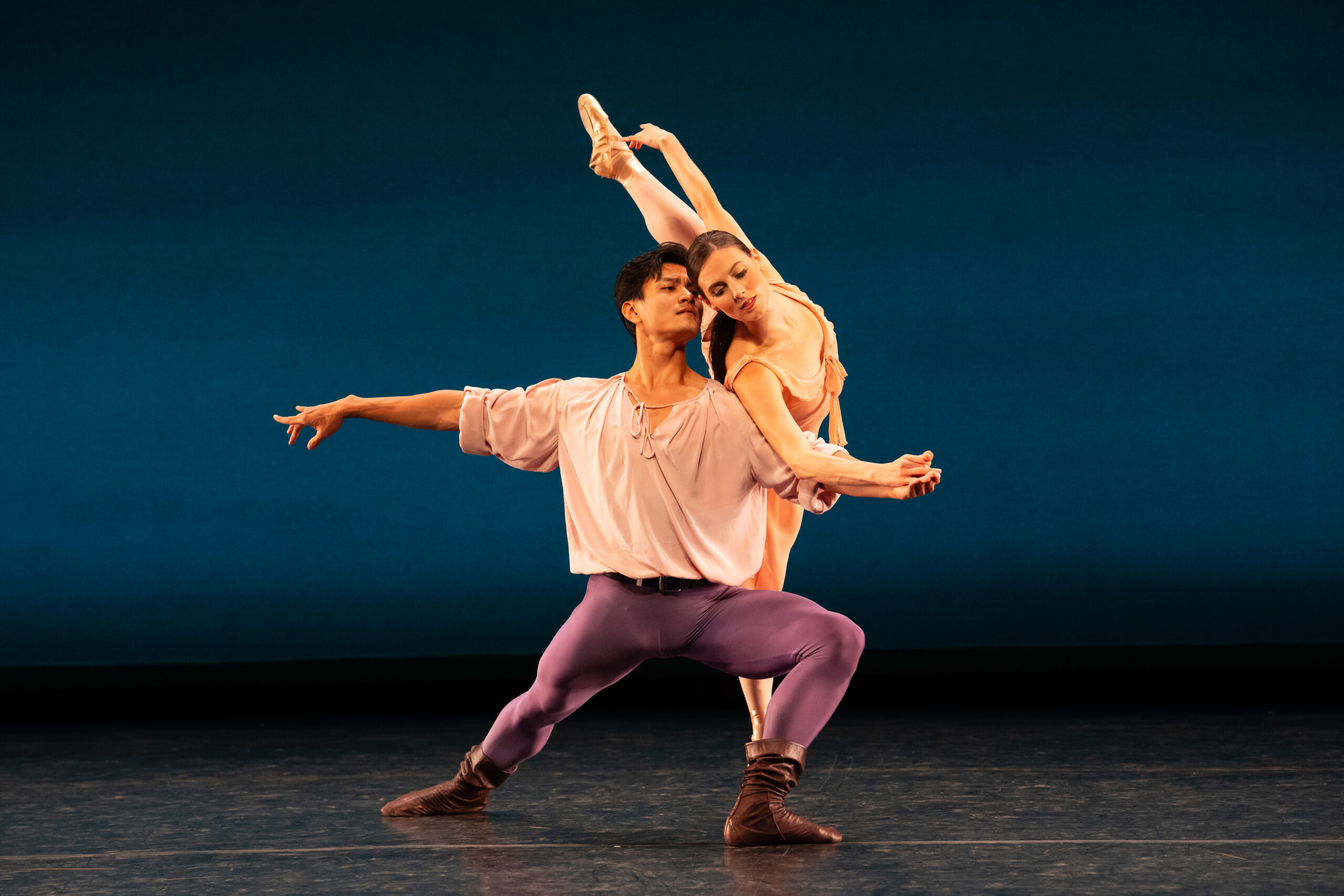
Other Dances — featuring Tiler Peck and Roman Mejia.
In the Night — a ballet set to Chopin nocturnes, featuring three couples.
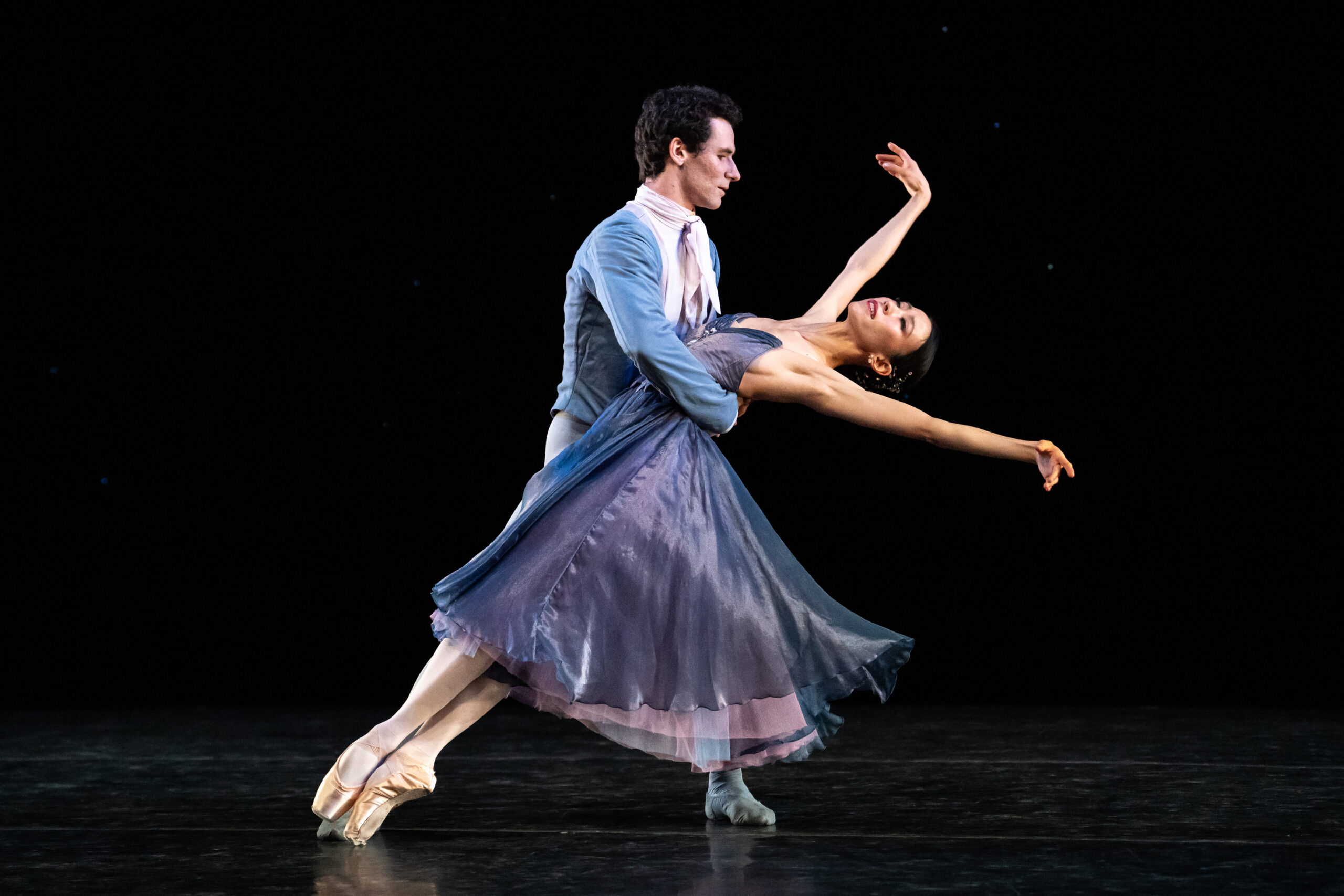
Four Bagatelles — Emma Von Enck and David Gabriel
A compact, finely crafted work that rewarded attention to musical detail (set to pieces by Beethoven) and the interplay between its dancers. Robbins’ choreography balanced classical precision with spontaneity, allowing subtle shifts in timing, gesture and partnership to carry the interest. Von Enck and Gabriel brought clarity and polish to choreography that depended on subtlety rather than spectacle.
Concertino —Dominika Afanasenkov, Taylor Stanley, and additional performers & musicians
Set to Igor Stravinsky’s sharp-edged, rhythmically intricate music, Concertino showcased Jerome Robbins’ fascination with precision, structure and unexpected shifts in movement. Stravinsky’s angular rhythms and modernist energy gave the choreography a crisp, propulsive quality, demanding exact timing and close coordination from the dancers. At the same time, Robbins infused the work with theatrical playfulness and room for individual personality. Stanley’s expressive presence and Afanasenkov’s poise gave the work a compelling center, while the ensemble added texture and energy, while the additional dancers strengthened its ensemble dynamics. The result was an intellectually engaging, rhythm-driven ballet in which music and movement seemed locked in a lively, sometimes playful exchange.
Other Dances — Tiler Peck and Roman Mejia
One of the program’s highlights, this intimate duet paired Chopin’s music with choreography that was both technically demanding and deceptively relaxed. Robbins created a sophisticated conversation between music and movement, combining intricate footwork, elegant partnering and moments of playful ease. Peck’s brilliant musicality and Mejia’s athletic precision made the dancing feel spontaneous, even when the technique was truly formidable. A highlight of the evening, their partnership captured the work’s distinctive blend of virtuosity, wit and romantic elegance.
In the Night — Three couples
Set to Chopin’s nocturnes, In the Night emerged as a lyrical, emotionally nuanced exploration of romantic love. Three couples embodied different relationships, moving from tenderness and intimacy to uncertainty, tension and reconciliation. Chopin’s expressive piano music supplied an atmosphere of reflection and emotional complexity, while Robbins’ refined choreography explored the feelings beneath the surface of each encounter. Expressive partnering and quiet gestures conveyed what words could not. The ballet’s beauty lay in its restraint, inviting the audience to observe the complexities of human relationships beneath the elegance.
Together, these four works revealed Robbins’ remarkable range, from the crisp, rhythm-driven energy of Concertino to the intimate emotional world of In the Night. Music was central to the achievement: rather than merely accompanying the dancing, it shaped the movement’s timing, mood and expressive depth. The evening demonstrated why Robbins’ choreography remains so rewarding—not simply for its exacting technique, but for its penetrating observations of human character.
About the artists:
Ballet superstar Tiler Peck has built a distinguished career as a principal dancer with New York City Ballet while developing a substantial following beyond the traditional ballet world. In fact, Peck’s pandemic-era Turn It Out with Tiler livestream classes attracted as many as 15,000 participants a day, and revealed her ability to connect with dancers and audiences far beyond the traditional ballet world.
A gifted dancer and choreographer, Peck brings exceptional precision, musicality and expressive intelligence to the stage; all qualities that make her a compelling interpreter of Jerome Robbins, himself considered one of the defining choreographers of American ballet. At the Ahmanson Theatre, Ballet Festival: Jerome Robbins offered audiences an opportunity to appreciate Robbins’ distinctive ability to combine classical technique with theatrical storytelling, psychological insight all with an unmistakably American sensibility.
Jerome Robbins’ choreography is deceptively difficult. Its apparent naturalness can conceal extraordinary technical demands, while its wit and dramatic clarity depend on dancers who understand not only the steps but also the personalities, rhythms and relationships behind them.
Raised in Bakersfield, California, Tiler Peck began studying ballet alongside tap, jazz and hip-hop. She appeared on Broadway as a child before joining New York City Ballet as a teenager, developing a range of movement and performance skills that extends beyond classical ballet’s traditional boundaries. That breadth is an asset in approaching Robbins, whose choreography frequently draws energy from everyday gestures, popular rhythms and the expressive possibilities of the individual dancer.
Robbins was a master of contrasts. His work could be playful and sharply comic one moment, then unexpectedly intimate or emotionally revealing the next. He understood that a tilt of the head, a hesitation or a glance between dancers could communicate as much as a technically dazzling sequence. His choreography gives performers room to be individuals while remaining part of a carefully constructed theatrical whole. The result is ballet that feels alive to human behavior rather than confined to formal display.
Peck’s strongest qualities – her clarity, quickness and instinctive sense of rhythm – make her an engaging presence in this world. She possesses the technical command to negotiate demanding movement without sacrificing its personality. Just as importantly, she understands that virtuosity is most satisfying when it appears to arise naturally from the music and the dramatic situation.
Ultimately, Ballet Festival: Jerome Robbins celebrated a choreographer who understood that ballet could be both rigorously classical and unmistakably human. Peck continues to bring freshness and vitality to that vision. The evening’s lasting impression was of an artistic conversation across generations, with Robbins’ inventive theatrical language meeting the precision, musicality and vitality of today’s dancers.
More information about the 2026-2027 season of Glorya Kaufman Presents Dance at The Music Center.
Tickets can be found here.

 Terry Morgan