


 Pauline Adamek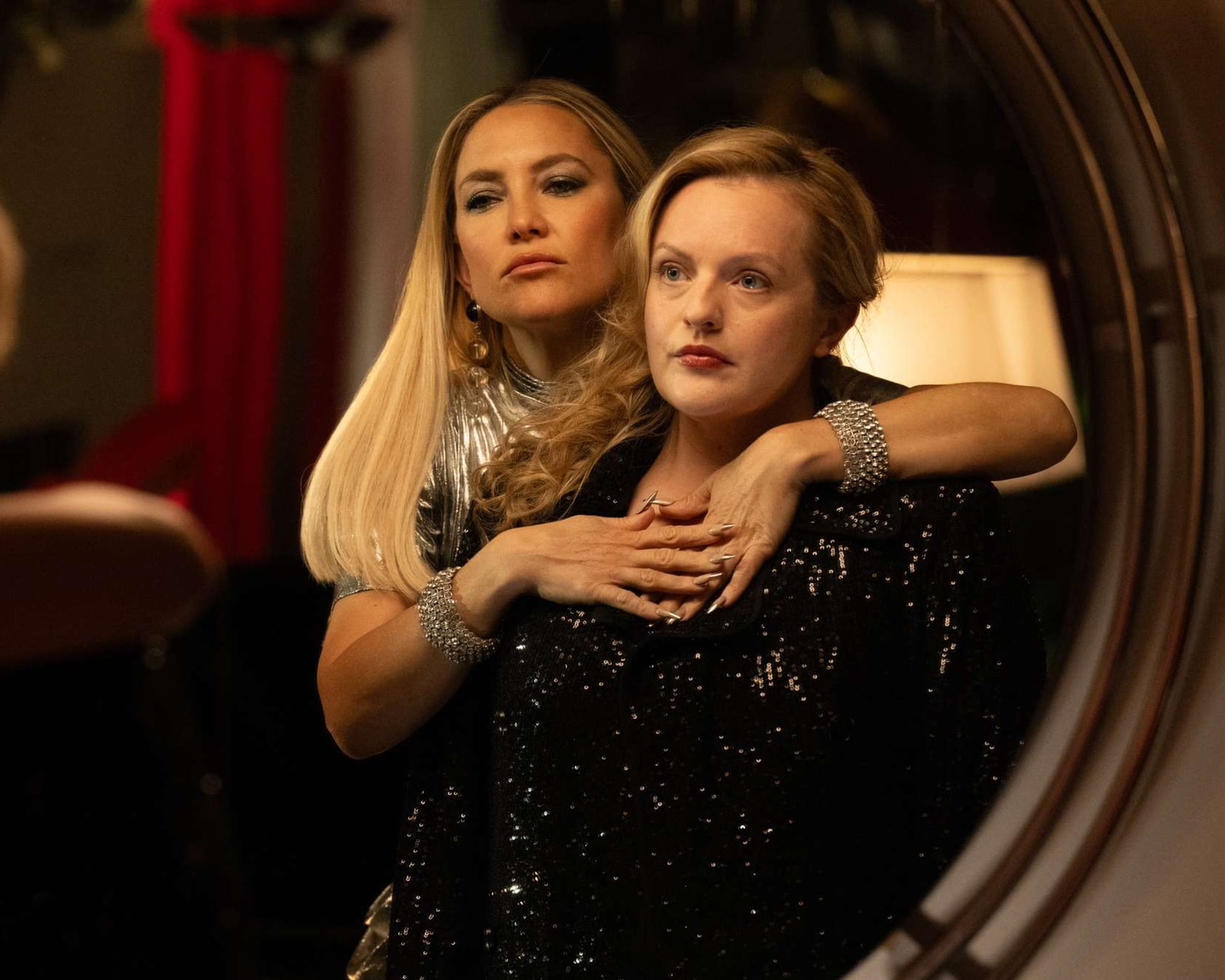
Max Minghella’s body horror The Shell emerges from the same vein as Coralie Fargeat’s The Substance. They each explore the specter of aging, of impossible beauty standards, and the fragility of female identity. In both films the central woman is offered a cruel choice: fade away, or sacrifice yourself for the promise of eternal youth. Of course, we saw Robert Zemeckis handle the same premise in 1992’s farcical Death Becomes Her, where eternal youth for Meryl Streep and Goldie Hawn came with hilariously grisly side effects. All three movies update the Faustian bargain legend for the age of influencer capitalism and self-optimization, turning the devil’s contract into medical transformation.
Above publicity photo: Kate Hudson and Elisabeth Moss in Shell. Photograph: Republic.
Elisabeth Moss plays Samantha Lake, a once-successful actress struggling to stay relevant. The former star of the popular sitcom “Hannah Has a Heart” (about a girl with a talking heart), she’s now in her forties and infuriatingly losing age-appropriate roles to pretty twenty-something “influencers.” Urged by her agents to try the Shell Clinic, Samantha investigates the futuristic wellness empire run by the charismatic Zoe Shannon.
It’s a neat bit of casting to have Kate Hudson (Goldie Hawn’s daughter) play Zoe, evoking Mephistopheles as she offers transformation without divulging the cost. Claiming to be 68 (she’s actually 46), Hudson’s Zoe is all smiles and menace, a guru in stiletto heels promising transcendence. The procedure is billed as a “one-treatment wonder” and vaguely described as “enzyme therapy.” The treatment doesn’t just halt the aging process, it facilitates cellular repair. Each new skin cycle, Zoe explains, leaves you taller, smoother, more perfect. But the details are sketchy…
Set in a high-tech near-future of self-driving cars, calorie-modified bananas, and wristwatch phones, this is an age when every human flaw seems solvable if you can afford the right treatment.
Samantha is enthralled. Her career revives, her confidence blooms, and she and Zoe become besties. Yet something is definitely off. Zoe’s discarded skin turns up as haute cuisine at one of Shell’s banquets, and no one bats an eye. Nasty-looking black lesions start to appear before Samantha’s next “moulting” stage. “We’ll clean it up,” Zoe assures her, and the movie’s mood shifts from sci-fi wellness fantasy toward horror. Given that the film begins with a gory teaser and ends in full splattstick chaos, it’s apparent Minghella wanted to bookend the story with blood and spectacle.
For the most part, Minghella’s directorial approach feels perfunctory, uneven and the production values appear low. Uninspired cinematography, poor lighting and cheap scenic and costume design fail to elevate the serviceable formulaic material, although there is some use of subtle and therefore excellent CGI effects.
Moss is fantastic as Samantha, delivering a performance of awkwardness and goofy girlishness, suggesting that her character has barely matured after her first flush of TV fame.
The dialogue lacks wit and only briefly comes alive when our besties start sparring as it all falls apart. Finally revealing her darker edge, Zoe delivers a sharp monologue about how women are devalued as they age, claiming that her technology allows women to “maintain our sexual power and live without judgment.” It’s a hint at the sharper, darker satire that Jack Stanley’s screenplay might have provided.
But then the story devolves into campy excess, complete with a mute, red-gloved and unconvincing henchman and a gory finale that feels like an outtake from a low-budget horror comedy.
Still, it’s enjoyable and entertaining viewing. Shell a modern parable about vanity and the price of self-improvement, a sleek reworking of the old Faustian bargain in which a woman trades her soul (rather, her skin) for beauty, relevance, and immortality. While the premise is serviceable, the execution is lacking: a film about surface polish that can’t quite find any of its own.
This review was first published on Filmink.


 Terry Morgan