 Pauline Adamek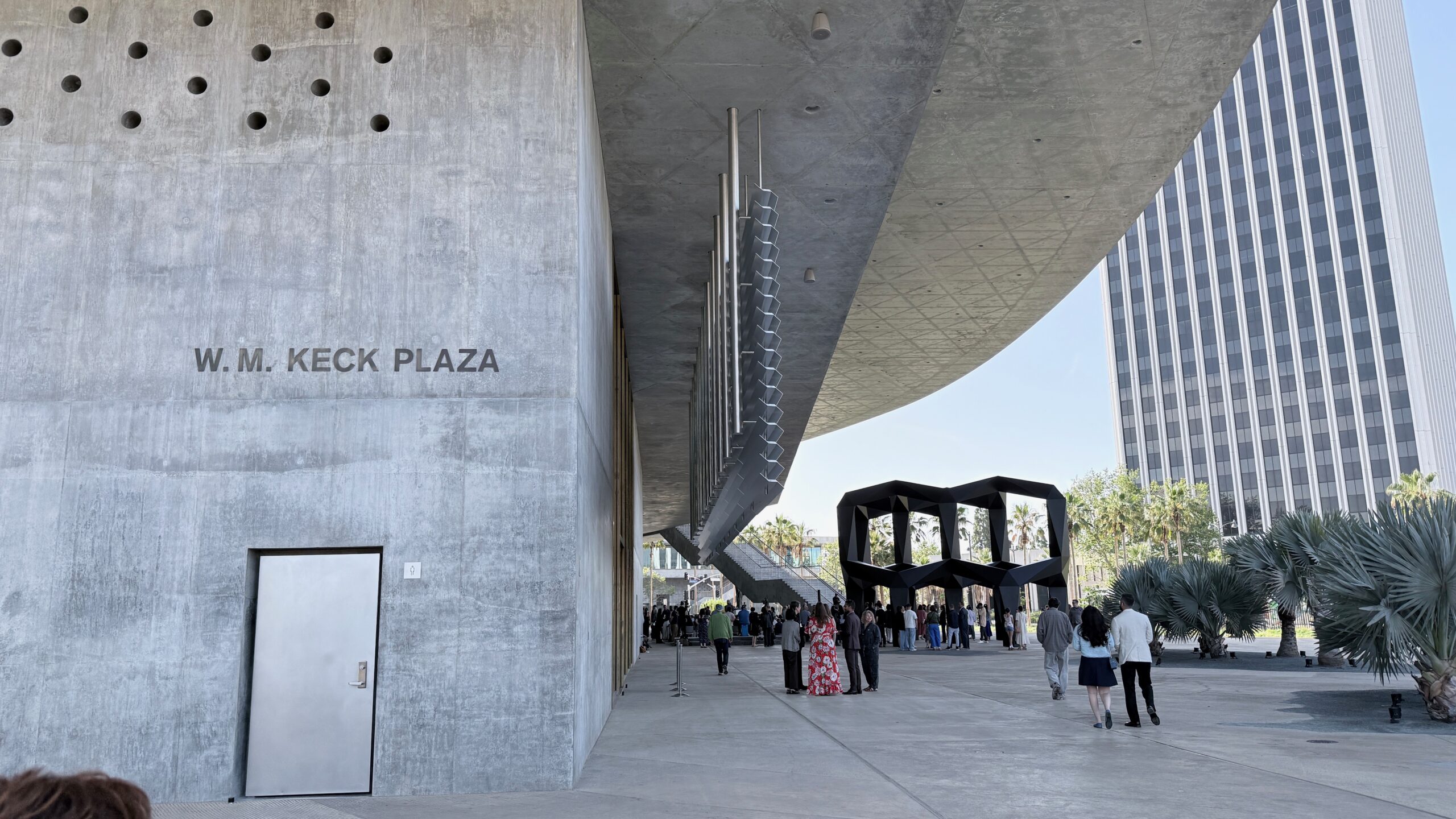
Thousands of hands built this place.
Opening to the public on May 4th the LACMA’s David Geffen Galleries were designed by Swiss architect Peter Zumthor and twenty years in the making. This grand new wing is both an architectural statement and a provocative declaration about what a museum should be in the 21st century.
The ambitious project was funded through a public-private partnership. Construction costs totaled about $724 million, including $125 million from Los Angeles County, with the rest raised through a campaign that is nearing $875 million.
This luxurious new wing replaces traditional gallery hierarchies with a single, sprawling, continuous structure that stretches across Wilshire Boulevard like a concrete canopy.
“LACMA is a museum of everything. We have art from all time and place and the 19th century. Conception of a museum is to divide everything into little pieces of knowledge and chronology and geography. But that’s not the way we live today. Today, we’re an integrated culture and ideas are mixed from around the world.” LACMA CEO Michael Govan speaking at the media preview.
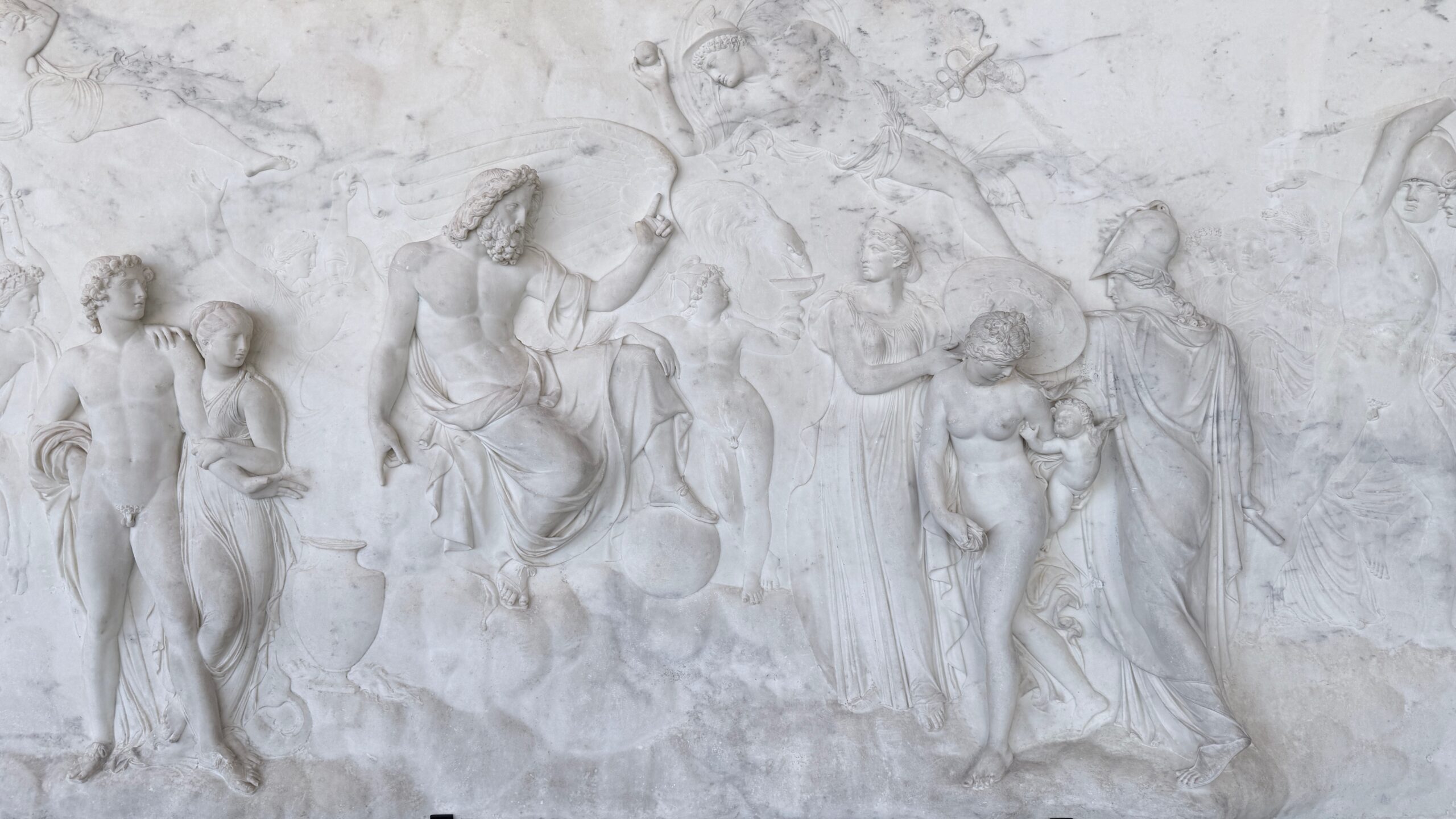
England, 1759-1798, active Rome
Judgment of Jupiter, 1786-87
Marble
Gift of Anna Bing Arnold.
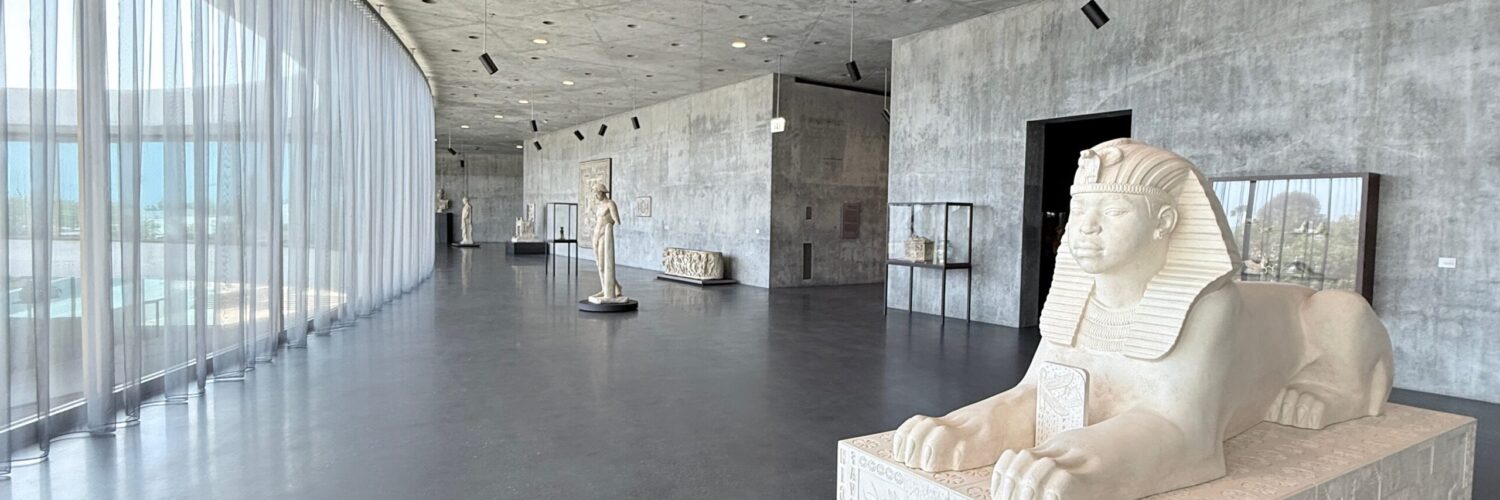
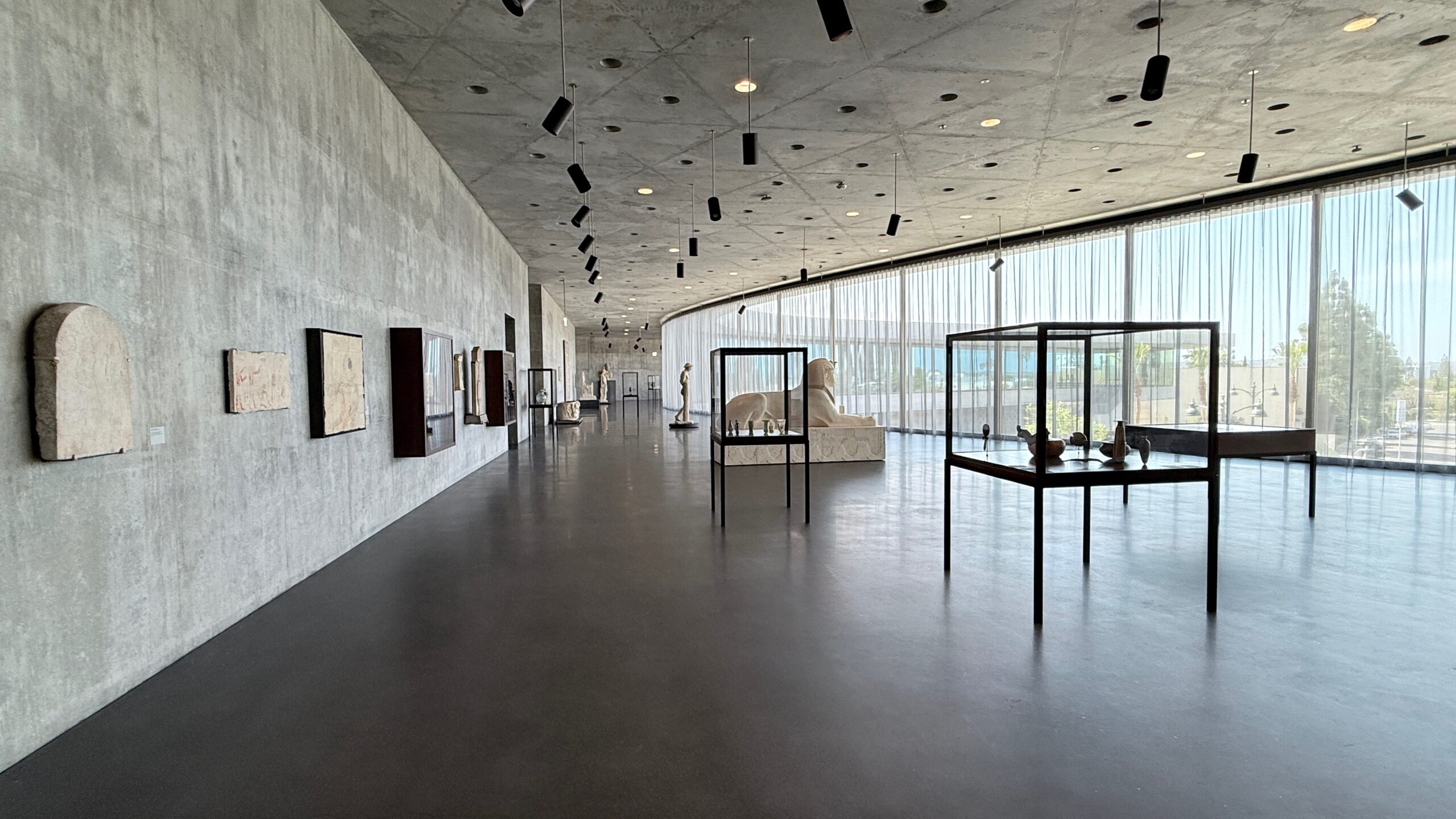
The building was designed by Pritzker Prize–winning Swiss architect Peter Zumthor. Made from raw architectural concrete, it features a sweeping, curvilinear form that spans the busy Wilshire Boulevard. The structure itself is elevated 30 feet above the ground on seven massive piers, each of which house either a café, restaurant, wine bar, theater, or an education center.
Engineered for longevity, the building sits on seismic base isolators that can shift up to five feet during an earthquake. LACMA Director Michael Govan has said he hopes the structure will endure for hundreds of years. Its concrete exterior is intended to weather naturally over time, with cracks and marks already becoming part of the building’s character.
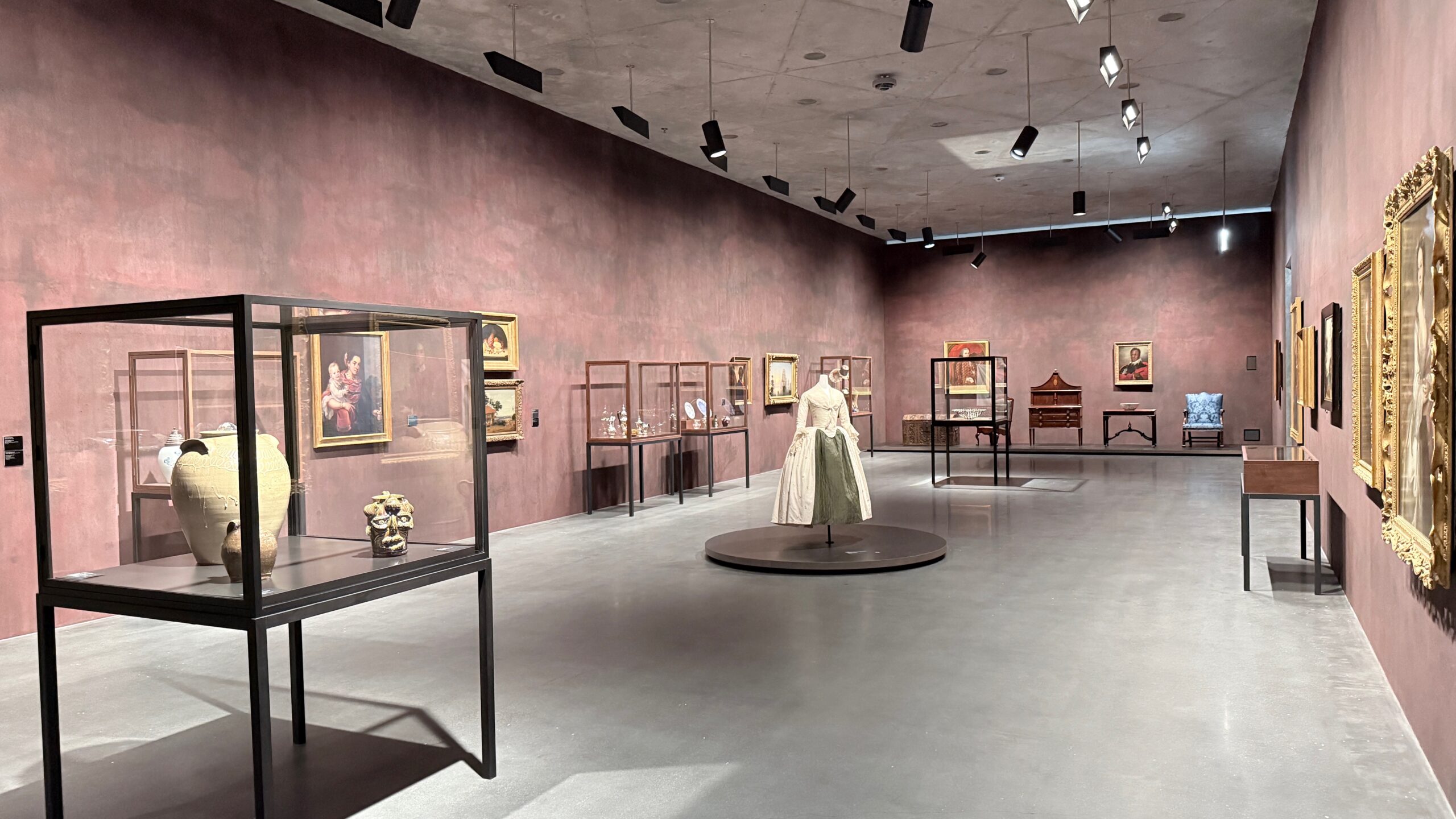
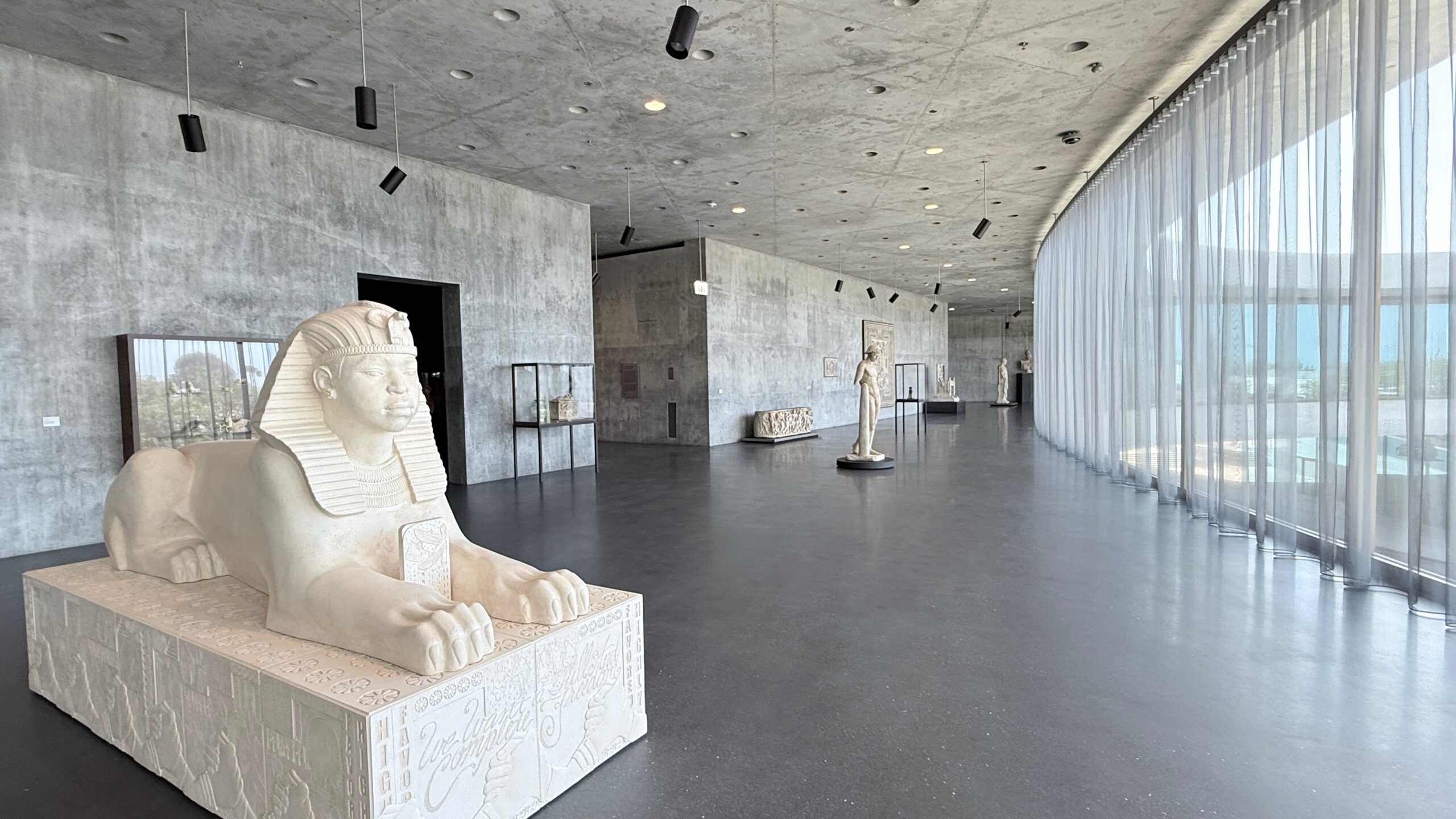
At its core is a rejection of the museum-as-grid plan. That ambition is embedded in both form and layout. The structure is one-level, monolithic, and continuous, with airy galleries and small rooms flowing into one another without offering a prescribed path for the visitor. Even the curatorial framework reinforces this idea by arranging the exhibits in conceptually-connected groups rather than organizing collections by nation or era. LACMA curators have clustered the artworks per oceans and zones of exchange, suggesting that cultural history is defined less by borders than by movement.
Critically, this idea is both the building’s strength and its challenge. On the one hand, the architecture succeeds in breaking down the rigidity of the traditional museum experience. On the other, it risks replacing clarity with disorientation. Even basic navigation can be difficult, but if you set out with a mindset of discovery and surrender to the flowing layout, the galleries will delight and surprise you at every turn.
“I love buildings with a strong presence—buildings that feel like they belong to the ground.
I thought about stone, excavations, ancient cultures, Gothic churches, and historic landscapes. Los Angeles itself is a place with a deeper history than we often remember.
“My goal was to create a building with a strong sense of place. We used a limited set of materials: concrete, stone, steel, and glass. The building is one continuous form, not broken into pieces.
“We also embraced imperfection. Cracks and irregularities are part of the building’s life. It is not about perfect surfaces, but about material presence and time. Craftsmanship was essential. Thousands of hands worked on this building. Much of what is built today is made in factories, but here, human work is visible.
“Nothing should be perfect; only nature or God is perfect. A building should carry traces of the people who made it. This is a building meant to endure, and to be experienced over generations.” Architect Peter Zumthor.
The material experience of the space intensifies this tension. The bold, brutalism of the weighty concrete is softened by the carefully selected pigment tints shift the atmosphere from industrial gray to more expressive environments: a deep red gallery, an inky charcoal room that “feels velvety,” and a striking blue space for Buddhist and Tibetan works.
The galleries are wrapped in glass and shaded by translucent, chromium-speckled curtains designed by Japanese textile artist Reiko Sudo. These filters protect the artwork from UV light while creating a shimmering effect and maintaining expansive views of the city.
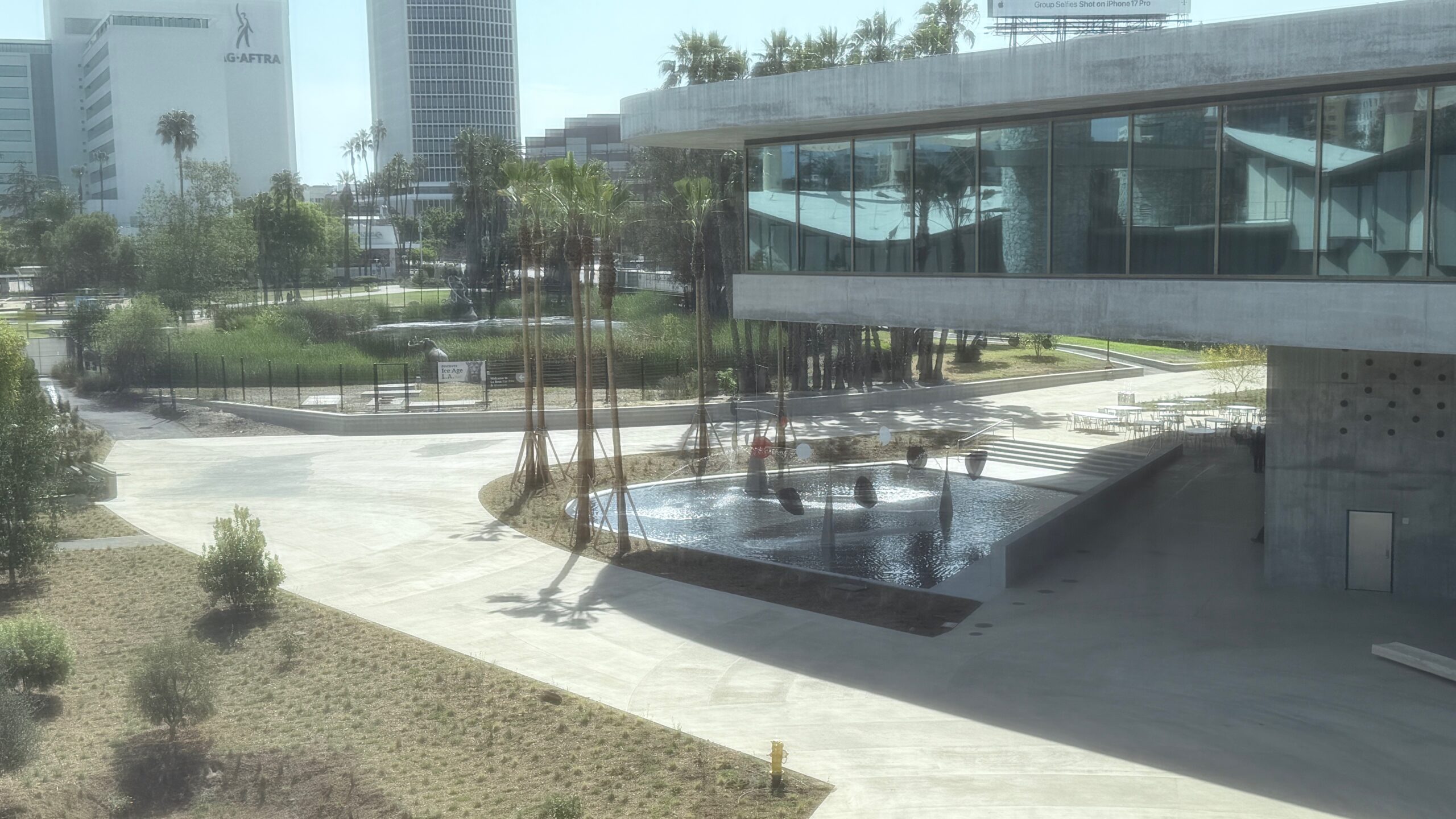
Those views include 3.5 acres of surrounding park space with newly commissioned public artworks, including Jeff Koons’ large-scale topiary sculpture Split-Rocker. Visitors can also see nearby landmarks such as the La Brea Tar Pits and Chris Burden’s Urban Light.
Inside, the museum offers about 110,000 square feet of exhibition space. The galleries are finished with tinted pigments applied through a custom process, creating three dominant tones: reddish black, ultramarine blue, and deep burgundy. The atmosphere and general lighting of the smaller exhibitions rooms is intentionally dim and moody, a departure from the stark white interiors typical of many museums, while the main passageways are drenched in natural though filtered sunlight.
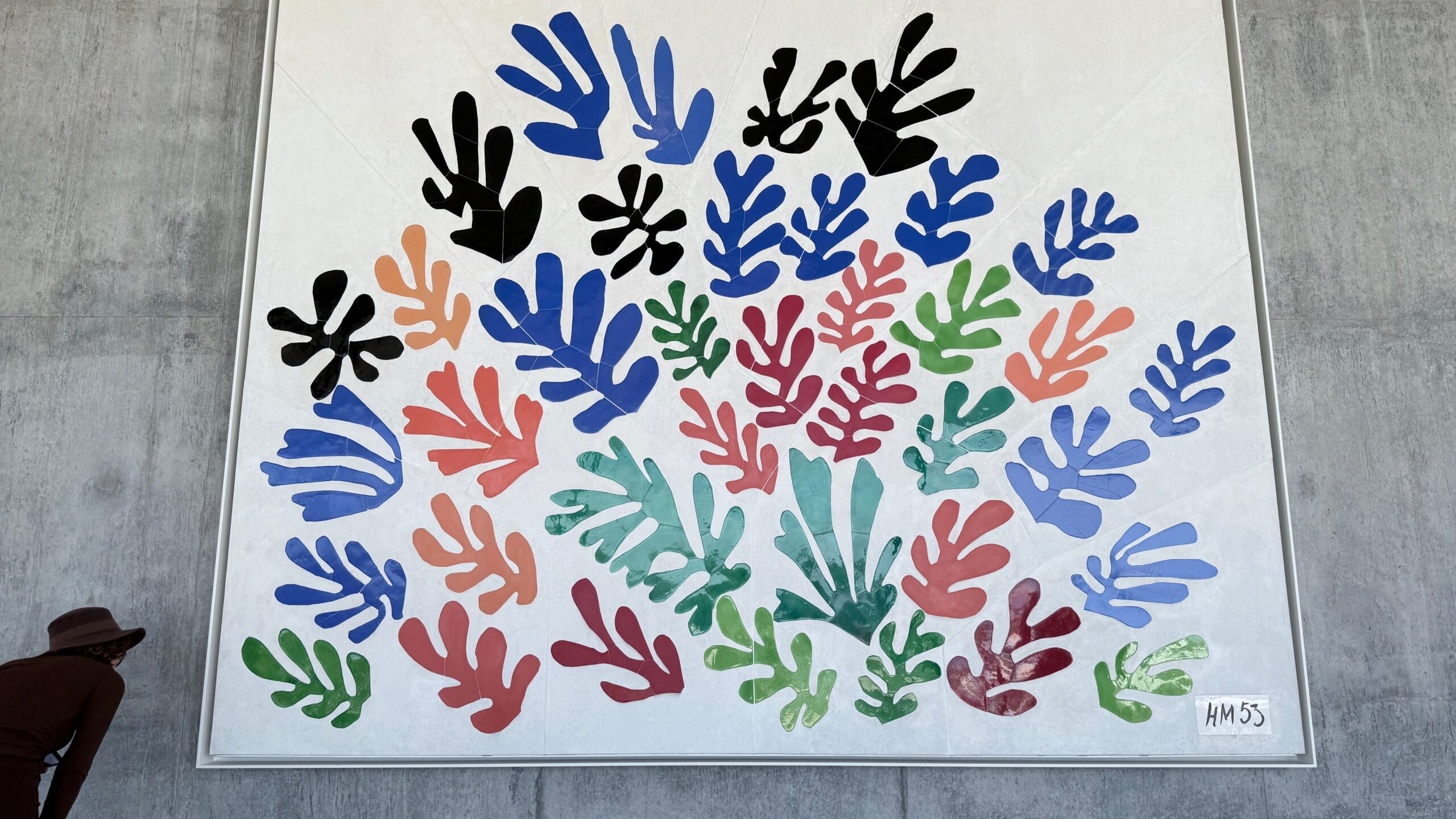
La Gerbe (The Sheaf) is one of Henri Matisse’s final works
and his only West Coast commission.
More than 2,000 works from LACMA’s collection of approximately 150,000 objects are on display, spanning modern art, global antiquities, costumes, furniture, and textiles.
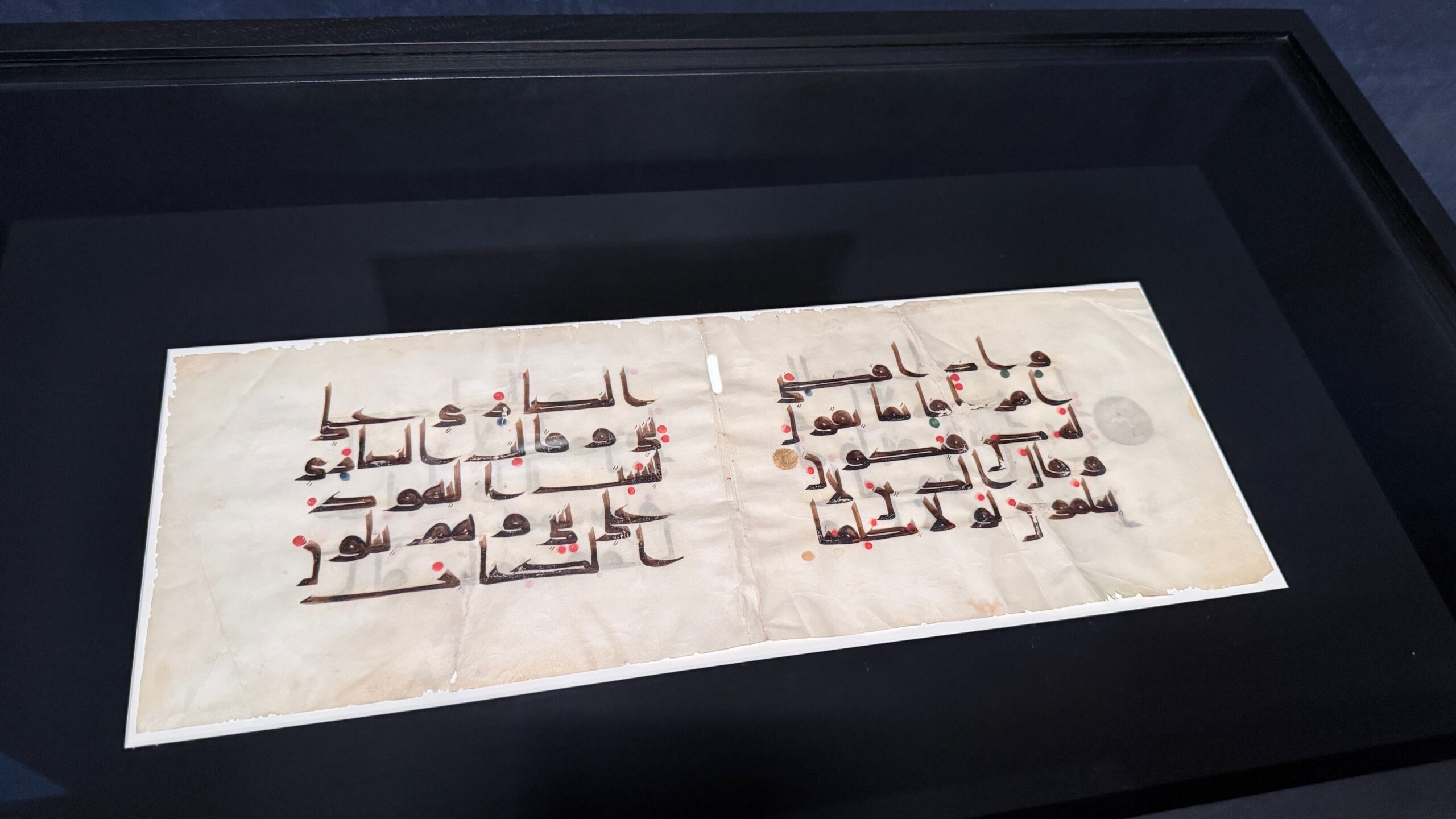
of the Quran, 9th century
Iraq
Ink, colors, and gold on parchment
The Madina Collection of Islamic Art,
gift of Camilla Chandler Frost.
The building itself and its curatorial approach have drawn some criticism, particularly for abandoning chronological organization in favor of thematic groupings. Whether this new model succeeds remains to be seen. Ultimately, its impact will depend on how visitors experience and navigate this ambitious new cultural space. For this critic it is a bold but successful choice that emphasizes inclusion over hierarchy, which is always welcome.
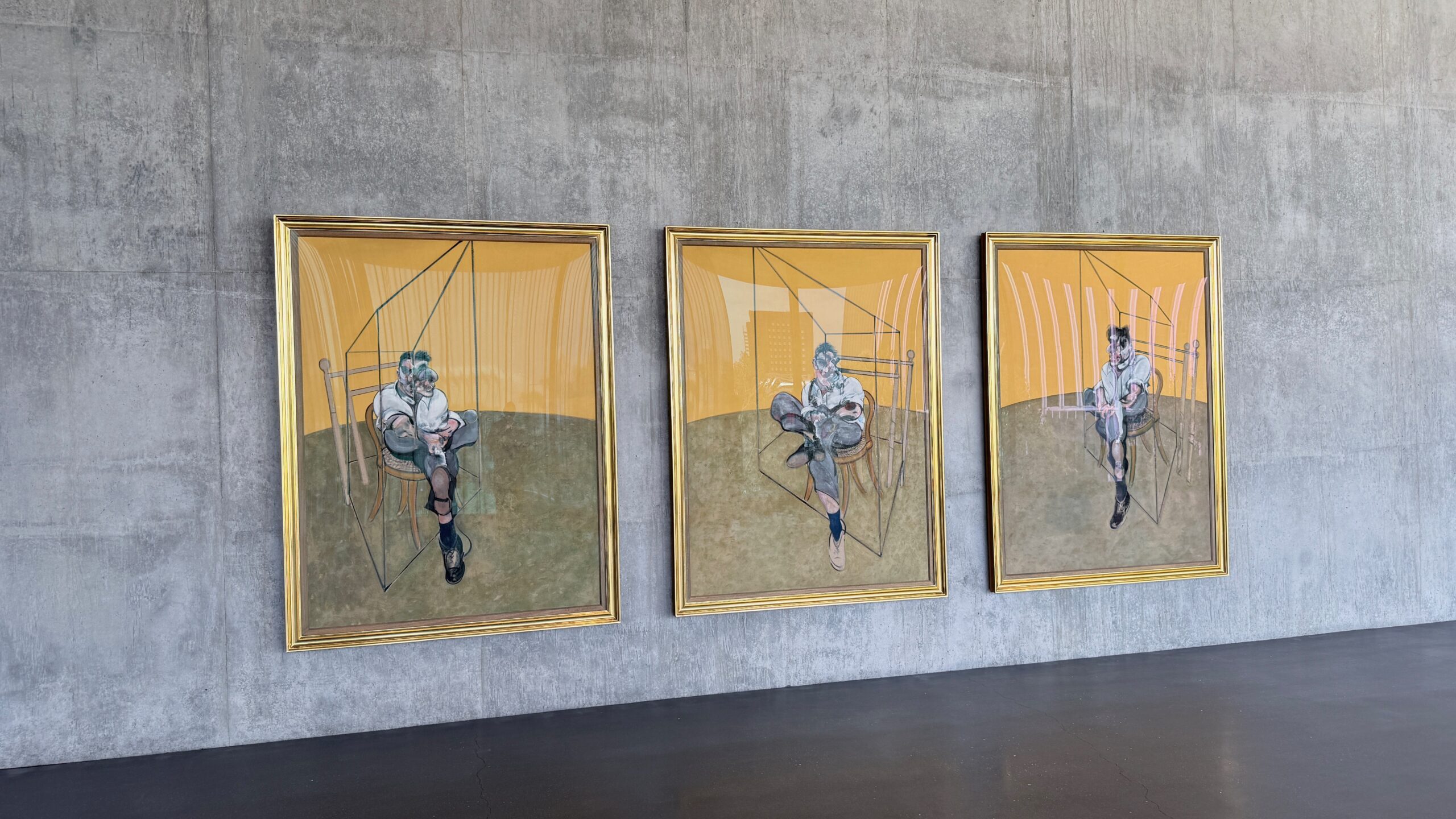
Ireland. 1909-1992. active England
Three Studies of Lucian Freud, 1969
Oil on canvas
Gift of Elaine P. Wynn.
Whereas the old LACMA campus felt insular and exclusive, this new design provides open vistas of the nearby La Brea Tar Pits, Hancock Park, and surrounding cultural institutions including the Academy Museum and the Petersen Automotive Museum.
The new wing attempts, at least spatially, to dissolve the boundaries between museum and city. Outside, however, the vision remains unresolved with an incomplete landscape dominated by hardscape and palm trees.
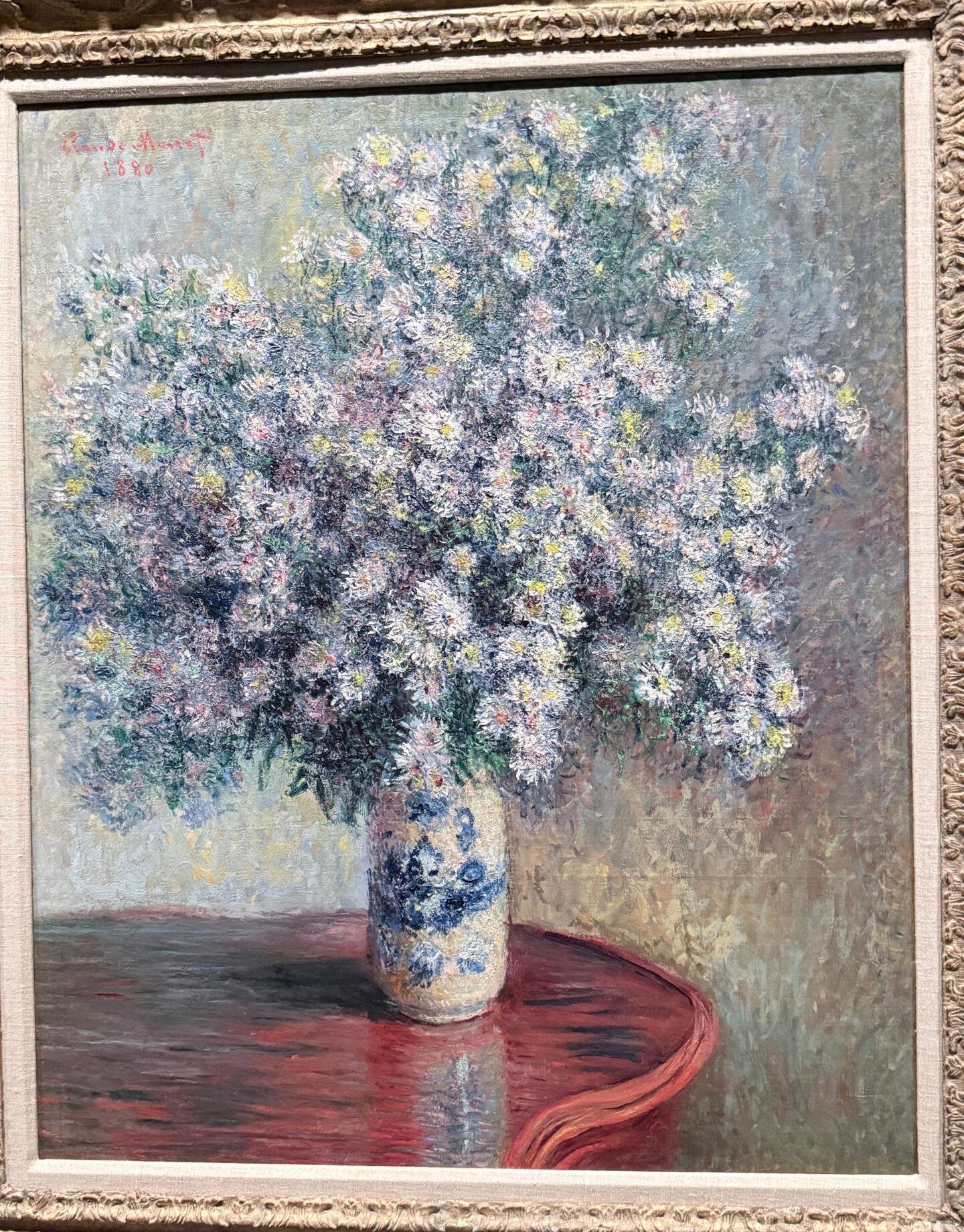
France, 1840-1926
Asters, 1880
Oil on canvas
Gift of A. Jerrold Perenchio

 Terry Morgan