
 Pauline Adamek
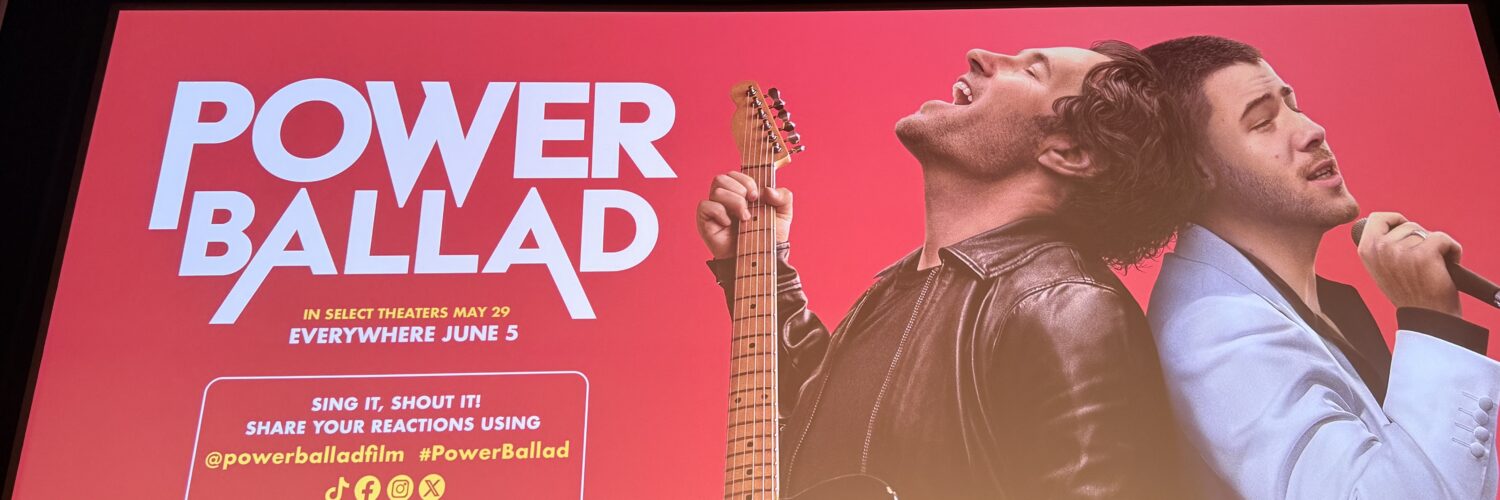
In filmmaker John Carney’s new dramedy Power Ballad a struggling songwriter and a fading pop star (Paul Rudd and Nick Jonas) turn a chance meeting into a runaway hit song – but whose song is it really?
Writer/director John Carney is best known for making emotionally grounded, music-centered films that blend realism, romance, and original songwriting. He first gained major international attention with the Irish indie film Once, a low-budget musical drama about two struggling musicians in Dublin. The film became a breakout hit, won the Academy Award for Best Original Song (“Falling Slowly”), and established his signature style: intimate storytelling where music emerges naturally from character rather than spectacle.
Carney later expanded on that approach with films such as Begin Again, a story about a disgraced music executive and a songwriter collaborating to make an album across New York City, starring Keira Knightley and Mark Ruffalo – and Sing Street, a coming-of-age story set in 1980s Dublin about a teenager starting a band to escape his circumstances.
Carney’s latest film is Power Ballad, a warmly appealing music-industry dramedy that centers around an American musician in Dublin and uses the story of a stolen song to explore bigger questions about ambition, creative ownership, success, and second chances. The film premiered at the SXSW Film & TV Festival in 2026 and is now being released by Lionsgate.
Featuring actor / musician Nick Jonas as Danny and popular comedy actor Paul Rudd as Rick, the sweet film combines Carney’s trademark blend of heartfelt storytelling and memorable music with strong performances from our compatible two leads. Rather than turning the music business into an evil adversity, the film focuses on the complicated human relationships behind creativity, examining who gets credit, who gets rewarded, and what people are willing to sacrifice for recognition.
What makes this charming film particularly effective is its emotional generosity. It manages to be crowd-pleasing without feeling cynical, funny without undercutting its sincerity, and thoughtful without becoming too heavy-handed. The father-daughter storyline between Rudd’s character Rick and his daughter Aja (played well by teenager Beth Fallon) provides a nice emotional core, while the music industry backdrop gives the film contemporary relevance in an era increasingly concerned with authorship, inspiration, and AI-generated creativity.
Like Carney’s earlier films, Power Ballad leaves audiences with a few questions rather than tidy answers. Its ending is upbeat yet somewhat open-ended, inviting conversation long after the credits roll.
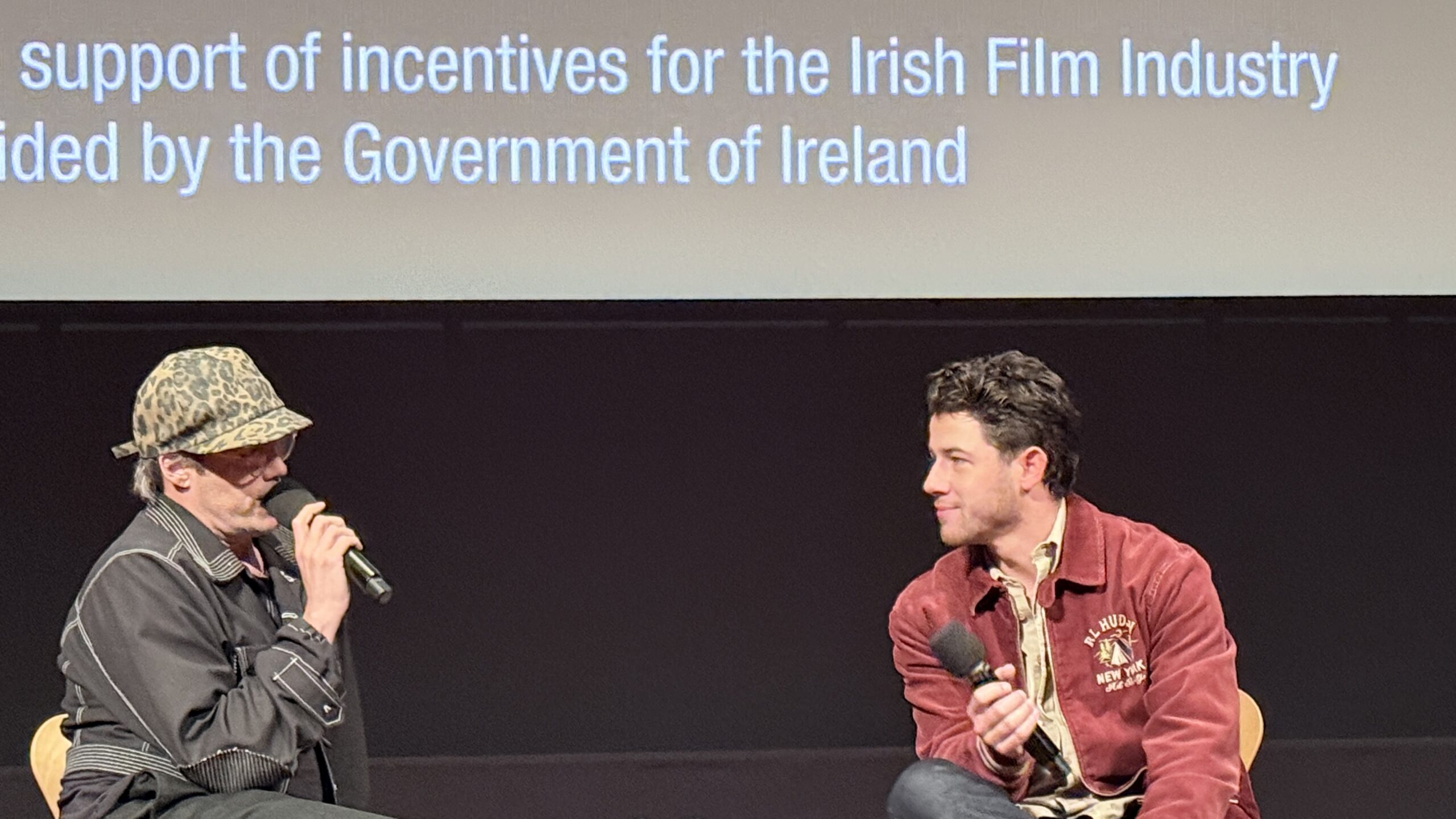
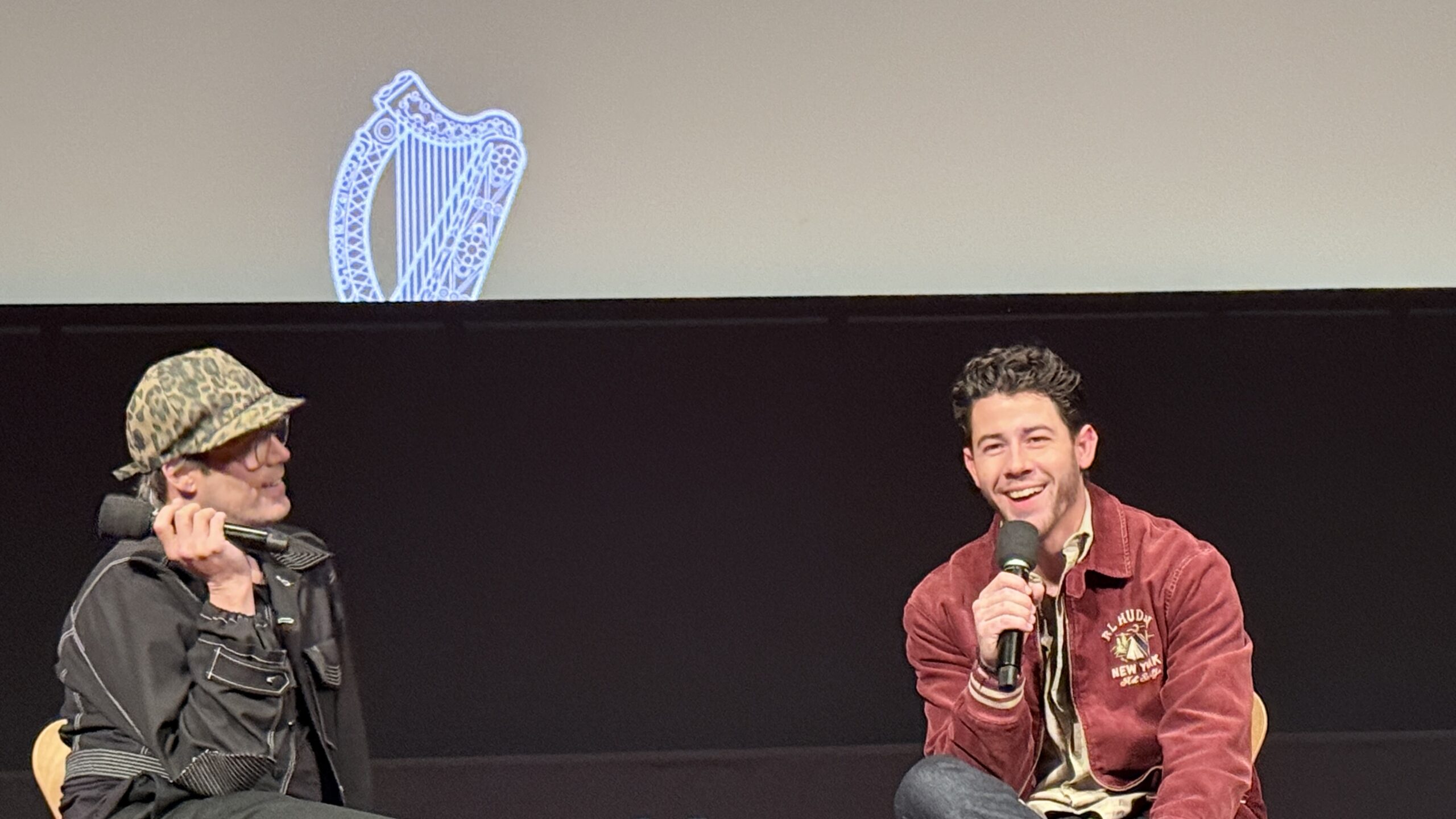
Nick Jonas on Power Ballad, Creative Ownership, Fatherhood, and the Search for Success
Nick Jonas believes Power Ballad is ultimately about a question that haunts many creative people: what happens when you finally get everything you’ve ever wanted? The gentle comedy follows two men pursuing success from different angles. One must live with the consequences of a decision he regrets; the other achieves the hit song he’s been seeking. Yet neither escapes the reality that every ambition comes with a price.
Explains Jonas, “For [my character] Danny, it’s about doing something he shouldn’t have done and living with those consequences for the rest of his life. For Rick, he gets what he wants in the end – a hit song – but at what cost?”
That tension was one of the elements that drew Jonas to the project. So, too, was the opportunity to work alongside Paul Rudd, whose musical abilities surprised him from the very first day on set.
“I was so excited to work with Paul Rudd,” Jonas says. “We all know him as the brilliant actor he is, but on the first day of shooting, he pulled out a guitar and started playing. I was blown away. If I may say so, he’s singing his ass off in this movie.”
The production schedule was designed so that the actors’ relationship developed alongside that their characters, creating a natural chemistry that Jonas says informed the film’s central partnership. Adds Jonas, “The first scene we filmed was the one where we’re writing the song together and getting to know each other. The schedule was set up perfectly so we were actually getting to know each other in real time. He pulled out a guitar between takes and started playing. I was blown away.”
Revisiting Questions About Reinvention
Although Danny’s story differs significantly from his own, Jonas found himself relating to many of the character’s insecurities and ambitions. Reflecting on the period following the Jonas Brothers’ split, when he began pursuing a solo career, Jonas recalls wrestling with similar questions about identity, relevance, and whether success could be rebuilt after it seemed to disappear.
“I was asking myself many of the same questions Danny asks himself,” he says. “Can I do this again? Can I climb that mountain again? Can I reach the peak one more time?”
The answer, he discovered, lay in collaboration.
“What I was fortunate enough to realize is that through great collaboration, meaning real collaboration, those peaks can become resting places before the next climb.”
That perspective became particularly meaningful while making Power Ballad, a film rooted in creative partnerships and the unpredictable ways inspiration emerges.
A Film About Ownership in the Modern Age
One of the movie’s most compelling ideas revolves around authorship and who gets to claim ownership over creative work. Jonas acknowledges that every songwriter understands the complexity of that conversation.
“There are only so many notes on a keyboard,” he observes. “There are only so many combinations available. Inspiration comes from everywhere.”
The film explores what happens when influence, collaboration, and originality begin to overlap, questions that feel increasingly relevant across music, film, television, and other creative industries.
“What fascinated me about this film is that it asks a very timely question: What does ownership of an idea actually mean today?”
For Jonas, that’s a discussion that extends well beyond the music business.
Learning From John Carney’s Musical Approach
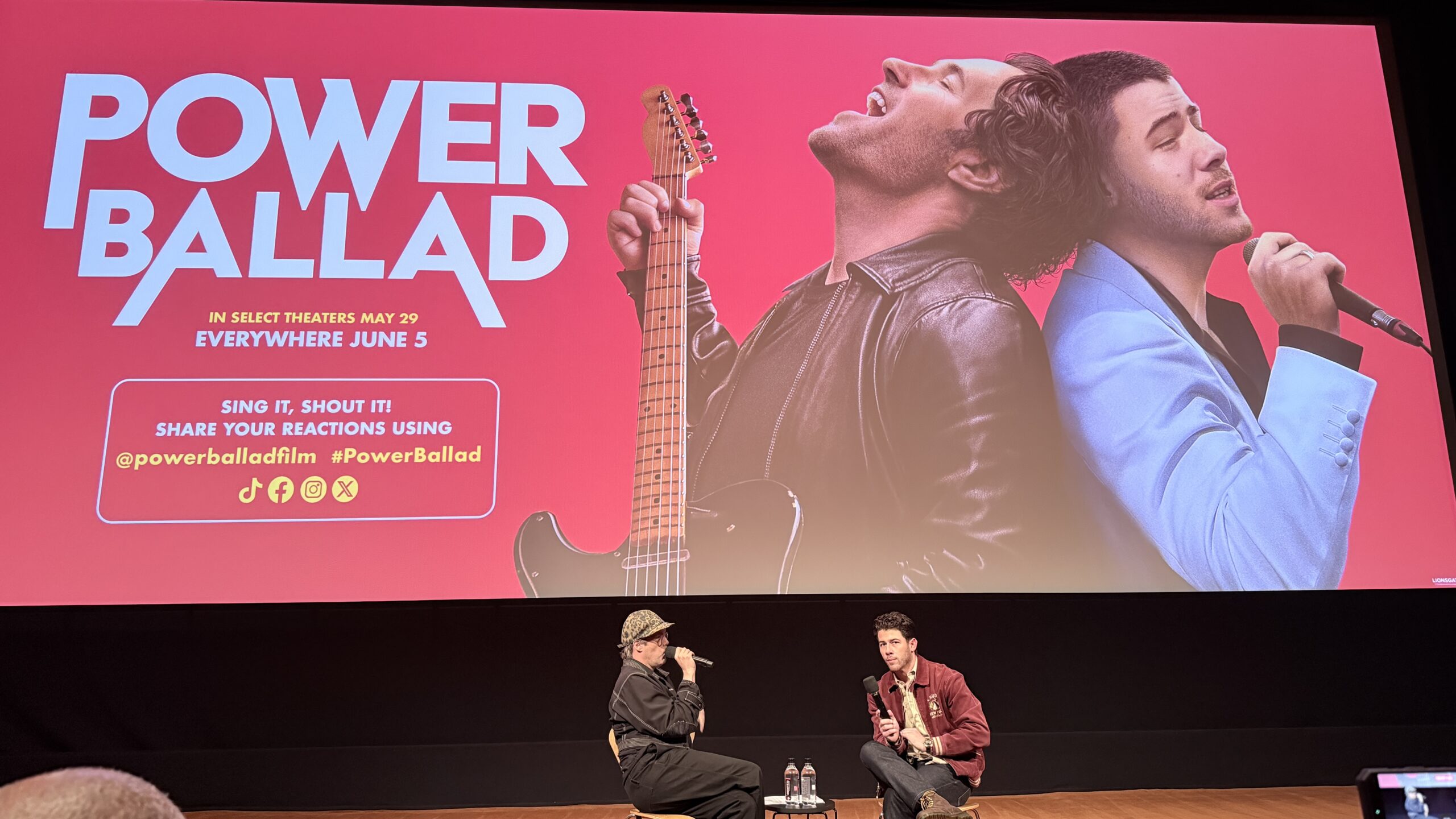
Much of the film’s authenticity comes from writer-director John Carney, whose background as a musician shaped the filmmaking process.
“The great thing about John is that he’s a musician, and he makes films like a musician,” Jonas enthuses.
Rather than forcing scenes to work, Carney approached filmmaking with the same flexibility found in a songwriting session.
“If a line isn’t working, he doesn’t force it. He says, ‘Let’s throw it out and try something else.’”
Jonas compares the process to recording vocals, where multiple takes are explored before finding the version that best captures the intended emotion. He was also mindful of avoiding simplistic portrayals of the music industry.
“I didn’t want it to feel like, ‘The music industry is evil,’ because it’s not,” he says. “A lot of good has come into all of our lives through this industry.”
Instead, he believes the film succeeds because it remains focused on people rather than systems.
“This is, ultimately, a story about a guy who just needs a break.”
How Fatherhood Changed His Perspective
Fatherhood also shaped Jonas’ connection to the material in unexpected ways.
“If I’d read this script before having a child, I would have played the role differently,” he opines.
Having a daughter, Jonas explains, fundamentally altered how he sees the world and expanded his emotional range as a performer.
“Having a child gives you access to a different emotional depth because you start seeing the world through their eyes.”
The everyday experience of answering a child’s questions has become a lesson in empathy and imagination.
“They ask questions like, ‘Why is glass clear?’ and suddenly you’re trying to explain something you’ve never really thought about yourself.”
That shift in perspective informed many of the film’s emotional beats, particularly its exploration of family, belief, and the desire to be seen.
Success Beyond the Charts
The film also prompted Jonas to reflect on how his own definition of success has evolved.
“The way success is measured in music has changed dramatically over the last decade,” he says.
Rather than obsessing over chart positions, he now focuses on creating work that connects with listeners.
“These days, I mostly focus on creating things that might impact someone’s life. Once a song is released, it belongs to the audience.”
That philosophy mirrors one of Power Ballad’s central themes: the tension between commercial success and personal fulfillment.
Why Shared Experiences Still Matter
At a time when entertainment is increasingly consumed alone and on demand, Jonas remains passionate about the communal experience of movies and live music.
“The shared experience of being moved by something – a song, a film, a play – is unlike anything else.”
He points to the isolation of modern life, where so much time is spent staring at screens.
“We spend so much time staring at our phones and computers. It’s easy to become isolated.”
For Jonas, the enduring appeal of movie theaters comes from their ability to reconnect people to one another.
“It goes back to sitting around a fire, telling stories, singing songs, and sharing experiences.”
Whether audiences are watching an intimate independent film or a major blockbuster, he believes there is lasting value in experiencing stories together.
“Ultimately, it’s healthy for people to gather, share an experience, and disconnect from everyday life for a couple of hours,” he says. “That’s what art is for.”
In essence, Power Ballad is a heartfelt, smart, and endearing film that understands both the joy and the complications of making art.

 Terry Morgan