

 Pauline Adamek
‘Love letter to undocumented, Indigenous, and trans people’: Poet féi iká shumarí celebrates launch of new essay collection CHABÓCHI DOLL
By Thomas Emick
On Thursday, July 9, poet féi iká shumarí celebrated the launch of CHABÓCHI DOLL, her new collection of essays and original artwork, at historic Venice community arts center Beyond Baroque. CHABÓCHI DOLL–whose title combines the Indigenous Rarámuri word for mestizos/mestizas or foreigners (chabóchi) with a slang term for trans women (doll)–compiles vignettes of shumarí’s life and ancestry—from the reconstructed past of her great grandparents living in the Chihuahuan Desert to navigating the struggles of growing up without the privileges of citizenship to enduring romantic love and betrayal as a trans woman to finding hope and empowerment learning her native Rarámuri language.
“CHABÓCHI DOLL is a love letter to undocumented, Indigenous, and trans people—she is the myriad of intersectional points within that force that is humanity, universality,” shumarí said. “She means we become more honest about who we are. That is the only way to know where we are going. She’s here to rattle the world.”
shumarí’s words come not just at an important time personally—the launch of her new work—but a precarious time politically—the rise of hate crimes against trans individuals and a mass deportation campaign by federal immigration enforcement that has resulted in fear, separation, and/or death for citizens, immigrants, and elementary and secondary students (including shumari’s own 38-year-old cousin).
That time of wider political crisis informed shumarí’s decision, in collaboration with her publisher Abode Press, for CHABÓCHI DOLL to be a curated collection of self-published essays originally posted to shumari’s Substack over the course of the last year.
“Self-published work was heavily frowned upon and highly dissuaded. However, what does a writer do in the face of terrorism against their people?” shumarí writes in her collection’s “Author’s Note.” “My self-published essays did what I could not wait for a publisher to do: deem my work, and its urgency, essential. NOW. Right. Now.”
Each of the speaking authors shared work that addressed similar themes about the power of language to address past and current injustice, often focusing on how American society views and treats LGBT+ people of color.
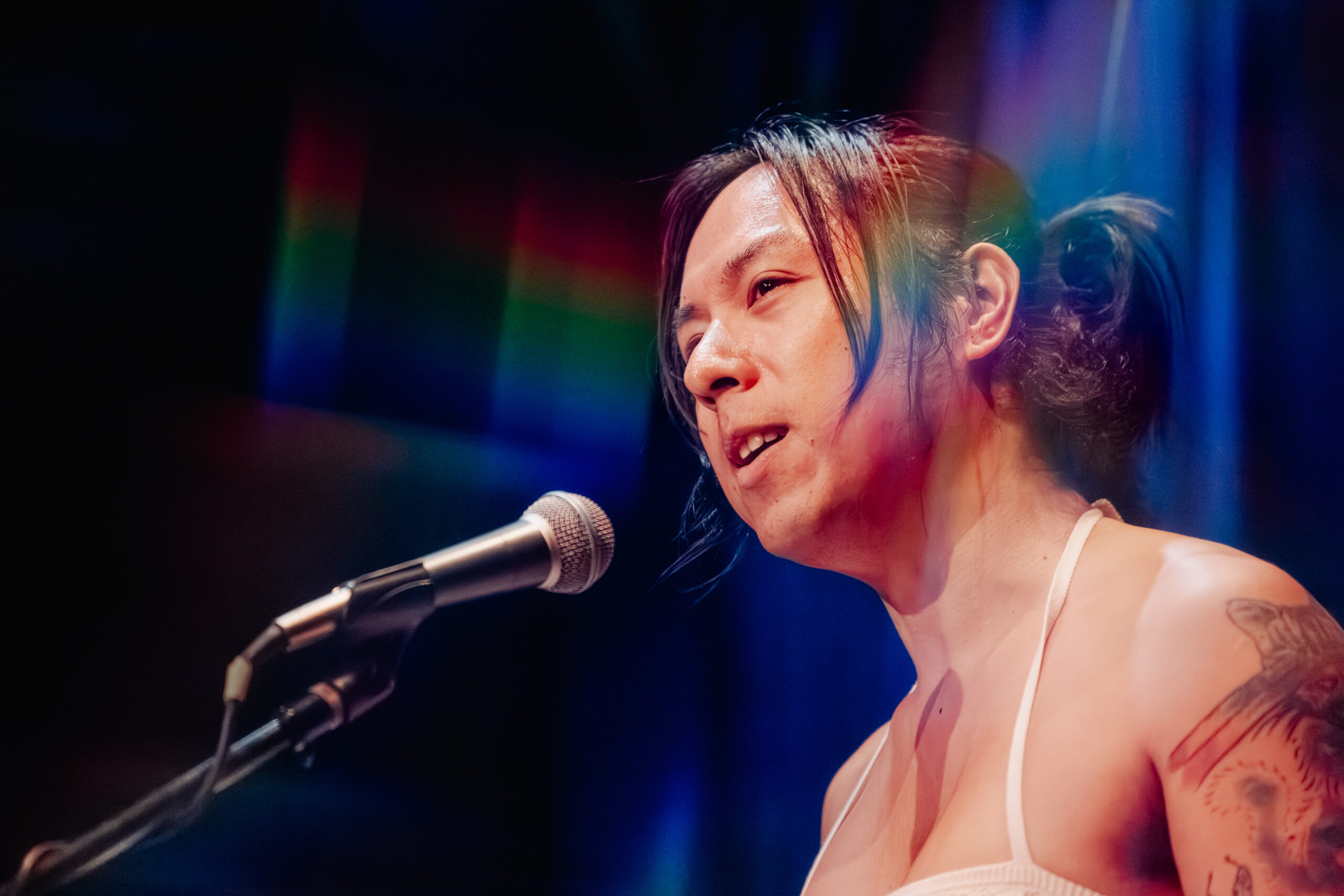
Writer and artist Jade Phoenix shares her poem “The Garden” from recent chapbook “From Ash We Bloom.” (Photo credit: Thomas Emick)
Writer and artist Jade Phoenix opened the night, describing her experience with her gender identity and family.
“I am a trans woman, which means I was assigned male at birth… But it’s fine. I just like to refer to my childhood as my tomboy phase, which, if we’re being real, actually never ended,” Phoenix said during her introduction. “I am Filipino American, the proud daughter of immigrants that still call me their son. It’s fine. I just switch out the ‘o’ for ‘u’ and pretend their lives still revolve around me.”
Phoenix then shared poems from her recent chapbook From Ash We Bloom, including “The Garden” that uses the metaphor of burgeoning plant life to show how one’s understanding of their own gender identity can evolve as one grows up.
“I like to think of my fem expression as little seeds planted at my birth, nearest the roots of my fullest potential, my most authentic expression in bloom, free from the thorns and weeds of toxic masculinity,” Phoenix read, “I like to think of these fem seeds rising to the surface my whole life.”
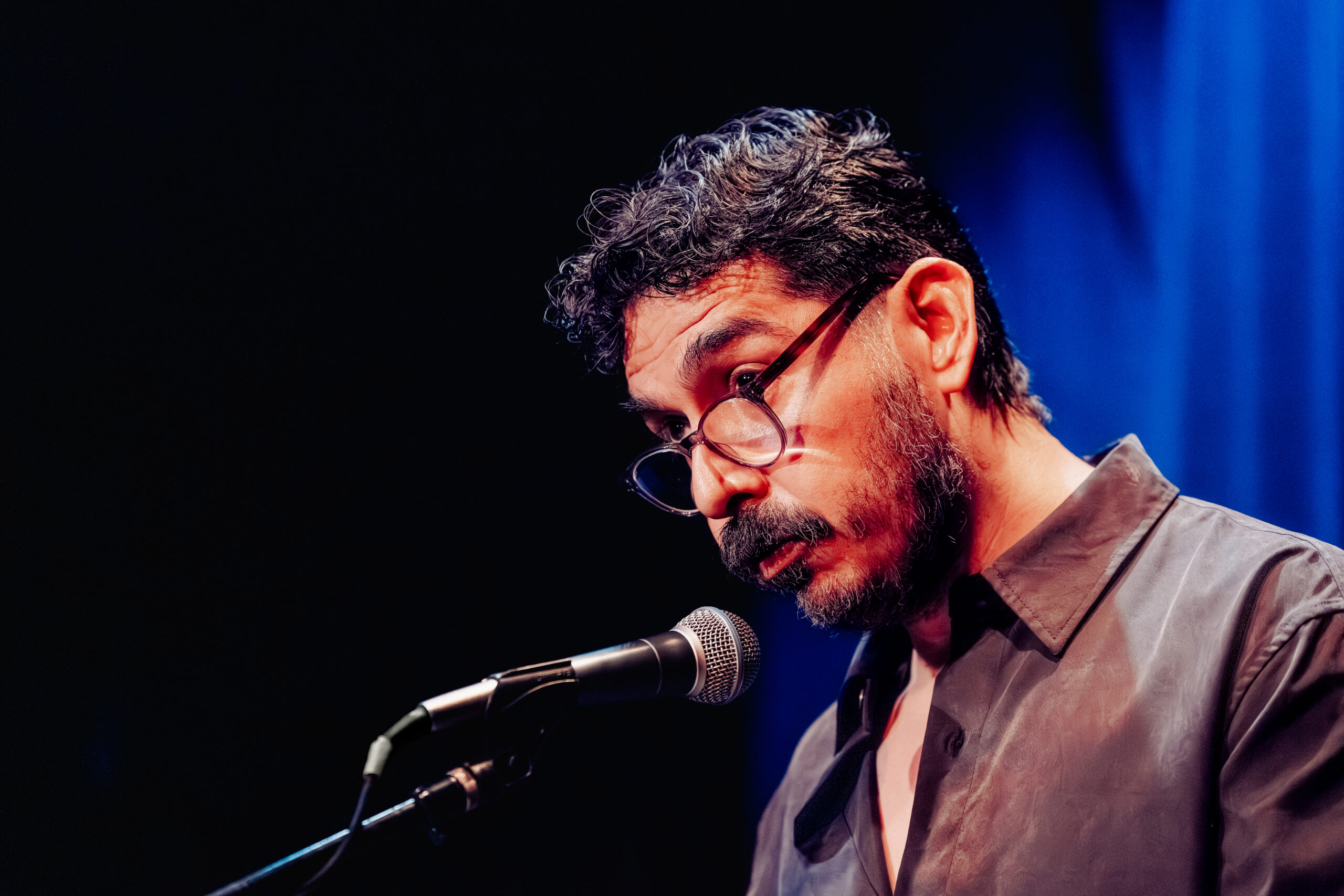
Writer and former kindergarten teacher Richard Villegas Jr. reads from his new essay collection “Your a Fat Suckr Bich.” (Photo credit: Thomas Emick)
Next, Richard Villegas Jr., a former Los Angeles Unified School District kindergarten teacher, shared two essays from his memoristic collection Your a Fat Suckr Bich that he gradually wrote and posted online after he retired from teaching in 2019.
In the title essay that Villegas read, he describes finding a bright pink “piece of litter” on the playground that, once examined more closely, turns out to be a Hello-Kitty-emblazoned hate note written in “penmanship typical of both serial killers and little children.” The note’s message? The eponymous insult.
Villegas then read his reflections on what the note indicates about the power of literacy for children.
“The late great Toni Morrison, during her acceptance speech for the Nobel Prize in Literature intoned, ‘We die. That may be the meaning of life. But we do language. That may be the measure of our lives,’” Villegas read. “‘Your a fat suckr bich’ was a message of hope.”
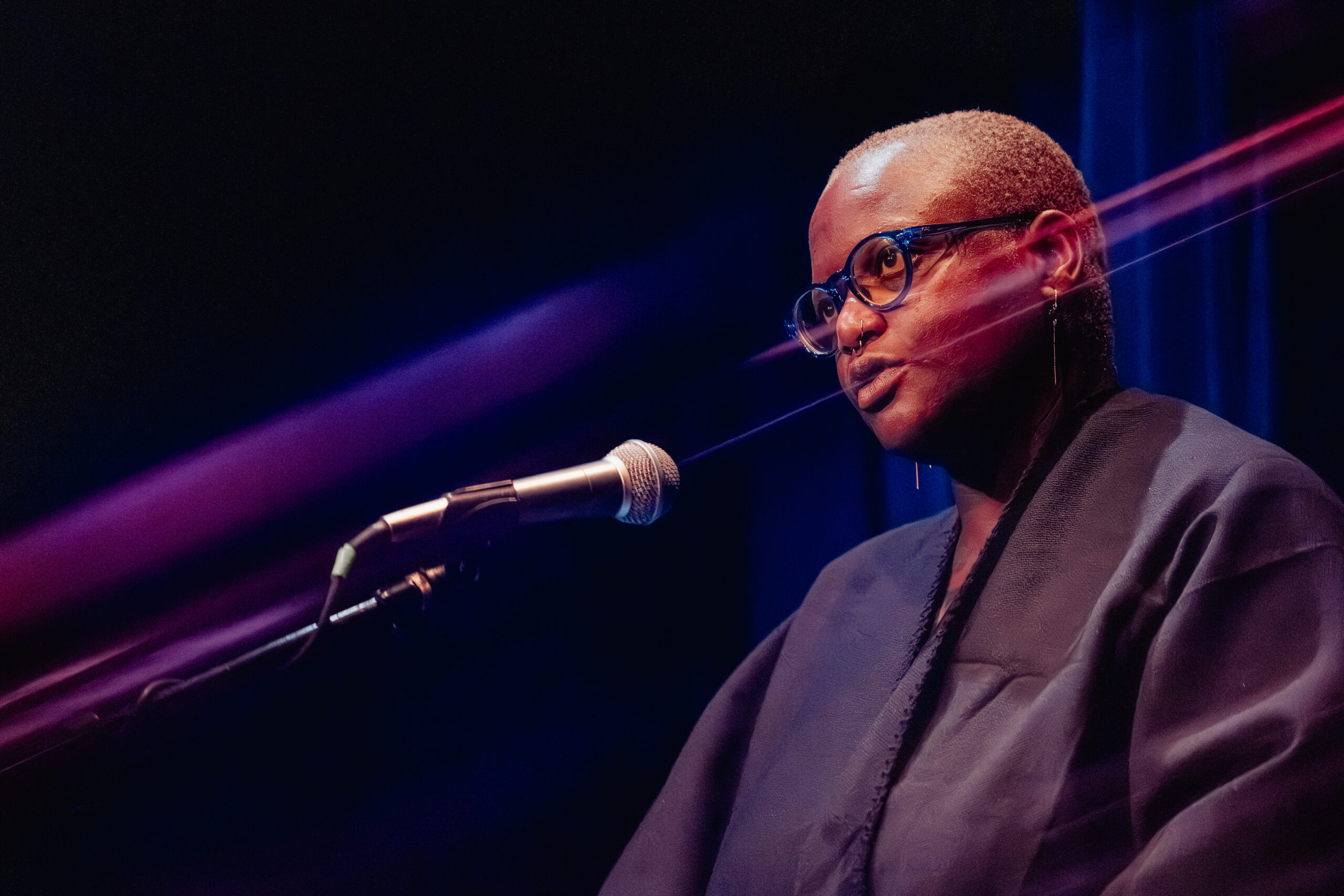
Writer and professor Chekwube O. Danladi reads an excerpt from an in-progress lyric essay about colonialism’s impacts on family and parenthood. (Photo credit: Thomas Emick)
Following Villegas, Chekwube O. Danladi, author of the poetry collection Semiotics and professor at Occidental College, shared an excerpt from a long, in-progress, lyric essay tentatively titled “Water, Therefore Blood” about how the legacy of colonialism has impacted her understanding of family and parenthood. The piece juxtaposes Danladi’s present as a foster mother to her ancestors’ experience enduring the Transatlantic Slave Trade.
“The scramble for Africa, the bodies, the gold, the land… So far from home. No home remains,” Danaldi read. “My ancestors abide me the troubling of my mind… Years I waited for relief, studied cloud patterns alone, and avoided observation. Refused the call of the bridges over the Chicago River… My name was my child’s doing.”
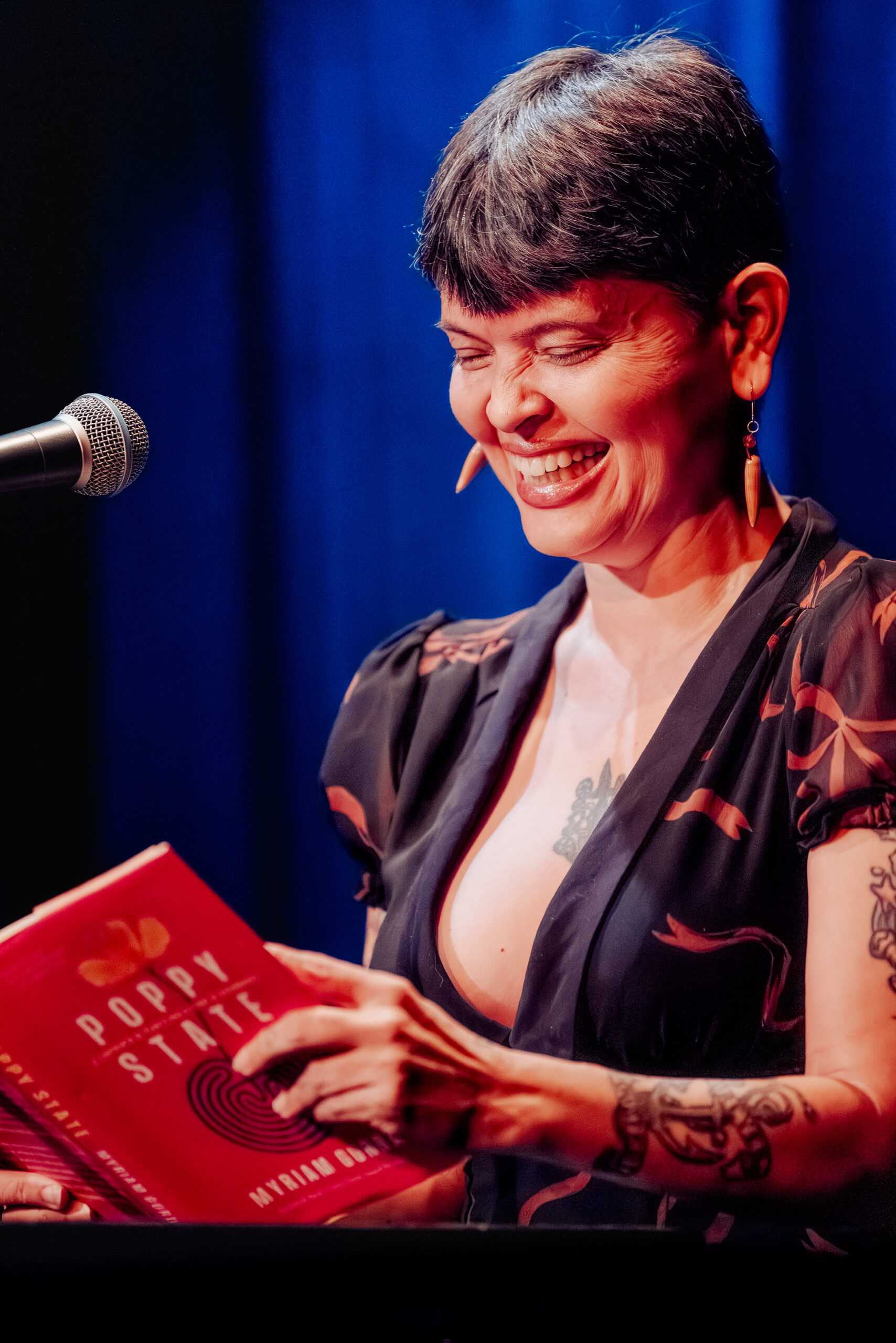
Next, Myriam Gurba read an excerpt from her non-fiction collection Poppy State, her self-described recovery from susto–sometimes known as ‘soul loss’–a Latin American folk illness that bears symptoms of depression.
“What you have to do [to recover from susto],” Gurba explained, “is figure out how to sweeten yourself to make yourself a home your soul would like to linger.”
Gurba shared section introduced the main villain of her personal narrative, an abuser she pseudonymized as the Marijuana Prince because “he smoked a lot of weed.”
Then, shumarí closed the night, reading multiple selections of CHABÓCHI DOLL–including “Mora Feet, A Dedication,” “I Am a Trans Woman. Not a Drag Queen.,” “Throat Game,” and, lastly, “Wa’lú Matetére Bá.”
“Wa’lú Matetére Bá” (which means ‘thank you’ in shumarí’s native Rarámuri tongue) tied together the themes of shumarí’s launch and collection, or, as she describes in the essay itself, “red-stitch[ed] all the parts [that] felt fragmented–together–in the same ways of wabi-sabi, the Japanese tradition to mend broken things with gold.”
shumarí noted that “Wa’lú matetére bá” became a symbolic way of saying “hello,” of showing humility and gratitude for what one already has, an energy and mindfulness that powers and guides new beginnings.
“‘Wa’lú matetére bá,’” to the woman I unleashed from within,” shumarí read. “May her light continue to help build a new world.”
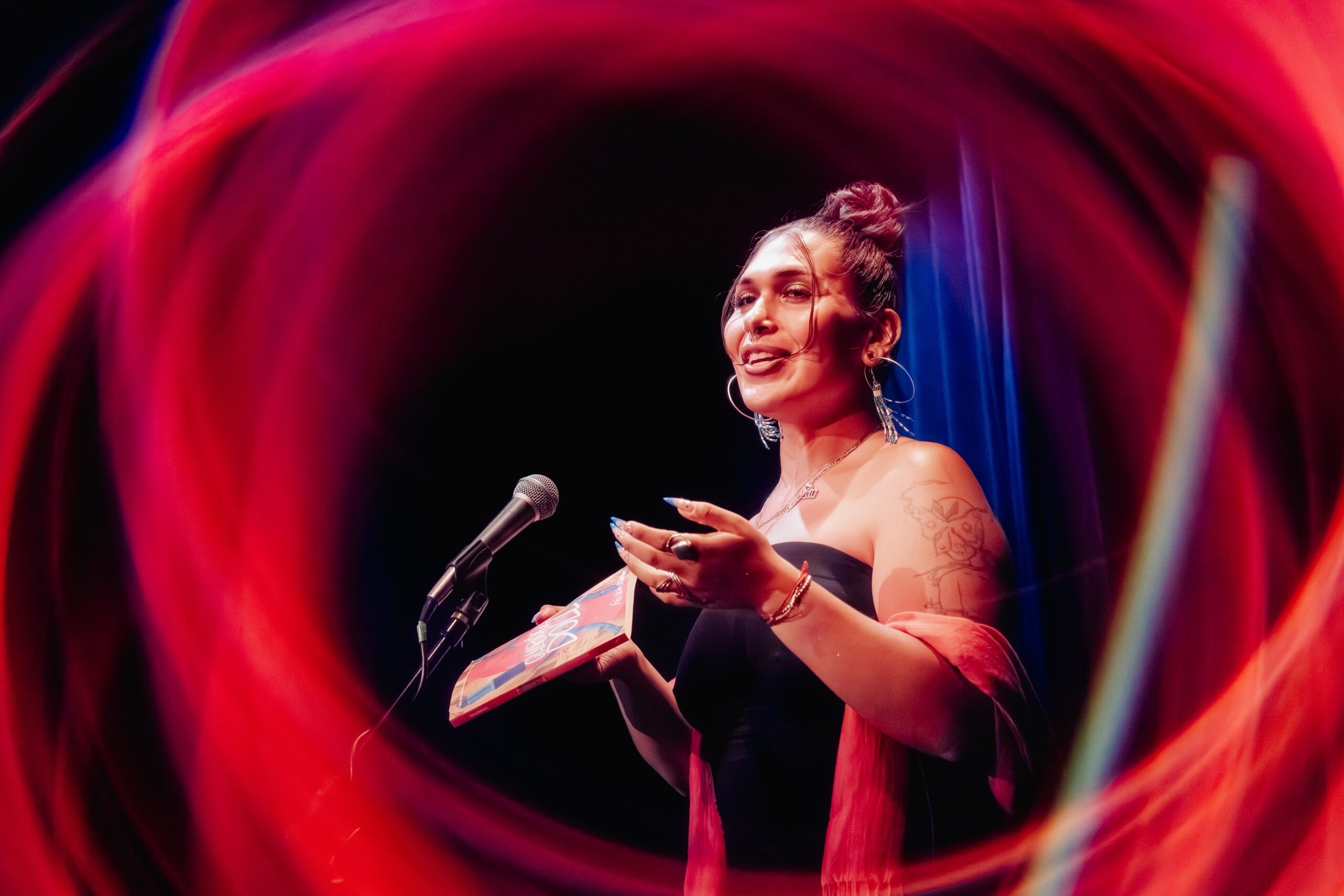
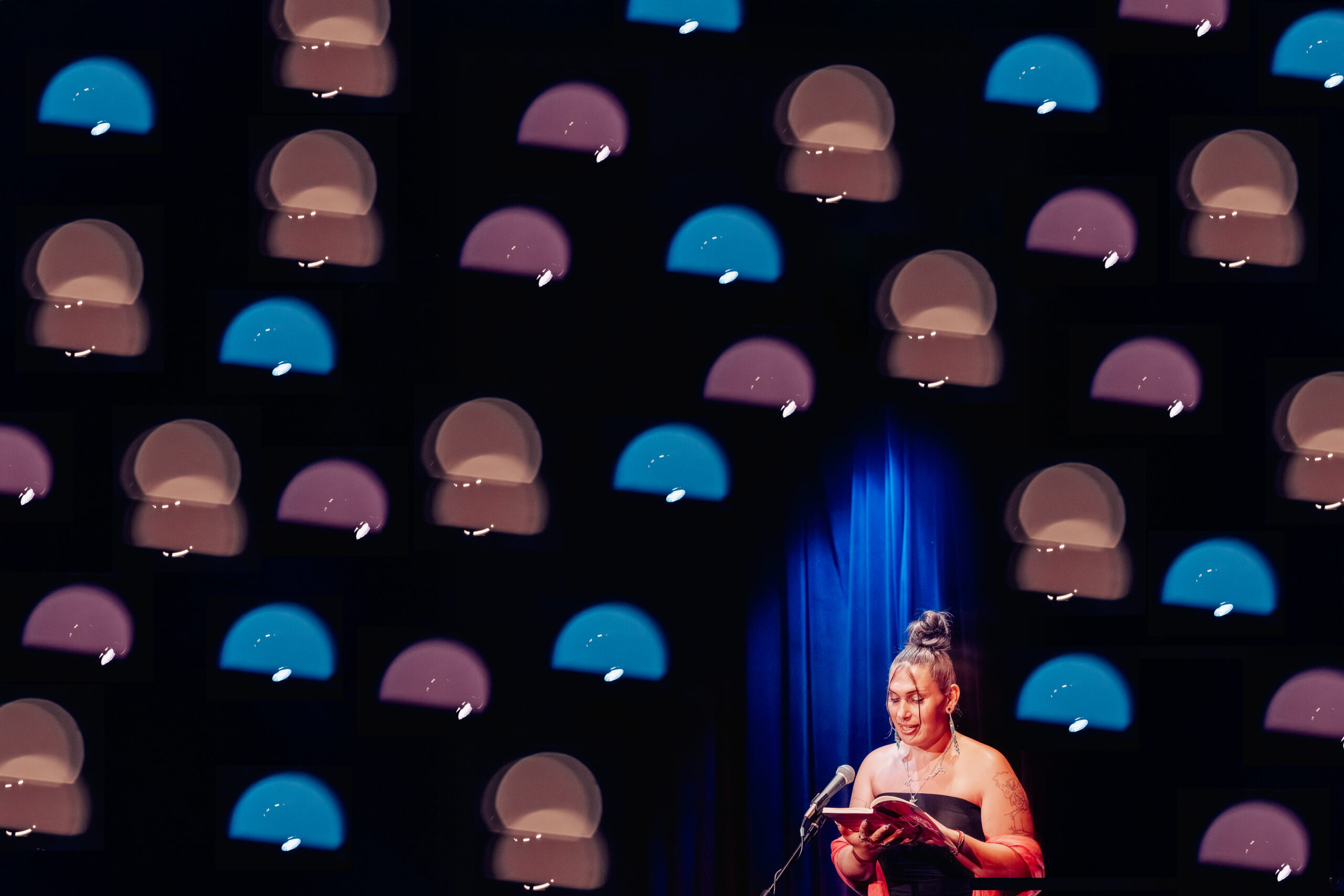
shumarí closed her book launch event with her essay “Wa’lú Matetére Bá,” asking the audience to repeat the Rarámuri word for ‘thank you’ as she read it as a collective practice of humility and gratitude. (Photo credit: Thomas Emick)


 Terry Morgan