

 Pauline Adamek
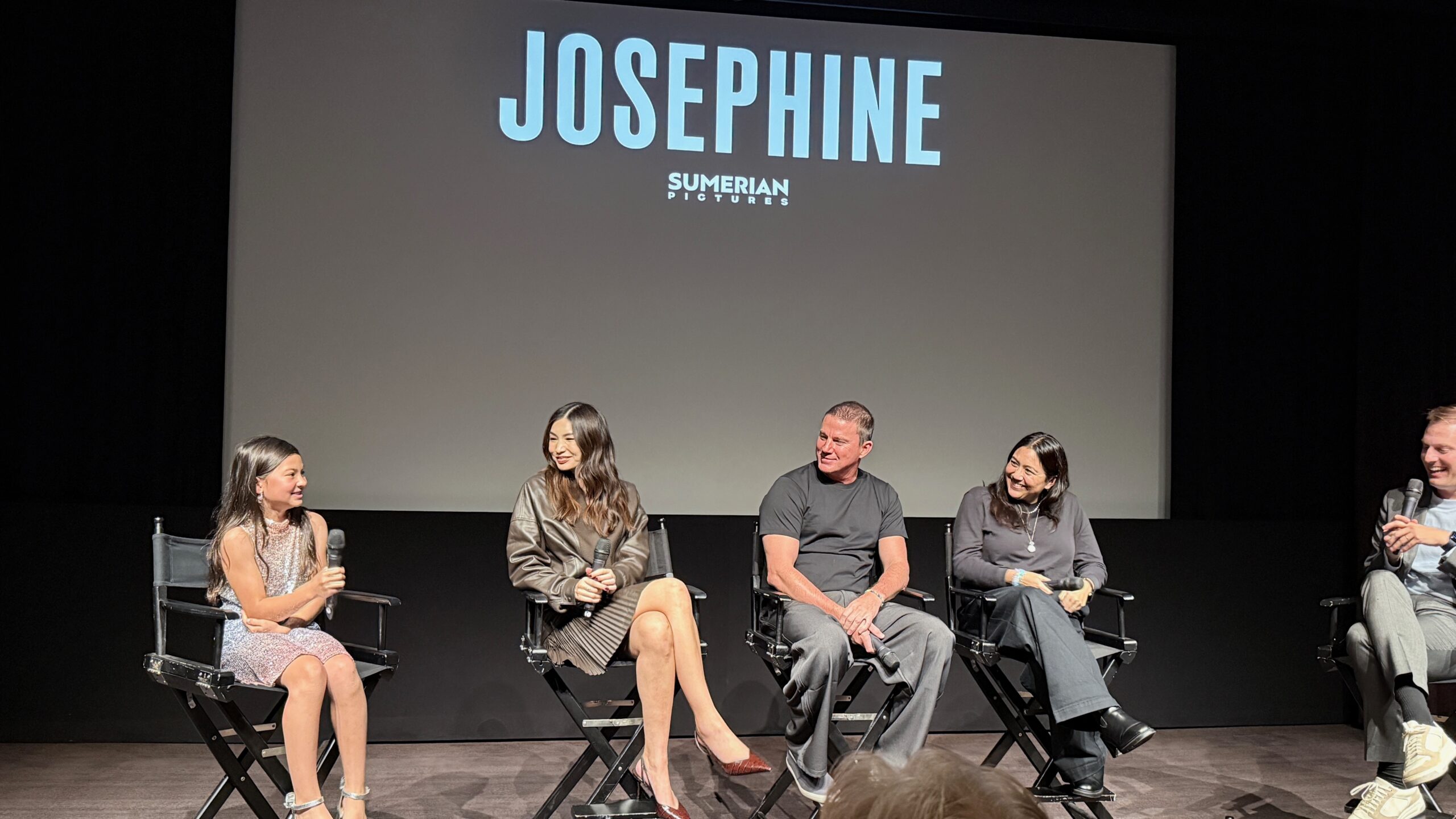
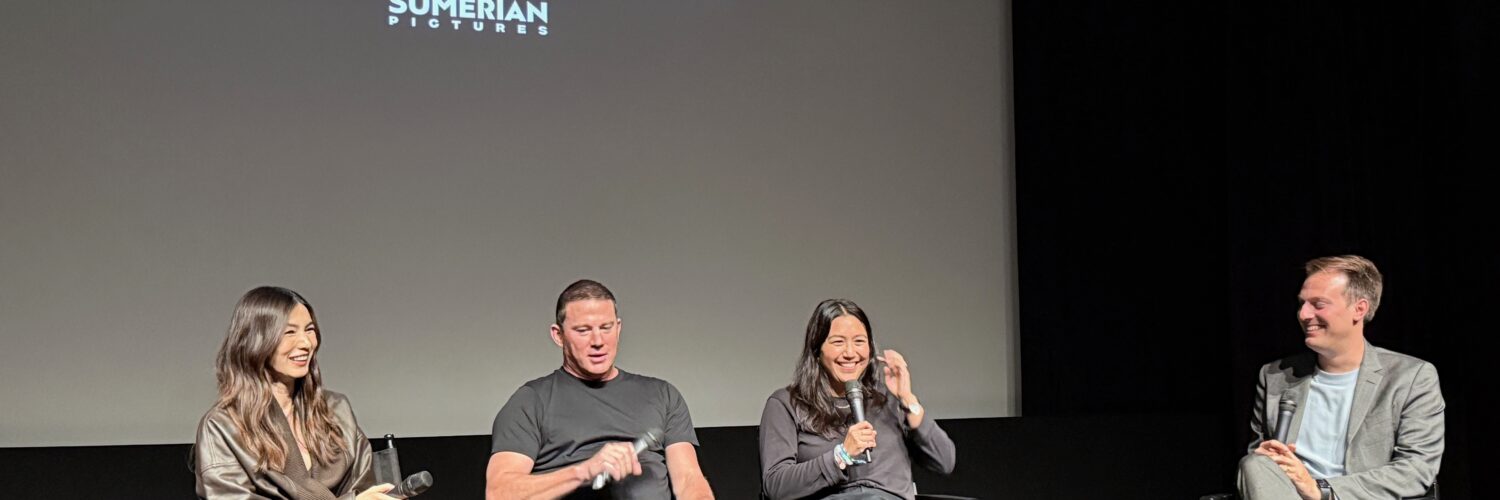
Channing Tatum, Gemma Chan and writer/director Beth de Araújo Q&A for Josephine
The filmmaker and cast discuss their psychological thriller about childhood trauma, parental protection and resilience, anchored by a remarkable debut performance from young actor Mason Reeves.
For writer/director Beth de Araújo, Josephine was more than a decade in the making. The psychological thriller, starring Channing Tatum, Gemma Chan and newcomer Mason Reeves, grew out of a personal experience and a conversation with her father in 2014 about an incident they had witnessed when she was eight years old.
The film follows eight-year-old Josephine as she struggles to process a traumatic event, while her parents, Damien (Tatum) and Claire (Chan), confront their own histories and differing instincts about how best to protect their daughter.
At a screening and Q&A on October 22, de Araújo and the cast discussed the film’s origins, its distinctive visual approach and the experience of working with Reeves in her first feature-film role.
“This is not a film that is for escapism,” de Araújo told the audience. “This is a psychological thriller that hopefully brings you into the mind of a little girl and opens up different conversations amongst ourselves.”
De Araújo began writing the screenplay in 2014, initially drawing on fragments of personal memories before expanding the story to explore the entire family and the ways trauma shapes relationships.
The project took years to finance and produce. After participating in the Sundance Directors Lab in 2018, de Araújo brought Chan aboard in 2019. The production was subsequently delayed by the pandemic and industry strikes. Tatum joined in 2023, and filming took place in 2024.
Chan said she was immediately struck by the screenplay when she first read it. “I just couldn’t get the script out of my head,” she said. “Just felt there was so much truth coming off every page.” She was particularly drawn to de Araújo’s ambition to tell the story entirely through a child’s perspective. “What Beth wanted to do, to put us completely in the perspective of an eight-year-old girl, hadn’t been done in quite that way before.”
For Tatum, the material also resonated personally. As a father, he recognized the difficult conversations between Damien and Josephine. “The conversation that I had with Josephine under the bridge, I had a very similar, almost verbatim conversation with my daughter, and in my own way,” he said.
A central theme of the film is the different ways Damien and Claire approach protecting their daughter. De Araújo explained that their individual histories with male violence have shaped their parenting styles. Damien believes in teaching Josephine to defend herself, while Claire has tried to repress her own experiences and move forward.
“They love her so much. They both love and want to protect her so much. They just have really different ideas of the best way to accomplish that,” the filmmaker said.
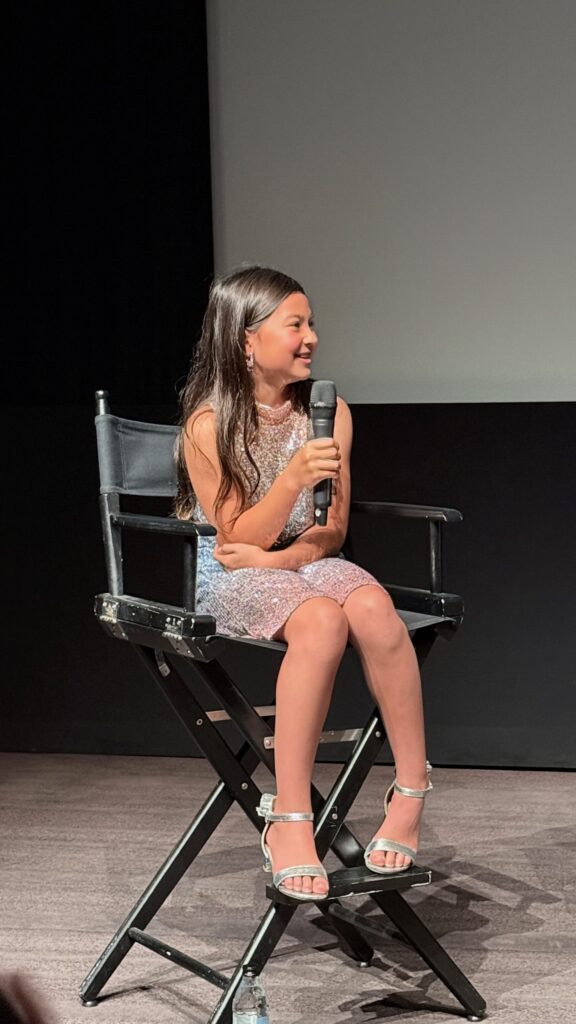
At the heart of the film is Mason Reeves, whose performance marks her feature-film debut. De Araújo first noticed the young actress at a farmers market before inviting her to audition. She said Reeves’ physical energy and first audition tape convinced her she had found her Josephine.
Both Chan and Tatum praised the young actress’s instincts and ability to respond naturally during emotionally demanding scenes. “She’s so present and such a good listener,” Chan said. “It honestly just meant that I could be completely in the moment in those scenes.”
Reeves, in turn, said Tatum’s performance helped her access her own emotions during a particularly intense scene. “Channing’s acting was super real, and it kind of helped me dip into my emotions,” she said.
De Araújo deliberately avoided discussing the film’s difficult themes with Reeves, instead allowing her to draw on her own memories and feelings. She also relied on the adult actors’ performances to guide the young actress’s reactions.
The film’s visual language was designed to reinforce Josephine’s perspective. Working with cinematographer Greta Zozula, de Araújo used low-angle, handheld camerawork to keep the audience close to the child’s experience. A traffic-light-inspired color palette – red for danger, green for safety and yellow for caution – helped establish the film’s visual symbolism.
The director also explained that the camera becomes stationary whenever the imagined rapist in Josephine’s mind appears, visually emphasizing her inability to escape the fear.
For de Araújo, the film ultimately is not simply about trauma, but about resilience and survival.
“I knew that I wanted it to be about Josephine finding her resilience,” she said. “I think it’s important for films like this that are dealing with really heavy subject matters to show, like, ‘Well, I am still here.’ You know, that has to stand for something.”
Josephine was produced by Sumerian Pictures and MACRO, directed by Beth de Araújo, and supported by the Sundance Institute Feature Film Program after winning awards at the 2026 Sundance Film Festival.

 Terry Morgan
 Kurt Gardner