
 Pauline Adamek
Ezra Collective: A Glorious Celebration of Rhythm, Community and Joy
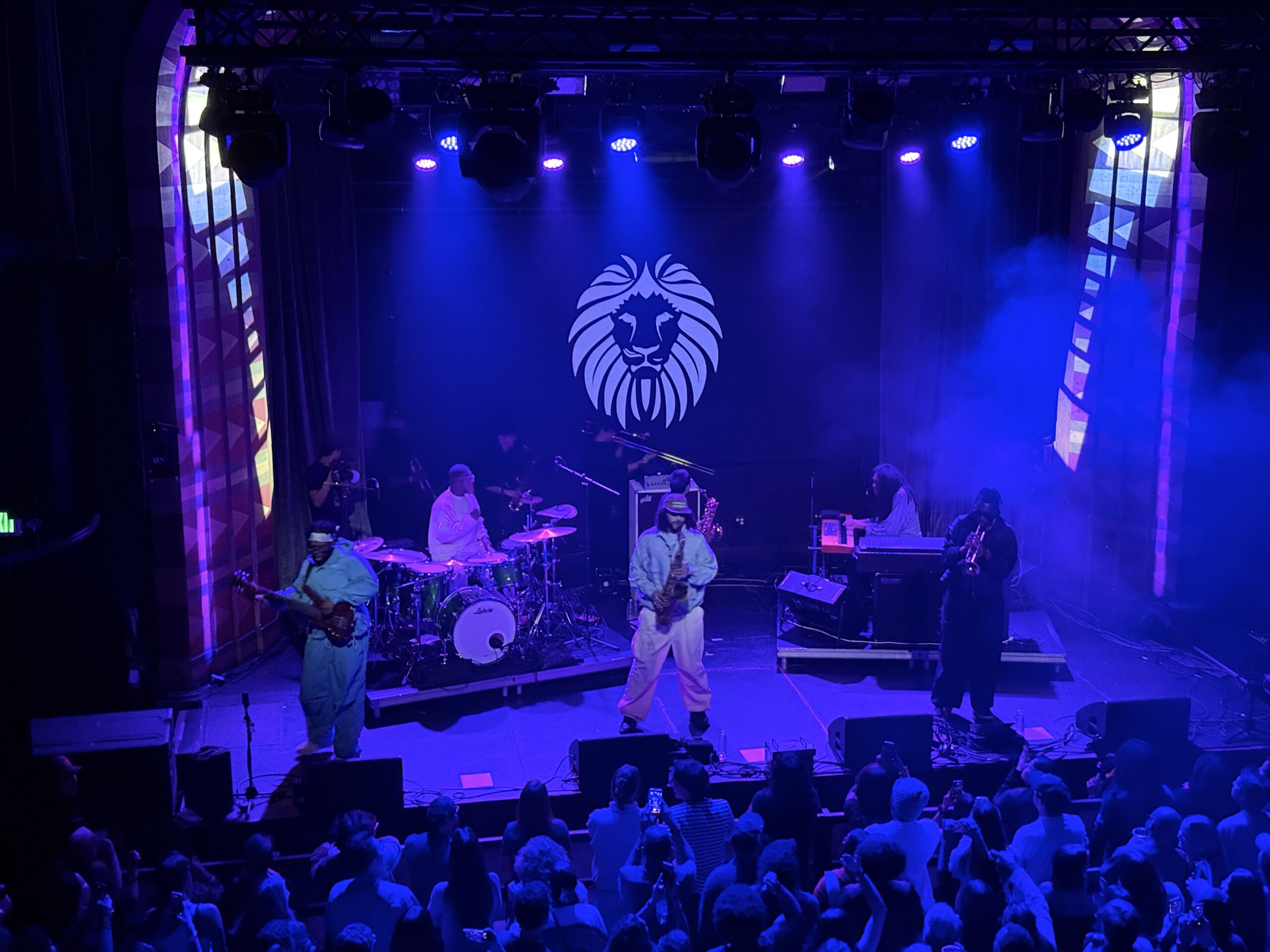
After three years away, Ezra Collective returned to Los Angeles for a triumphant performance that turned a packed house into one enormous celebration of music, movement and collective joy.
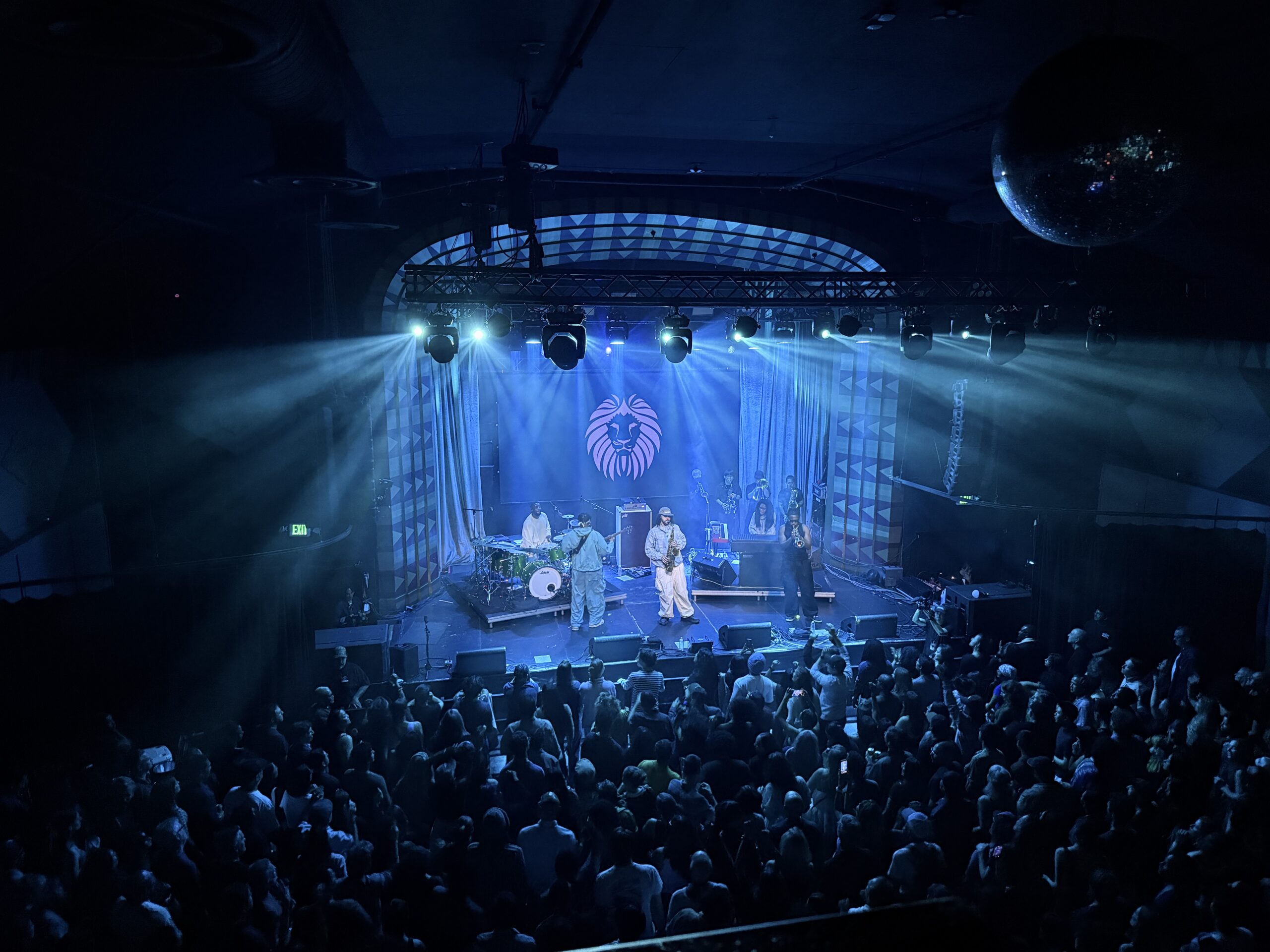
The evening was already buzzing before the band appeared. An upbeat DJ set had the audience dancing, with sound levels climbing from 92 decibels during the pre-show music to 99 just before the musicians took the stage. Once the performance got underway, the sound regularly topped 100 decibels. Nobody was going to mistake this for a quiet night out.
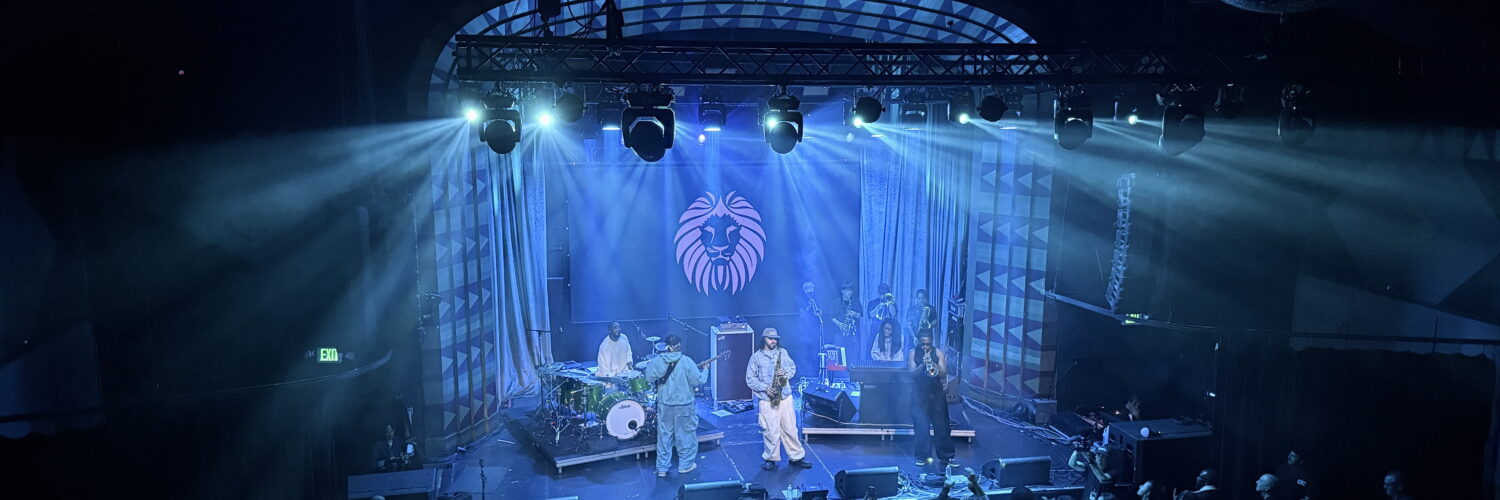
The nine-piece ensemble took command with infectious energy and remarkable precision. At its heart were the five core members: Femi Koleoso on drums, his brother TJ Koleoso on bass, Joe Armon-Jones on keyboards, James Mollison on tenor saxophone and Ife Ogunjobi on trumpet. They were joined by additional musicians who expanded the brass and percussion arrangements, creating a wonderfully rich, full-bodied sound.
Femi Koleoso was the charismatic frontman, as much master of ceremonies as musical powerhouse. His drumming was extraordinary, combining technical virtuosity with an almost inexhaustible rhythmic energy. The whole band, however, was remarkably tight and slick, negotiating fast, furious and often fiendishly complicated rhythms with apparent ease.
Their music draws on jazz, Afrobeat, hip-hop, funk and dance music, but resists easy categorization. As the band have described Lagos, it is “one big beautiful ball of chaos” — an apt description of the exhilarating rhythmic whirlwind they unleashed.
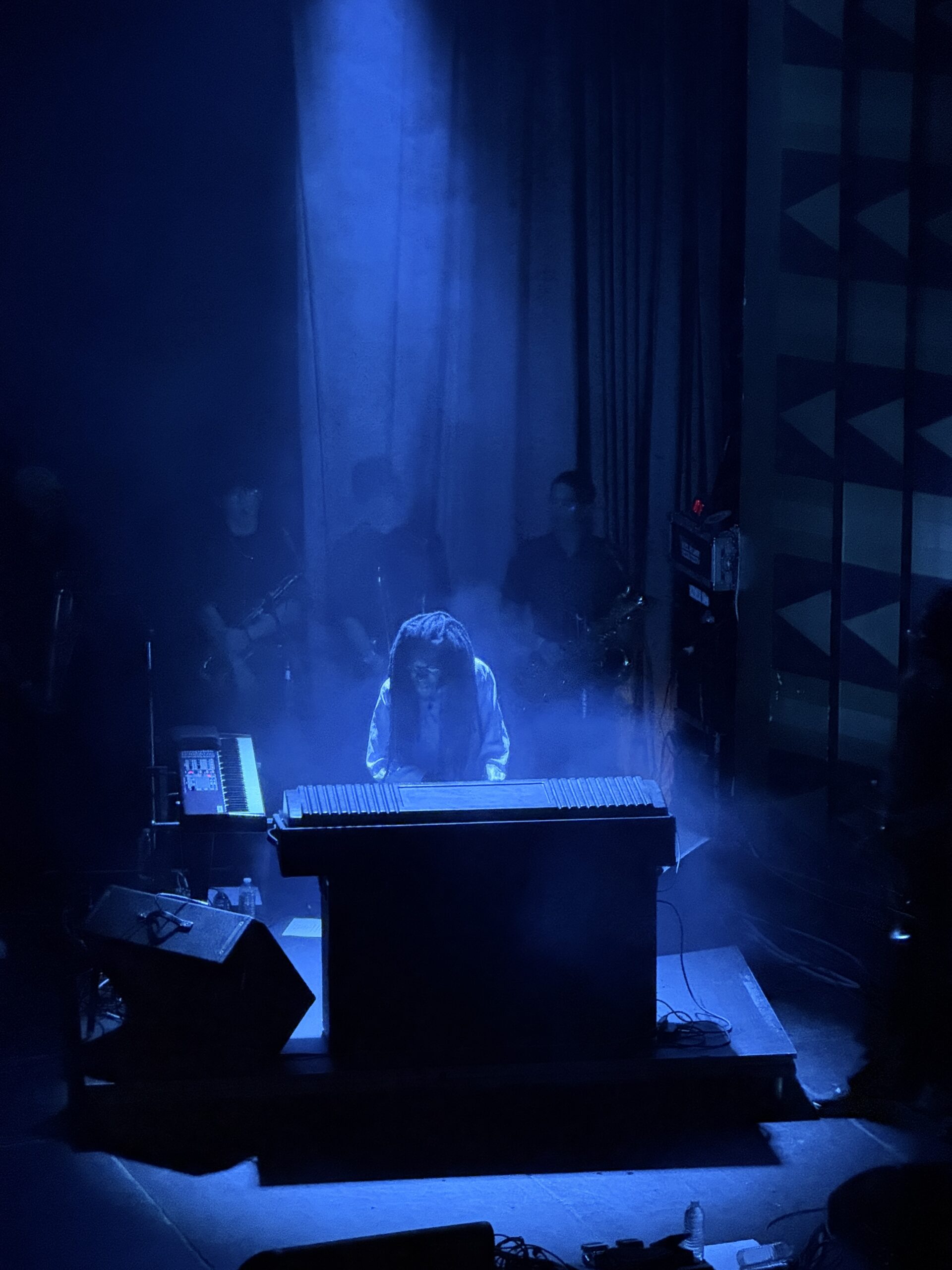
There was plenty of opportunity to appreciate the individual musicianship amid the exuberance. Joe Armon-Jones was particularly impressive on keyboards and electric piano, conjuring up wonderfully fluid grooves and atmospheric textures. At times, his playing evoked memories of Ray Manzarek and his unmistakable Rhodes piano sound with the Doors. When keyboards, drums and bass were left to establish a more relaxed, hypnotic groove, the music became positively mesmerizing. A plaintive trumpet would occasionally emerge, taking over the melody from the piano and adding a wonderfully lyrical counterpoint.
The band also knew precisely when to ease off the throttle. The pacing was excellent, with more introspective, piano-led passages providing welcome breathing space between the explosive rhythmic workouts. And when the drums took centre stage, the result was an extraordinary display of virtuosity: dazzling, propulsive and seemingly inexhaustible.
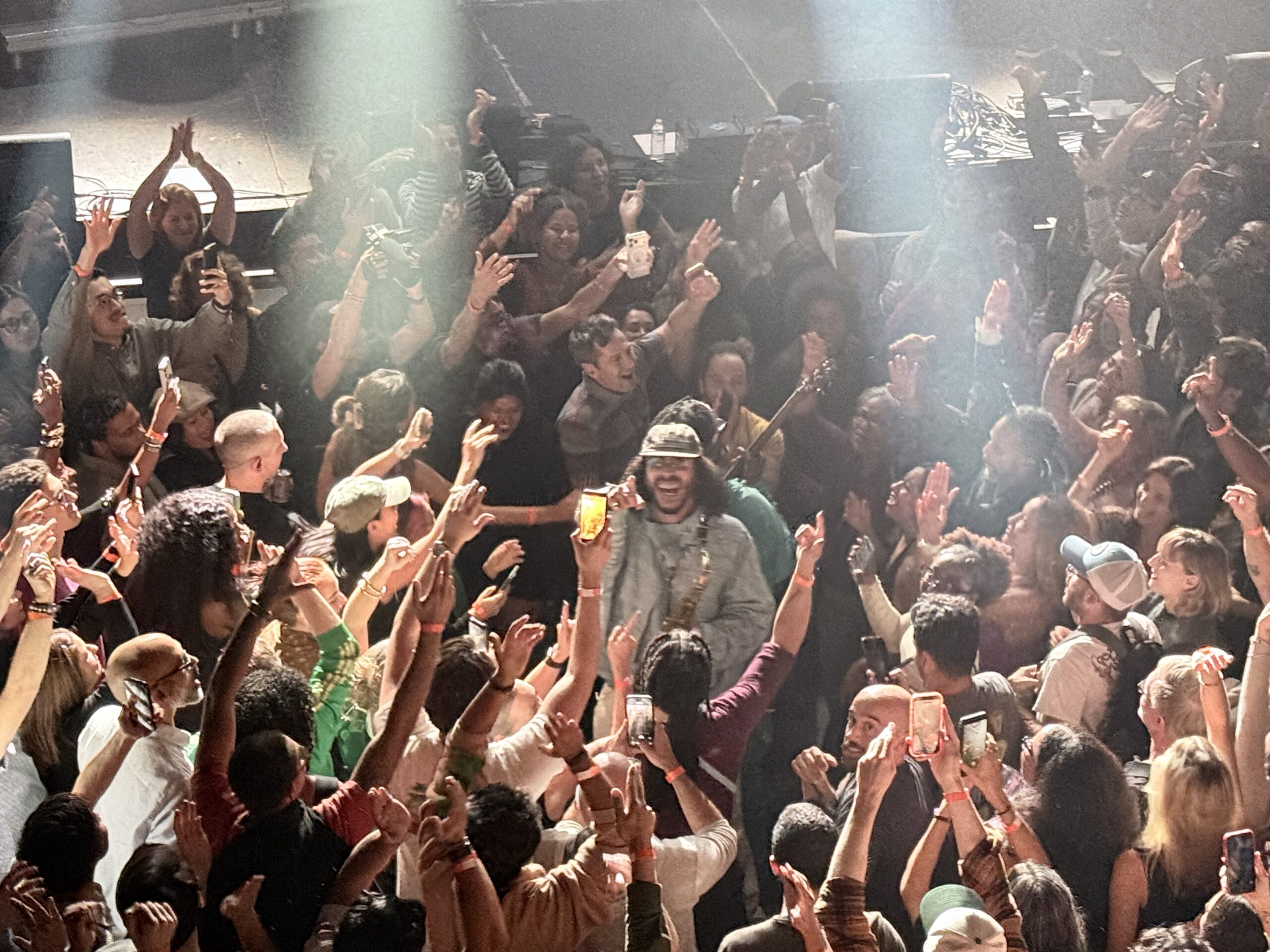
The atmosphere was gloriously uninhibited. The occasional waft of cannabis smoke added to the distinctly festival-like ambience, while the audience responded with dancing, shouting and an almost continuous eruption of applause. Femi encouraged everyone to turn to a stranger nearby and say hello, briefly transforming a packed concert hall into a friendly gathering.
At another point, the effusive frontman challenged the crowd: “Turn this place into the biggest dance floor in America. This part of the show we’re gonna turn into a UK dance party.” It was an invitation nobody seemed inclined to refuse.
But the evening’s most memorable moment came when Femi stepped away from the music to explain what Ezra Collective was really about. He charted their journey, one that began fourteen years earlier where they all met as teenagers in a London youth club, and started learning instruments and discovering jazz. The band had since grown from playing pubs around London to touring the UK, Europe and now the world – now embarking on their fourth world tour.
Femi spoke movingly about the gratitude they felt for having stayed together and achieved so much. Recalling the early days spent rehearsing in a basement, he explained that they had made a conscious decision: whenever they were given the opportunity to play music, they would share the feeling that had first brought them together.
“That feeling was joy.”
What followed was a thoughtful and unexpectedly philosophical reflection on the difference between happiness and joy. Happiness, he suggested, depended on circumstances: the news could make you sad, and life’s disappointments could repeatedly break your heart. Joy, however, was something different – something you could choose, irrespective of what was happening around you.
“Whatever’s going on in my life right now, for the next 20 minutes, I’m going to choose joy.”
He illustrated this with wonderfully ordinary examples: noticing the beauty of a tree on the way to work, or finding unexpected pleasure in someone simply thanking you for something small. These everyday moments, he suggested, were opportunities to choose joy.
Then came the invitation to join what he called their “temple of joy.” It was an engaging, heartfelt speech, made all the more convincing by the evident affection between the musicians and their audience. It also provided the perfect introduction to the band’s hit “Joy,” which erupted with renewed energy and transformed the venue into exactly the kind of collective celebration he had been describing. The musicians even mingled with the crowd, performing on the venue’s crowded dance floor!
There was something particularly appealing about the contrast between the band’s extraordinary musical sophistication and the uncomplicated generosity of its message. This was music of considerable rhythmic complexity, played by musicians of exceptional ability, yet its purpose was fundamentally communal: to bring people together and make them feel good.
By the time the band finished at 10.45pm, after a performance that had begun about 90 minutes earlier, the audience had been taken on a thoroughly exhilarating journey through jazz, funk, Afrobeat and dance music, with enough virtuosity, invention and sheer infectious energy to satisfy the most demanding listener.
Ezra Collective in concert created a joyous sense of togetherness, reminding everyone that music can be both an extraordinary artistic achievement and a profoundly human experience. After three years absence, Los Angeles could hardly have asked for a more exuberant reunion. A dazzling performance, a terrific band, and a message worth taking home: choose joy.
From the press release:
Ezra Collective’s sold-out show at The Regent Theater in Los Angeles, November 2026. The London five-piece don’t make it to the U.S. often, and this run comes at a pretty extraordinary moment for the band. Their new album, Here Because of Hope, debuted at No. 1 on the UK Albums Chart, giving Ezra their first-ever UK No. 1 and making them the first UK male jazz group to earn a No. 1 studio album. The entire upcoming North American run is now sold out.
It’s the latest milestone in a rise that has made Ezra Collective one of the defining British bands of their generation. Their 2022 album Where I’m Meant To Be won the Mercury Prize. Dance, No One’s Watching followed with a UK Top 10 debut before Ezra became the first jazz act to win Group of the Year at the BRIT Awards. They’ve since headlined Wembley Arena, while Rolling Stone UK recently put them on its cover and called them “one of Britain’s biggest bands.”
Here Because of Hope expands the band’s sound across the Black diaspora, moving from West Africa through the Caribbean before landing back home in London. Jazz remains the foundation, but the record reaches far beyond it, pulling from Afrobeat and reggae alongside salsa, grime, funky house and the sounds of the city that raised them.
Ezra Collective performance – Saturday, November 14, 2026
The Regent Theater
448 S. Main St., Los Angeles, 90013
8:00 p.m.