

 Pauline Adamek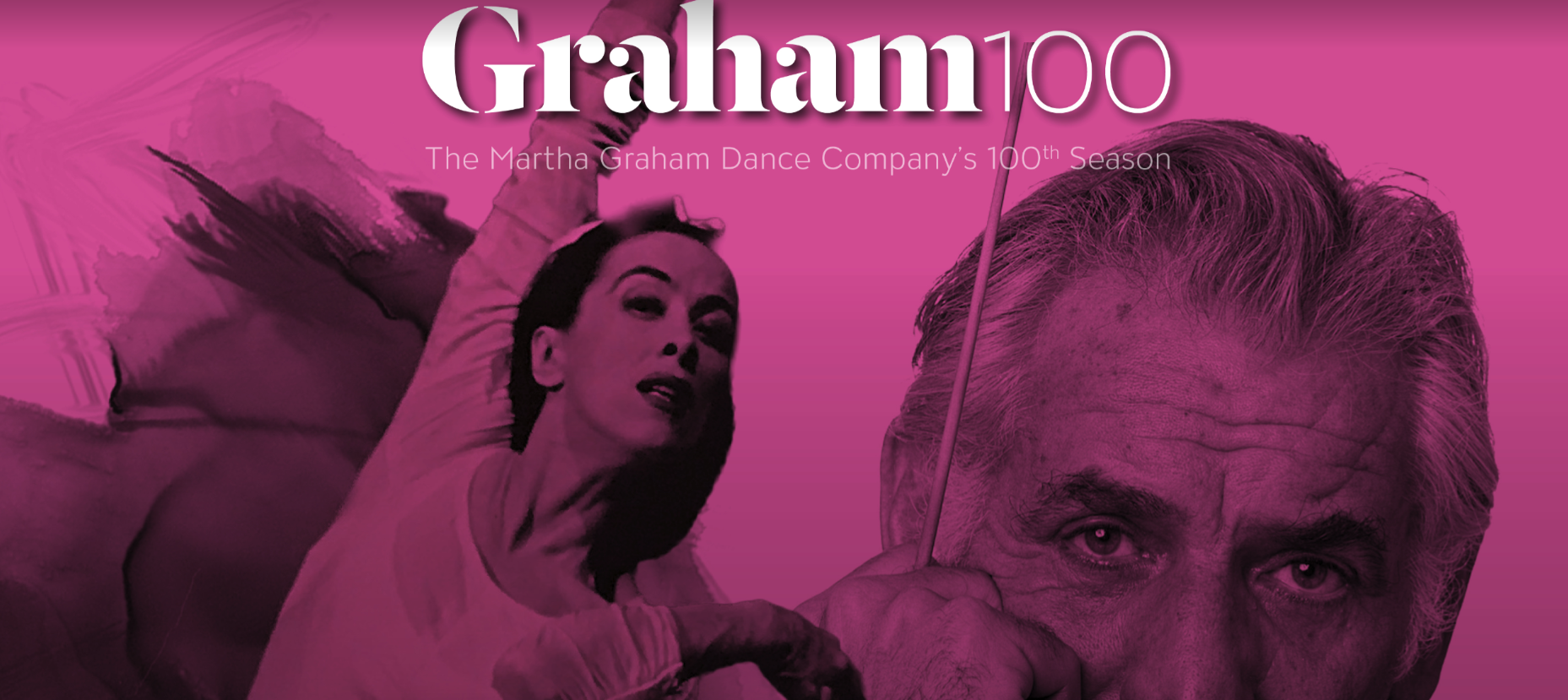
Last night, October 4, 2025, at The Soraya, the Martha Graham Dance Company delivered an evening of performances that conveyed a sense of high drama. Deeply reverent and electrifying, the collection formed a fitting highlight to their centennial season. The program included three major works: Night Journey by Martha Graham, We the People by Jamar Roberts, as well as a world premiere pairing between Graham with Leonard Bernstein; a bold and inspired commission that rounded out the evening of modern dance entitled En Masse with choreography by Hope Boykin.
Artistic and Executive Director of The Soraya, Thor Steingraber, introduced the evening by reminding us that it was here in Los Angeles, where Martha Graham began her life as a dancer. Welcoming us all to the Soraya’s 15th Anniversary, Steingraber added, “This year, we’re celebrating our anniversary with five performances that showcase what it is that the Soraya does best. And tonight is not just dance, but also about collaboration and partnership.” He thanked the evening’s generous underwriter Christopher Sales.
Thrillingly, last night’s performances included the new work commissioned by The Soraya with new music arranged by Wild Up Artistic Director/Conductor Christopher Rountree based on Leonard Bernstein’s incomplete score and accompanied by new choreography. This marked a monumental creation celebrating MGDC’s 100th year, which began at The Soraya and has been traveling worldwide.
Performers included: Lloyd Knight, Xin Ying, Leslie Andrea Williams, Anne Souder, Laurel Dalley Smith, So Young An, Marzia Memoli, Richard Villaverde, Devin Loh, Antonio Leone, Meagan King, Ane Arrieta, Zachary Jeppsen-Toy, Amanda Moreira, Jai Perez, and Ethan Palma.
MGDC’s Artistic Director Janet Eilber took to the stage as well, and continued the introduction:
We’re opening tonight’s program with Night Journey, created in 1947. This is one of Martha Graham’s modernist, abstract, and pre-themed works. In Night Journey, she reimagines the tragic tale of Oedipus. In the original play, near the end, Jocasta—his mother, later his wife, and the mother of his children—finally understands the truth. She runs from the stage, and though we never see her again, we later hear she has gone to her chambers and taken her own life.
Martha Graham begins her ballet at this very moment—told entirely through the eyes of Jocasta. As the curtain rises, we see Jocasta in her chamber, holding a rope above her head, about to end her life. From there, the entire ballet unfolds as if her life is flashing before her eyes.
On stage with her is the looming figure of the blind prophet Tiresias, who represents the inescapable truth. There’s also a Greek chorus of women who embody Jocasta’s inner life. Through them, we witness her memories: Oedipus’s return to Thebes as a hero, their courtship, their marriage, and finally, the tragic unraveling of it all.
Following this emotional journey, we’ll take a short pause to reset the stage, and perhaps our heart rates.
And what a breathtaking performance it was! Night Journey unfolded with a haunting intensity. The dancers captured the psychological landscape of Oedipus’ dark myth with subtle emotional textures, pushing gestures sharply, then softening them, making the familiar story feel fresh and alive. The shadows and dramatic lighting played a crucial role by illuminating every contraction, extension, and pause with its nuanced design. The lighting design for Night Journey was originally created by Jean Rosenthal, since adapted by Beverly Emmons.
In We the People, the company embraced more overt political messaging. The choreography, supported by Rhiannon Giddens’s folk-inflected, bluegrass score, conveyed both urgency and reflection. There was a compelling balance between collective ensemble textures and moments of solo expression. At times, the phrasing felt lithe, at other times it swelled with impassioned force.
The world premiere of a resurrected dance collaboration between Graham and Bernstein proved to be the night’s boldest gesture. Eilber had explained that this was a collaboration that had begun almost 40 years earlier, back in the late 1980s, when Martha Graham invited the composer Leonard Bernstein to create a score for a work that she had in mind at the time. They met several times and exchanged ideas and letters, but the work itself never came to fruition. They had been looking in the ‘Lenny Martha’ file, and had found a few sheets of music that they believe he wrote for her that no one had ever heard. Christopher Rowntree was invited to take that short piece of music and create variations on theme by Leonard Bernstein.
For En Masse, with choreography by Hope Boykin, the dancers treated the material with reverence but also with some sense of exploration. The resulting piece felt like the company was pushing at the boundaries of what Graham’s vocabulary might accommodate and seeking to frame it within a contemporary lens.
A marvelous evening was enjoyed by the enthusiastic crowd.

 Terry Morgan