

 Pauline Adamek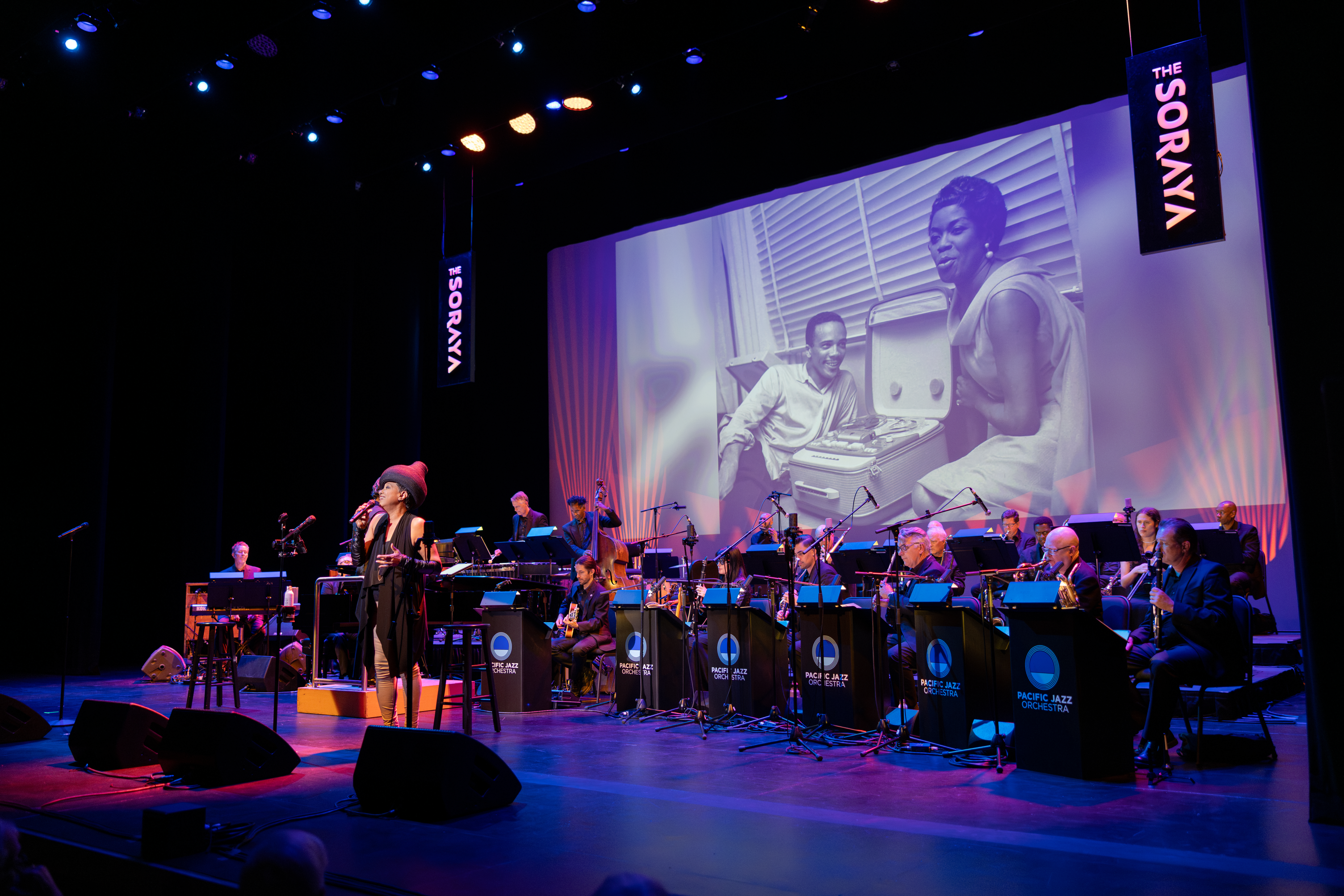
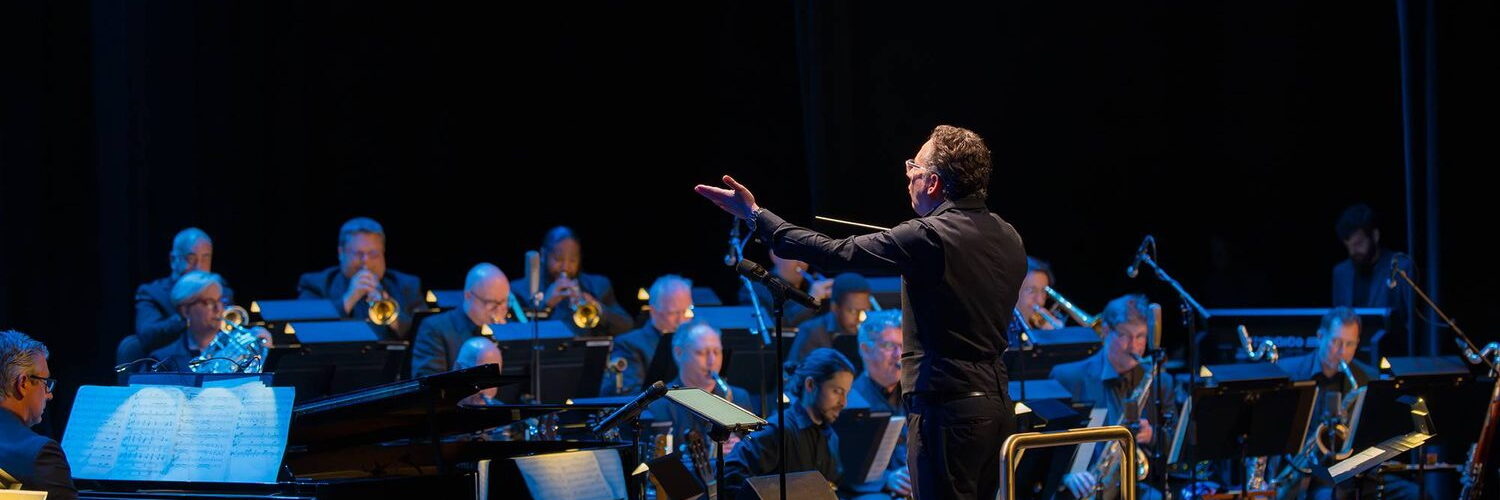
Last night at The Soraya the joint was jumping and the band was swinging in celebration of the great musical artist Quincy Jones. The Pacific Jazz Orchestra was led by arranger Chris Walden, himself a longtime protégé and friend of Quincy Jones. Walden took us on a tour that focussed on Jones’ early years, dating back to the 1950’s and 1960’s when he cut his teeth as a touring jazz musician and then as arranger for some of the greats like Frank Sinatra, Sarah Vaughan, Sammy Davis Jr., and Ray Charles.
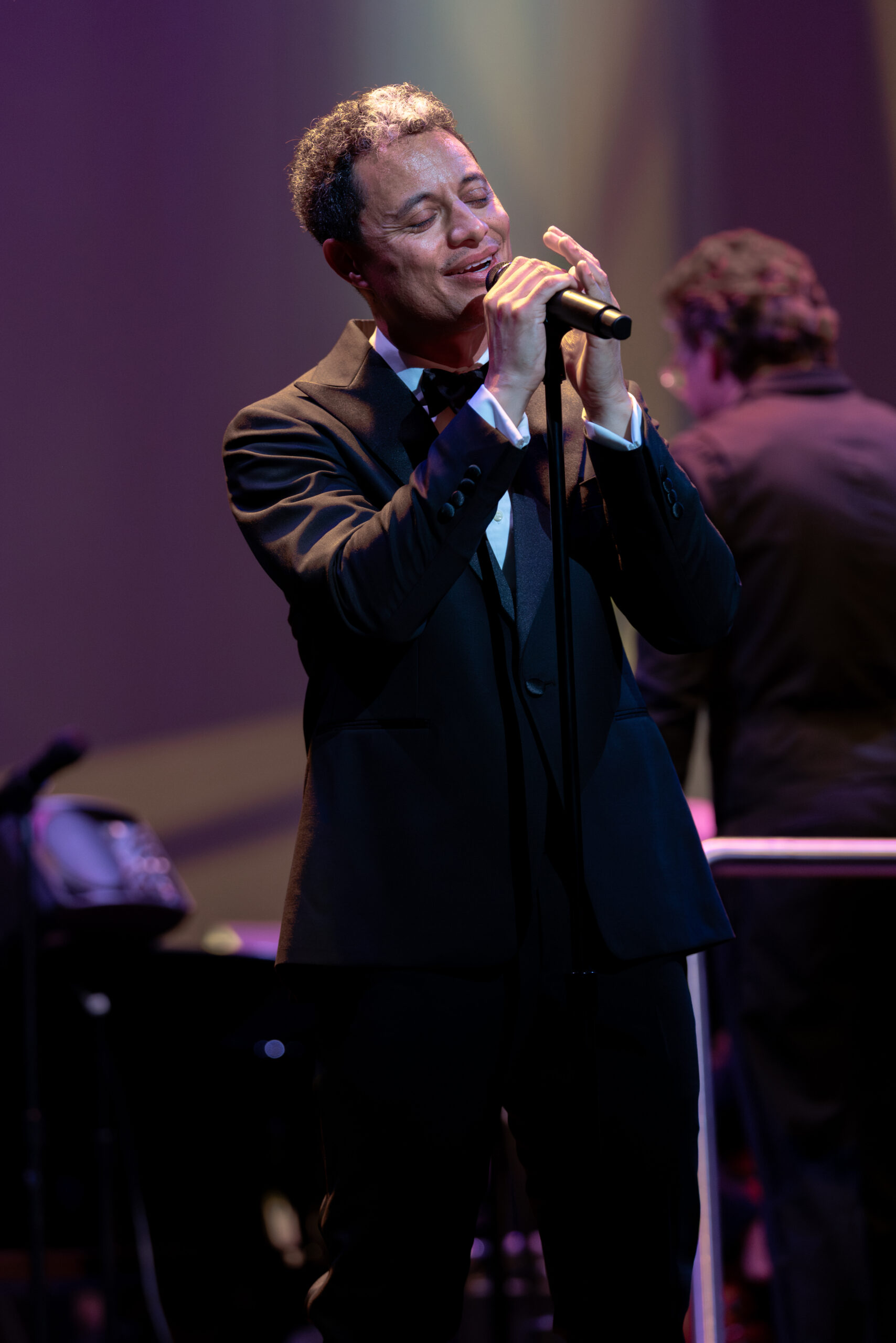
The one-off concert was a Soraya Original Production and one of five 15th anniversary events. Joining the Pacific Jazz Orchestra were vocalists José James and Lisa Fischer, and this concert marked Fischer’s third performance at The Soraya – recognized as a one of LA’s primary jazz venues. The superlative stylings of Fischer and James added vocal depth and polish to what could easily have been a strictly instrumental big‑band show.
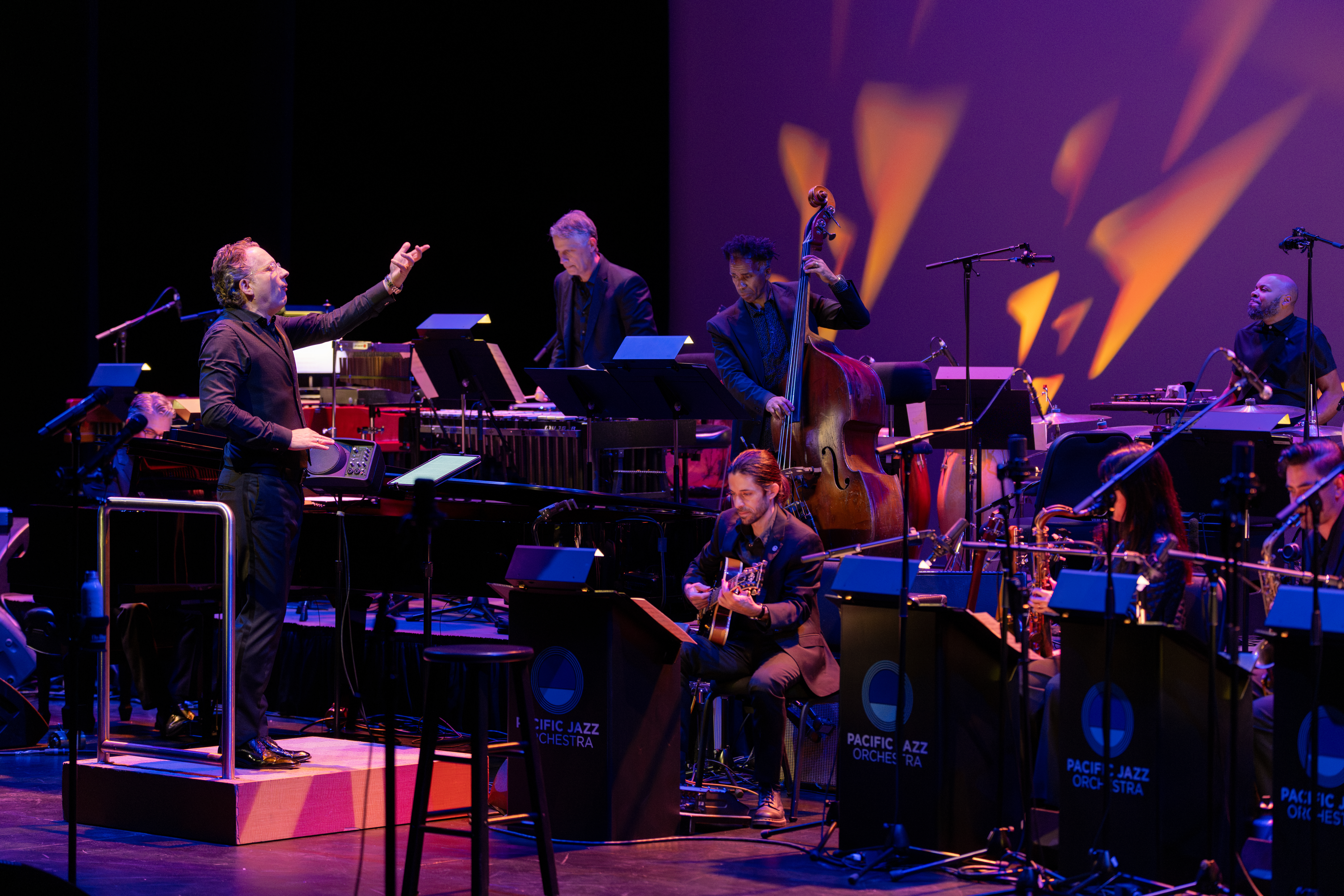
From the first chord, the PJO smoothly interpreted the arrangements that formed a fusion of Jones’s original charts supplemented by Walden’s reinterpretations. The brass section were crisp and dynamic, the reeds projected elegance, and the rhythm section locked in with perfect measures of drive and subtlety. One particularly memorable moment came early with a recreation of the legendary arrangement of “Fly Me to the Moon” that Quincy Jones had famously arranged for legendary crooner Frank Sinatra back in 1964 to commemorate the Apollo 11 mission.
Walden spoke warmly of Jones’ mentorship during the early years of his career:
“He noticed me being a young, Big Band arranger, and he immediately took interest in me, and we quickly became friends and started talking about big band writing. He was still passionate about writing big band music, and once in a while, he would call me in the telephone just to talk about music, writing about how the voice, trombones, with the flutes evolve. That was one of his things. And we talked for hours about all kinds of things. He gave me great advice also along the way. Looking at the world through five saxes, four trombones and four trumpets and four rhythm. I didn’t really know at the time what that meant, but eventually I understood that he meant that whatever happens in the world, as long as the music that you write is how you want it to be, then the rest of the world will make sense to you as well.
Quincy told me, “God gave you one mouth and two ears,” which means that listening is twice as important as talking.
The concert featured several of arrangements that Jones created for numerous singers during the 1950s and 60s. Most memorable were his iconic arrangements for female vocalists such as Diana Washington, Sarah Vaughn and Ella Fitzgerald. And we were treated to his Ella Fitzgerald arrangement of “Dream a Little Dream of Me,” a classic standard, originally published around 1930 with music by Fabian Andre and Wilbur Schwandt, and lyrics by Gus Kahn.
For this number, Lisa Fischer’s rich, soulful voice soared when needed but also adhered to the phrasing that big‑band charts demand. The other vocalist for the night, José James provided a modern sensibility, at times subtle and introspective, which contrasted nicely with the more robust big‑band sound. With the addition of their vocal sparkle, the concert succeeded both as entertainment and as a piece of musical remembrance.
Packed to the rafters for this sold-out concert, The Soraya delivered warm acoustics, clear sight‑lines and a stage that amply allowed each section of the orchestra to breathe. Directly below the stage was a special “orchestra” table seating for some of the venue’s most supportive sponsors, the crystal members, as well as Tina Jones and other members of the Jones family.
The line-up included some of Jones’ compositions of film/TV themes, including from In the Heat of the Night (1967) Ironside and The Pawnbroker.
Backstory:
Before Quincy Jones became a household name through his blockbuster collaborations with Michael Jackson and scoring Hollywood hit movies, he was already reshaping the sound of modern jazz. A true musical polymath, Jones began his career as a trumpeter and quickly emerged as one of the most sophisticated arrangers and composers of the postwar jazz era.
Jones learned his craft while touring with Lionel Hampton in the early 1950s and soon found himself arranging for giants like Dizzy Gillespie, Count Basie, and Sarah Vaughan. His work stood out for its bold harmonic language and cinematic flair, influenced by his classical training under Nadia Boulanger in Paris. That same orchestral sensibility would later infuse his jazz compositions with a depth and polish that pushed the genre into new territory.
By the time he released This Is How I Feel About Jazz in 1956, Jones had already begun to explore a broader vision for the jazz, one that embraced traditional swing and bebop stylings while embracing the worlds of soul, pop, and film. His big band arrangements from this period are not only technically masterful but emotionally charged, offering a rich, expansive take on jazz that foreshadowed the genre-blending path he would pursue in subsequent decades.
Jones was also instrumental in taking jazz global. As part of the U.S. State Department’s jazz diplomacy tours, and later as a musical director for European labels, he helped spread the music internationally and built a reputation as a cultural ambassador. At a time when jazz was still largely club-bound, Jones envisioned it on a world stage and brought it there.
Though he would go on to revolutionize pop music production in the 1980s, jazz has always remained at the core of Quincy Jones’ artistic identity. His work in the genre is marked by a rare blend of elegance and innovation, creating a sound that both honors tradition and dares to transcend it.

 Terry Morgan