

 Pauline Adamek
The Monkey’s Paw story trope remains one of the most adaptable and enduring narrative devices in literature and film. Its core premise revolves around an object (originally an actual mummified monkey’s paw) that fulfills wishes or desires but also exacts a tragic, unforeseen cost or penalty. Employing this compelling premise, storytellers explore human temptation, morality, and the limits of agency — all themes that have resonated for over a century.
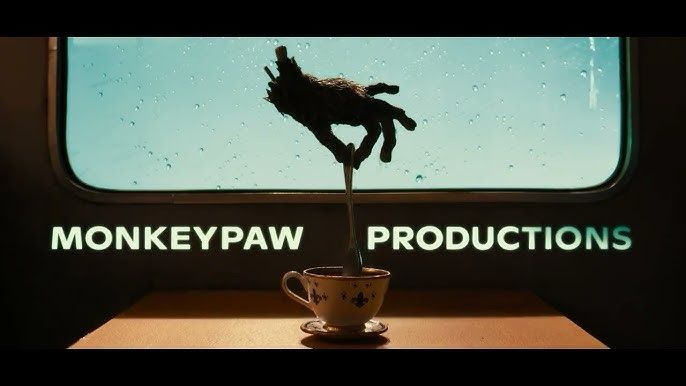
Monkeypaw Productions is an American film and television production company that was founded by filmmaker and performer Jordan Peele in early 2012. The company is known for producing horror films, such as Get Out, Us, Candyman, Nope, and Wendell & Wild, as well as other films, such as Keanu and Monkey Man. In 2019 the company signed a 5-year exclusivity deal with Universal Pictures.
So, it’s no coincidence that Jordan Peele’s production company directly references the Monkey’s Paw trope, signaling the thematic focus of Peele’s work, typically exploring stories where human desire, curiosity, or complacency leads to unforeseen and often horrific consequences.
Originating in W. W. Jacobs’ 1902 short story “The Monkey’s Paw,” the trope centers on a mystical talisman (the bizarrely disembodied monkey’s paw) that grants three wishes, each realized in a cruelly literal way. When a family wishes for money, their son dies in an accident, and the compensation they receive becomes the fulfillment of their request. Jacobs established the defining pattern: temptation, fulfillment, and consequence. His story warns that human attempts to alter fate often lead to ruin.
The concept has since been reinterpreted across genres, especially in horror and science fiction. A famous short story by Richard Matheson, first published in Playboy in 1970, is “Button, Button” which offers one of the most direct adaptations: a couple is given a box with a button that, when pressed, grants them money at the cost of a stranger’s life. Matheson’s story preserves the moral tension and tragic irony of Jacobs’ original tale while translating it into a modern ethical dilemma.
Matheson’s story inspired multiple screen versions, most notably The Box (2009), written and directed by Richard Kelly. Set in 1976, the film follows a suburban couple who receive a box promising a million-dollar reward if they press its red button—knowing it will kill someone they don’t know. Kelly expands the moral puzzle into a larger commentary on social manipulation, incorporating elements of science fiction and surrealism. The film retains the central dynamic of the Monkey’s Paw: human desire confronted by catastrophic consequence.
Other films have drawn on the same structure with varying degrees of abstraction. Wishmaster (1997) presents a djinn (or genie) who grants wishes that backfire in grotesque ways. Final Destination (2000) removes the object entirely but preserves the theme of cheating fate, as death claims those who try to escape it. The Ring (2002) reframes curiosity itself as the fatal act, with a cursed videotape serving as the instrument of consequence. In each, human action triggers suffering that underscores the futility of resisting destiny.
The trope also manifests in stories centered on cursed or enchanted objects. The Dybbuk Box in The Possession (2012), the Lament Configuration puzzle box in Hellraiser (1987), and the mythic Pandora’s Box all reflect the same principle: curiosity or desire unleashes uncontrollable forces. These objects act as vessels of fate, lying dormant until human hands set their power in motion.
Modern reinterpretations often combine the moral dimension of the original with other genres. The Box expands the cautionary tale into a study of psychological manipulation and cosmic consequence, while smaller-scale works such as The Monkey (2025) return to more intimate, character-driven tragedy. Regardless of scope, the essential mechanism remains constant: temptation, fulfillment, and unintended cost.
Across its many incarnations, the Monkey’s Paw trope functions as a meditation on human nature. It examines the tension between curiosity and morality, the illusion of control, and the price of desire. Whether in Jacobs’ Victorian parable, Matheson’s ethical test, or the surreal fatalism of Final Destination and The Ring, the lesson endures: attempts to manipulate destiny carry a price far greater than the wish itself.
The trope continues to thrive because it speaks to timeless fears about choice and consequence. From short stories to blockbuster films, it has evolved from a simple cautionary fable into a versatile framework for exploring the boundaries of human agency. Its message remains as relevant today as it was over a century ago; tampering with fate invites consequences that can neither be predicted nor controlled.
A timeline of Monkey’s Paw–style films:
1970 – Twilight Zone: Button, Button (TV Episode)
Plot: A couple receives a box containing a button. Pressing it will grant them money, but a stranger will die.
Interpretation: A direct adaptation of Richard Matheson’s short story. Emphasizes moral dilemma and ethical responsibility. Consequences are immediate and personal.
1987 – Hellraiser
Plot: The Lament Configuration puzzle box opens a portal to a realm of sadistic beings.
Interpretation: The “box” acts as a gateway to unimaginable consequences. Desire (curiosity and ambition) triggers suffering and punishment, expanding the trope into cosmic horror.
1997 – Wishmaster
Plot: A djinn grants wishes in literal and ironic ways, causing gruesome deaths.
Interpretation: Wishes are fulfilled literally, but the outcomes subvert expectations. The film uses gore and horror to dramatize the consequences of human greed.
2000 – Final Destination
Plot: A group of teenagers cheat death after a premonition, only for death to pursue them systematically.
Interpretation: Abstract take on the trope. Fate itself acts as the “object,” punishing attempts to interfere. Consequences are elaborate, inevitable, and impersonal, emphasizing predestination.
2002 – The Ring
Plot: Watching a cursed videotape leads to death within seven days unless the viewer propagates the curse.
Interpretation: Curiosity and engagement function as the wish. The consequences are fatal, indirect, and psychological. The film modernizes the trope using a media object instead of a magical artifact.
2009 – The Box
Plot: A suburban couple discovers a red-buttoned box. Pressing it promises money but causes the death of a stranger. Additional consequences unfold, involving secret agencies and surreal phenomena.
Interpretation: Direct Monkey’s Paw lineage with added layers of science fiction and moral testing. Consequences extend beyond personal tragedy into ethical and existential dimensions.
2012 – The Possession
Plot: A young girl acquires a Dybbuk Box, releasing a malevolent spirit.
Interpretation: The box serves as a vessel for supernatural consequences. Curiosity or desire to possess triggers harm, aligning with the original Monkey’s Paw principle of unintended consequences.
2025 – The Monkey
Plot: A wind-up toy monkey randomly kills each time it is wound up.
Interpretation: A smaller-scale, intimate variation of the trope. The cursed object causes immediate death, reinforcing the idea that human interaction with the supernatural triggers tragedy.
Tropes and patterns:
Across these adaptations, several patterns emerge: the object or scenario offering the reward varies from a literal box or talisman to abstract fate itself. The temptation driving human action ranges from greed and curiosity to moral compromise. Consequences are typically ironic, tragic, and disproportionate to the initial desire. Early adaptations focus on moral and ethical questions, while later versions incorporate elaborate visual effects, surrealism, or psychological and social commentary.
This timeline illustrates the flexibility and enduring appeal of the Monkey’s Paw trope. It continues to resonate because it combines suspense, moral reflection, and universal anxiety about the limits of human control over fate. Whether presented in a concise television episode, a horror spectacle, or a complex psychological thriller, the fundamental structure remains: human action triggers consequences that cannot be controlled nor anticipated.