
 Pauline Adamek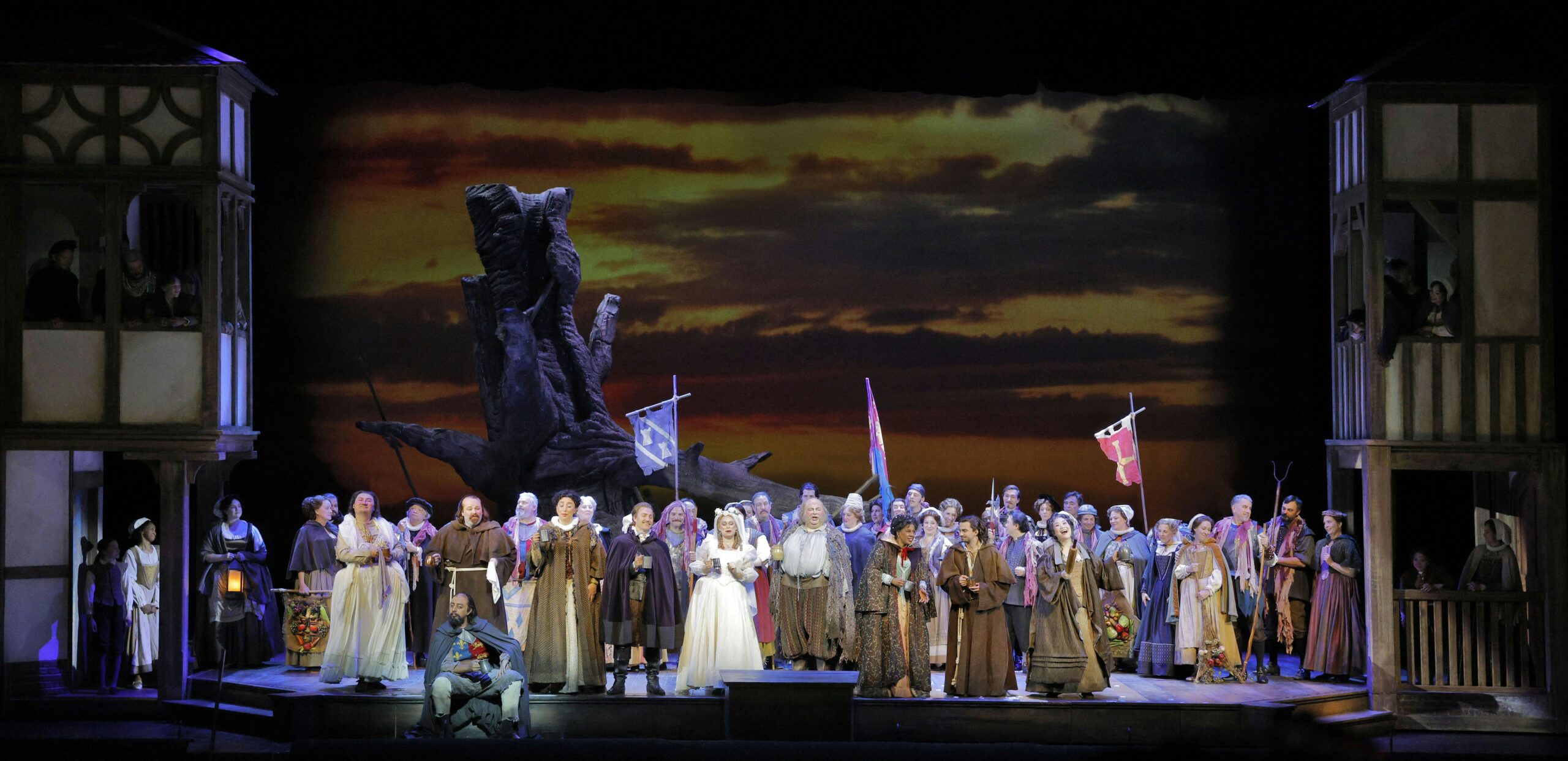
LA Opera’s revival production of Falstaff opened last Saturday night to a rapturous audience, proving to be a successful, high-energy showpiece for the talented company.
Falstaff is a late work by Giuseppe Verdi, marking his final operatic composition and large-scale work for the stage. As such, it deliberately abandons many of the conventions associated with the great composer’s earlier operas. Instead of clearly delineated arias and set pieces, the score unfolds in a continuous, conversational flow. Dispensing with a traditional overture or prelude, the opera plunges straight into the action with an energetic burst of music. In the boisterous comedy that follows, the music seldom slows down to pause for traditional arias. The result is a work that depends less on vocal display and more on precision, pacing, and ensemble coordination as befitting an amusing story that clearly has its roots in the classic clowning of Commedia dell’arte.
Conductor James Conlon’s illuminating pre-show talk was the perfect introduction to those of us experiencing Falstaff for the first time. “You’re in for something special,” Conlon promised, explaining how this opera stands among Giuseppe Verdi’s greatest achievements. Written late in his life, the work made its premier in 1893, just before the composer’s 80th birthday. “Falstaff is one of Verdi’s masterpieces—indeed, one of the greatest. He wrote many masterpieces, but this is at the very top, along with Otello. What’s remarkable is that he wrote it late in life, when he didn’t need the money and had grown weary of the theater. He wrote it for himself.”
Verdi composed 26 operas during his life, most of which were serious dramas. Early in his career, he had written a comedy that failed, and that failure stayed with him. Un giorno di regno (King for a Day), was only Verdi’s second opera, which premiered in 1840 at La Scala during a time when the composer was enduring some personal losses. Conlon claims that Falstaff was his way of finally succeeding in comedy.
Shakespeare’s Falstaff is a complex character, one who’s both comic, but also deeply human. In Verdi’s version, he becomes even richer: funny, flawed, resilient. Based on Shakespeare’s Henry IV plays as well as The Merry Wives of Windsor, with a brilliant libretto by Arrigo Boito, Verdi’s Falstaff tells the story of a jolly and charming but disreputable knight who tries to seduce two married women using identical love letters, only to be outwitted at every turn.
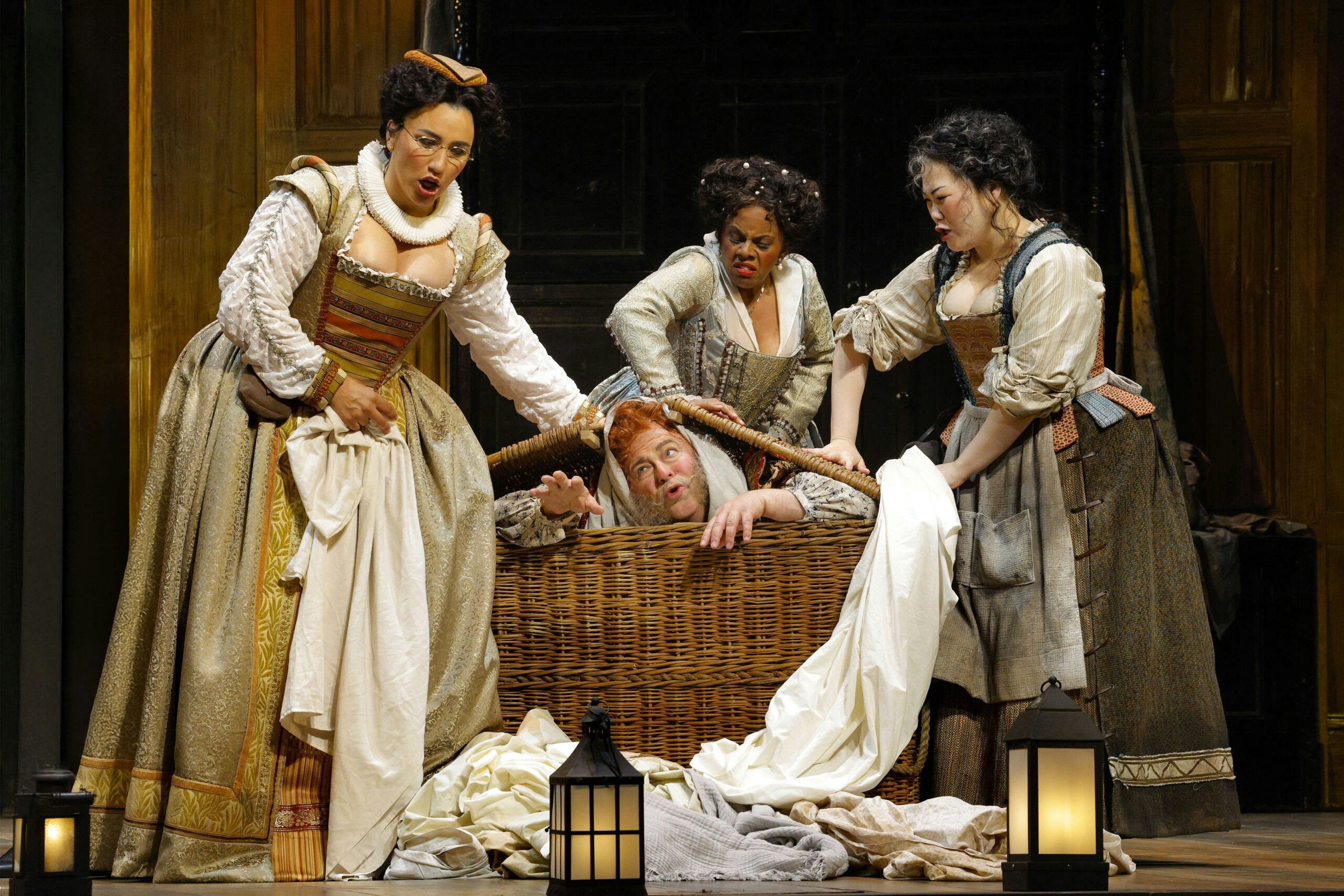
Falstaff is presented as a broke aristocrat who is desperate for money. He seductively petitions two married women, but unfortunately for him the pair are confidants. Outraged, they decide to teach the old fool a lesson. What follows is a battle of the sexes, full of wit, trickery, and ensemble brilliance.
Explains Conlon, “Musically, this opera is extraordinary. Some people say it lacks memorable melodies—but that’s not true. The melodies are everywhere; they just move incredibly fast.”
Unlike traditional opera, Falstaff moves with extraordinary speed. Its melodies are abundant but fleeting, woven into a continuous flow of music and action. The result is a work of remarkable energy, wit, and sophistication. In the end, Verdi brings everything together in a dazzling fugue, reminding us that all of life is a grand joke—and that we are all, in some fashion, fools. Yet beneath the effervescent humor lies a deeper reflection on human nature, resilience, and joy.
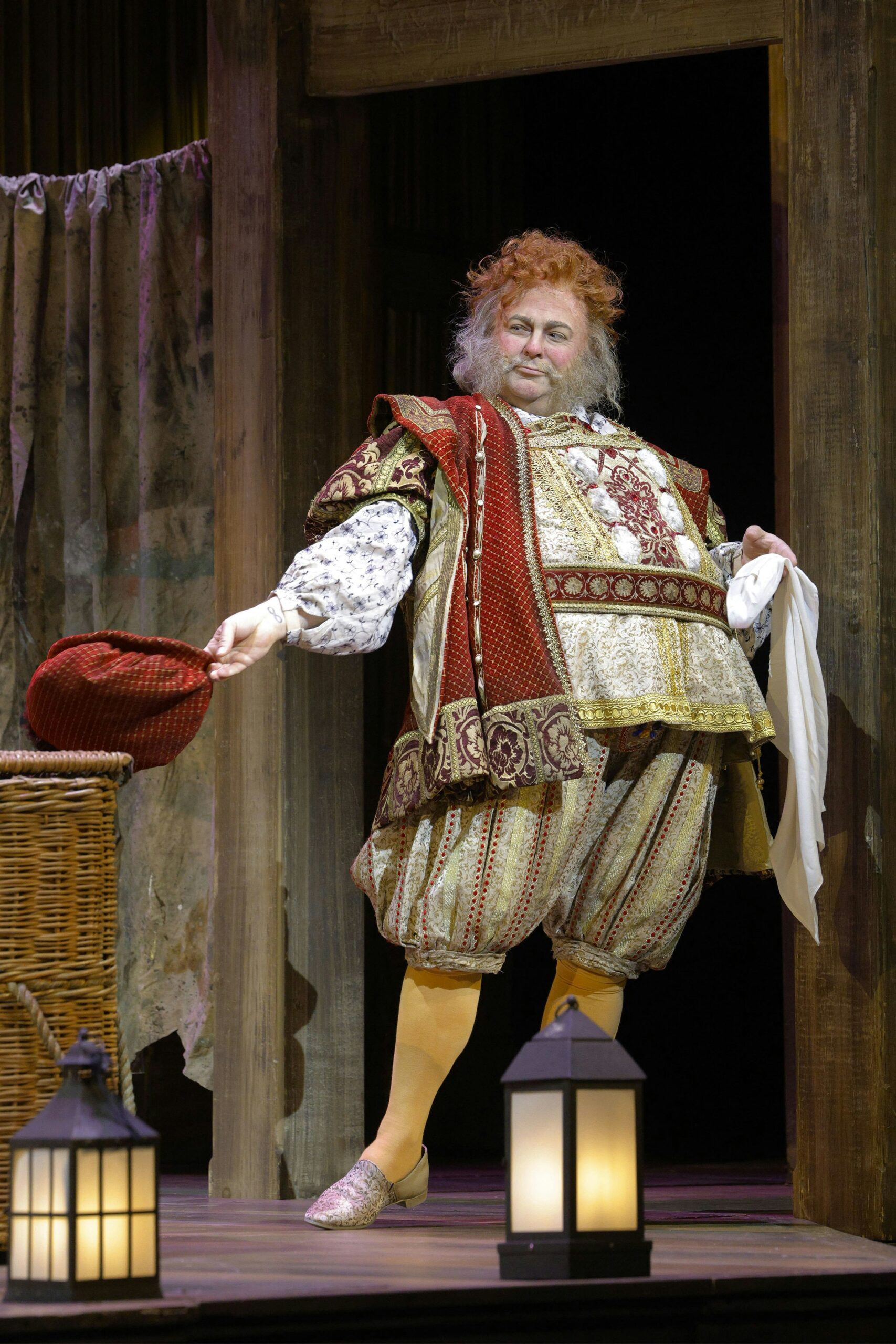
With expert direction from Lee Blakeley (revival staging), the performance captures that sense of quicksilver movement inherent in the work’s pacing. At the center is Sir John Falstaff – “a fat knight” and a figure of comic excess whose self-confidence borders on delusion. Delivering on-point comic timing and character nuance, Craig Colclough’s baritone performance brought warmth and humor to the stage. Beneath the buffoonery, bluster and bravado we detect a sympathetic and, at times, reflective figure.
Musically, the opera is built on intricate ensembles rather than isolated solos. Verdi’s orchestration is unusually transparent, often chamber-like, and full of fleeting details that mirror the action on stage. At the helm, Conlon’s dynamic musical direction achieves clarity without sacrificing momentum.
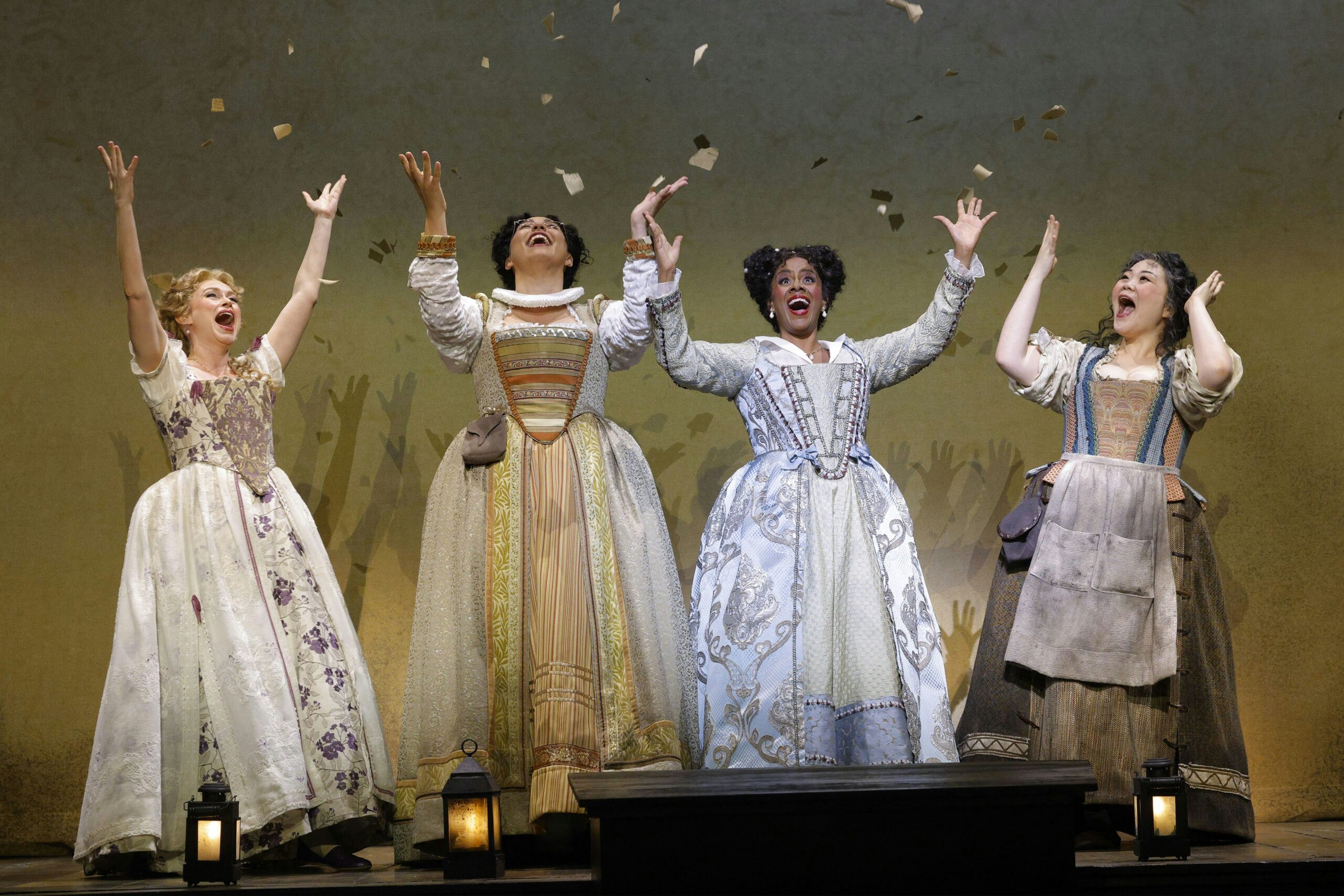
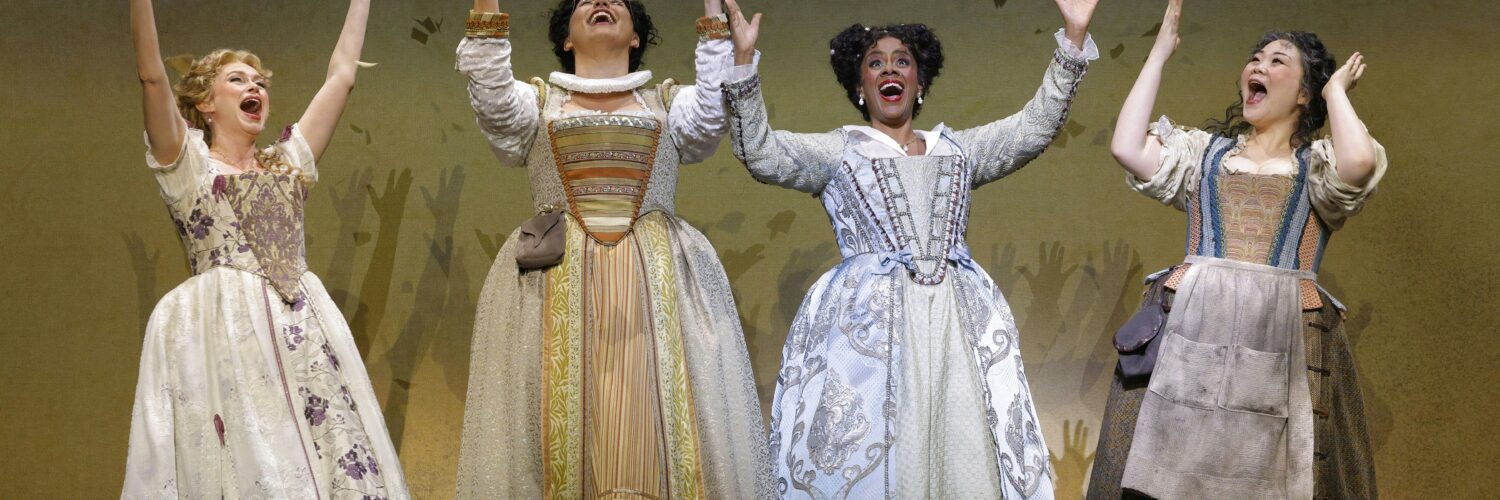
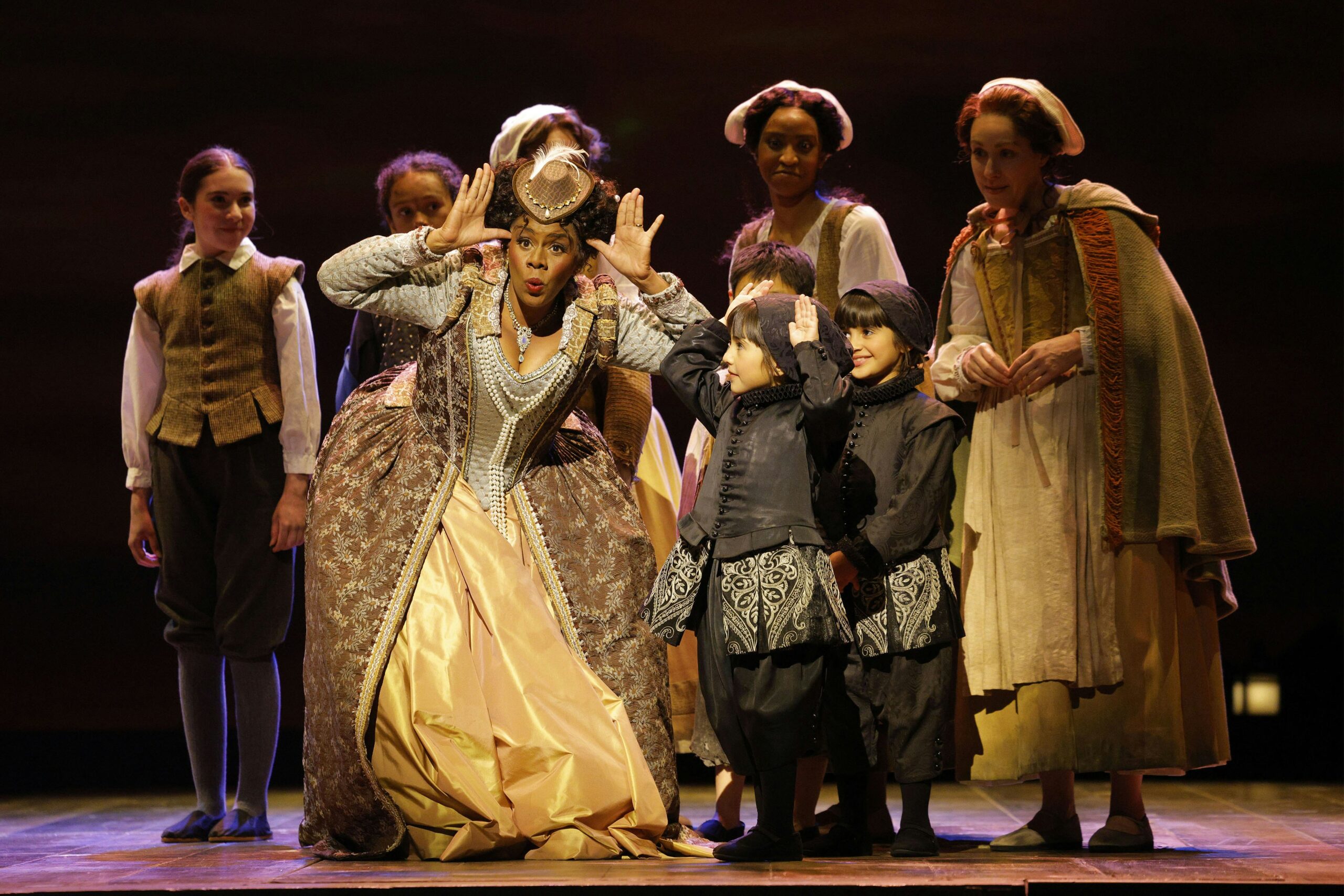
The supporting characters form the engine of the drama. Ford, the jealous husband (Ernesto Petti, baritone), provides one of the few moments approaching a traditional aria, and his music introduces a darker, more introspective color that contrasts with the surrounding comedy. The four women—Alice Ford (soprano Nicole Heaston), Meg Page, Mistress Quickly, and Nannetta—drive the plot with intelligence and coordination, and their success depends heavily on ensemble chemistry. Hyona Kim (mezzo-soprano) as Mistress Quickly, in particular, delivered the essential precise comic timing, while Nannetta (soprano Deanna Breiwick) and Fenton (tenor Anthony León) offered a more lyrical, romantic strand that felt integrated into the lively comedy. As Meg, Sarah Saturnino (mezzo-soprano) was warm, witty, and firmly a part of the ensemble of these scheming “merry wives.”
Staging carries an unusually strong weight in the success of this opera because of its rapid musical and dramatic shifts. The scenic design was traditional but polished, permitting versatile scene changes while some scenes continued behind the scrim. The resulting show was visually rich with its Tudor-style period costumes and detailed sets.
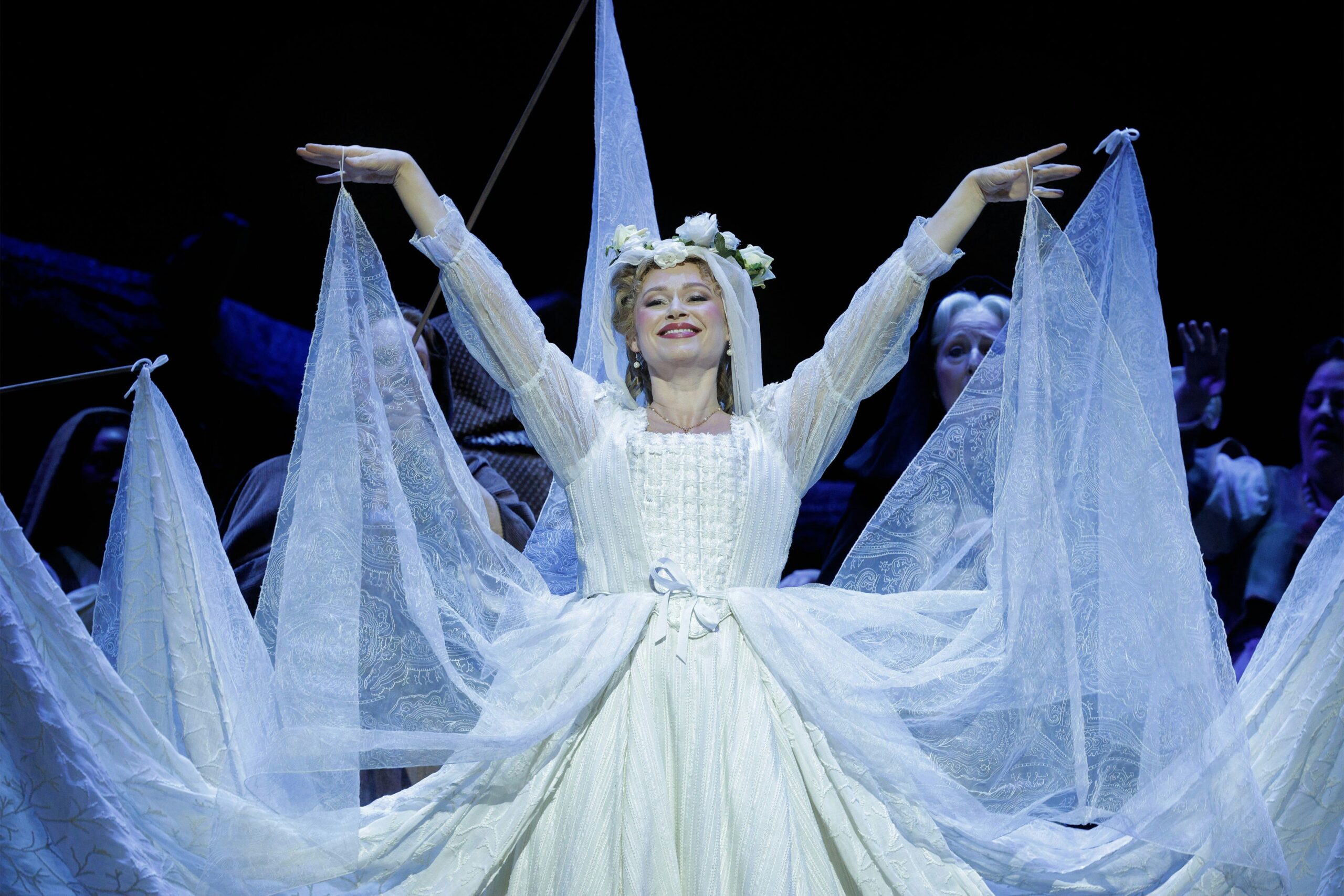
The final act, particularly the Windsor Forest scene, introduced a shift in tone from social comedy to something more stylized and ambiguous. The use of disguises and quasi-supernatural elements created a sense of enchantment amidst the subterfuge.
The opera concluded with a fugue, an unusual device in this context, given that it’s typically a complex, traditionally serious form. But Verdi magnificently converts it into comedy. The entire company sings that “all the world’s a joke,” and declares that everyone is a fool. Then, in the midst of laughter, there’s a fleeting reminder of mortality—a memento mori. Verdi, then nearly 80, is reminding us of life’s fragility for an instant before immediately sweeping it away with humor and energy. Both hilarious and profound, this finale encapsulates the work’s broader perspective: the broad comedy ultimately includes everyone, not just its central victim.
It’s a triumphant and satisfying finish to a lively performance.
Falstaff by Giuseppe Verdi
Dorothy Chandler Pavilion
Conductor: James Conlon
Production: Lee Blakeley (revival)
Performance Schedule:
Thursday, April 23, 2026 — 7:30 PM
Sunday, April 26, 2026 — 2:00 PM
Wednesday, April 29, 2026 — 7:30 PM
Saturday, May 2, 2026 — 7:30 PM
Sunday, May 3, 2026 — 2:00 PM
Thursday, May 7, 2026 — 7:30 PM
Saturday, May 9, 2026 — 7:30 PM
Sunday, May 10, 2026 — 2:00 PM (Final Performance)
Go here to purchase 2026/27 Season Packages.

 Terry Morgan