


 Pauline Adamek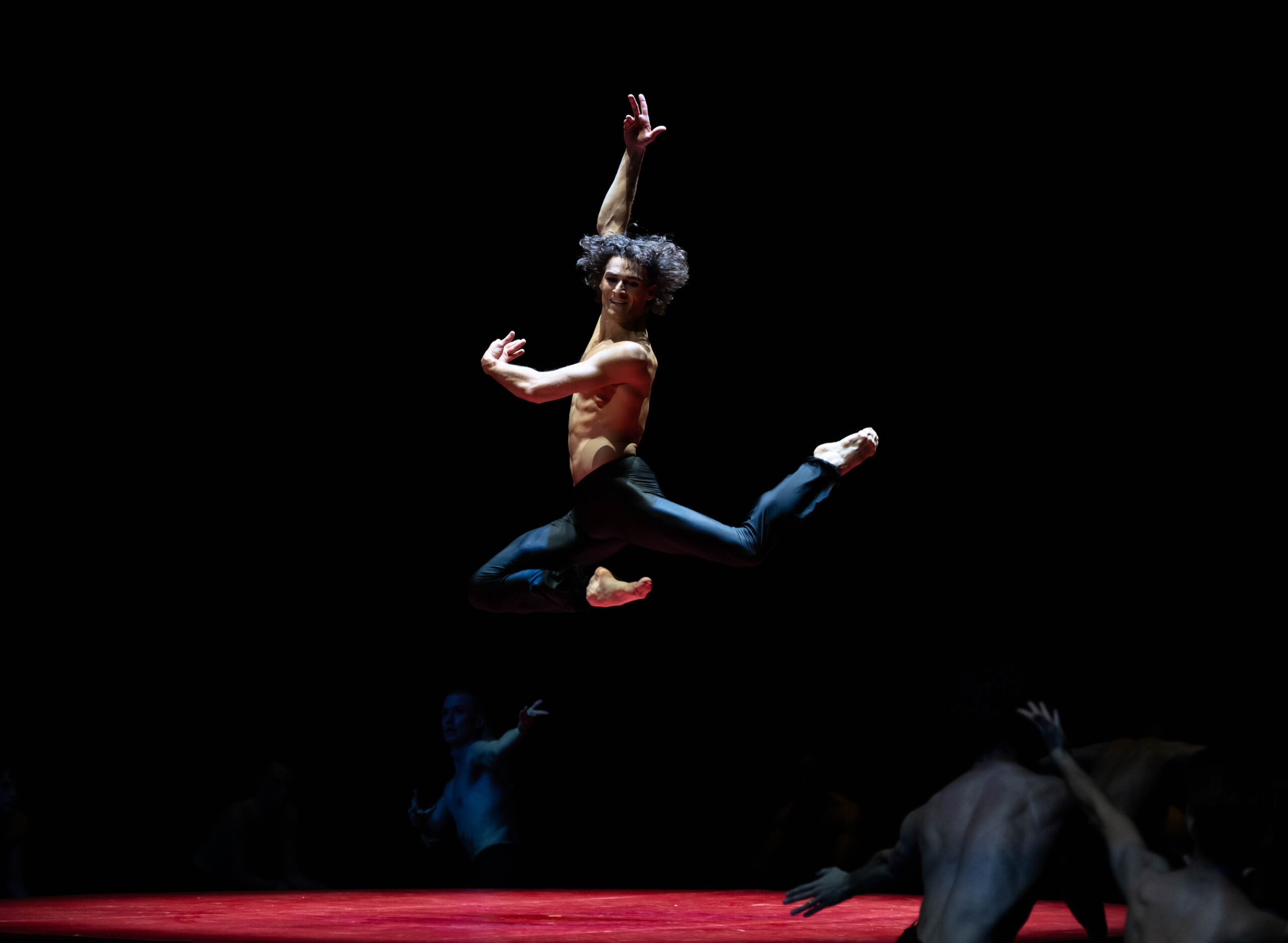
Hugo Marchand and the Stars of the Paris Opera Ballet Bring Elegance, Passion, and Poetry to Walt Disney Concert Hall
“She’s the swan.” This groundbreaking revelation was audibly uttered by no fewer than two men in my vicinity as they helpfully informed their silent female companion while a solo dancer, costumed as – ahem – a swan began her performance. Hooray for mansplaining!!
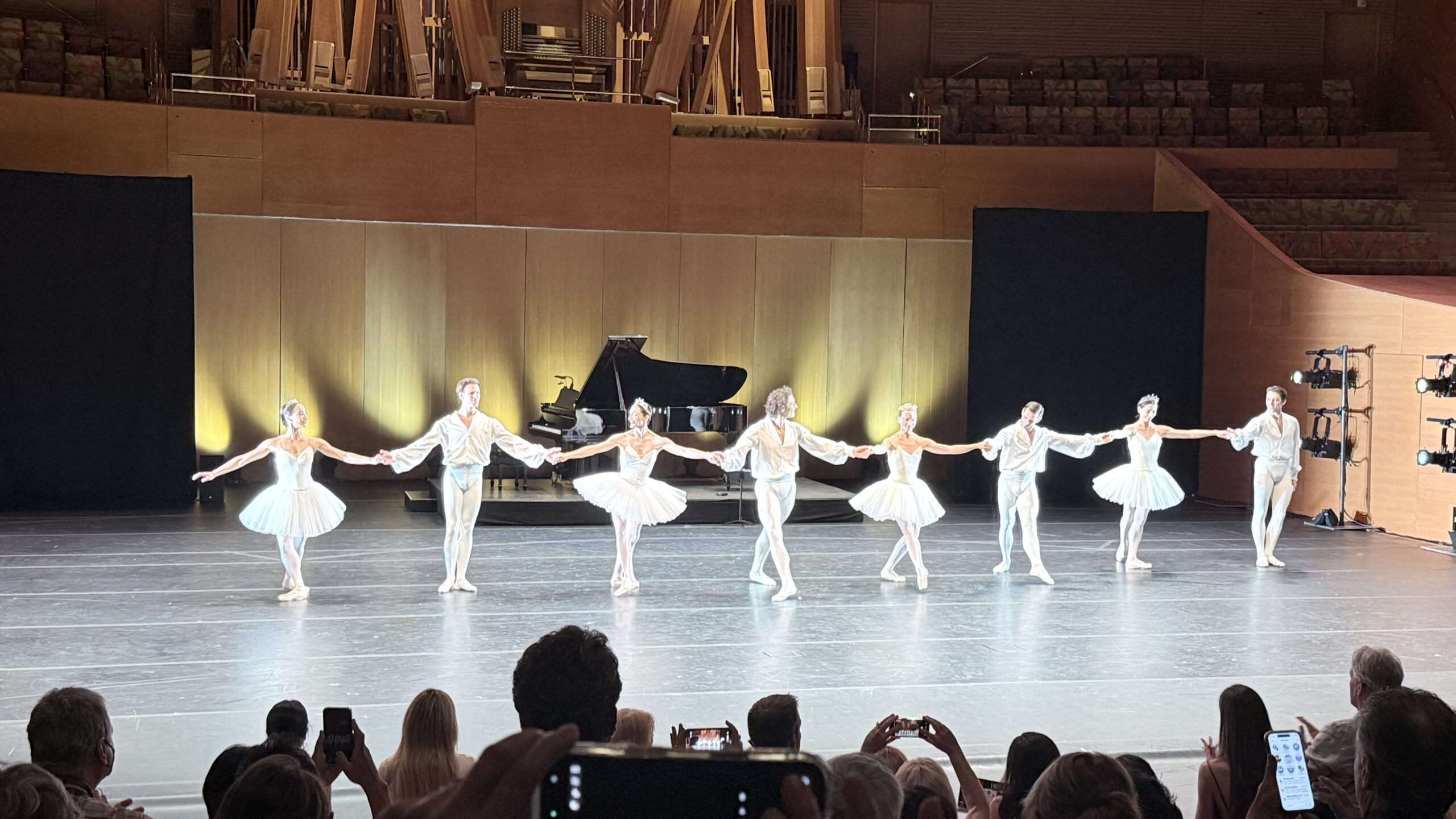
The sublime artistry of the Paris Opera Ballet – one of the world’s oldest and most prestigious ballet companies – arrived in Los Angeles with extraordinary brilliance. Danseur Étoile Hugo Marchand brought together an exceptional company of principals and soloists for an unforgettable matinée at Walt Disney Concert Hall on Saturday (8-1-26). Today’s final matinée performance is sold out.
Above photo – Hugo Marchand in Bolero by Choreographer Maurice Bejart – Photo by Julien Benhamou. (Photo from a different performance.)
Presented as part of The Music Center’s 2025/2026 Season dedicated to the memory of Glorya Kaufman, the program offered a rare opportunity to experience the world-renowned dancers of Paris in an intimate setting where every movement, musical phrase, and artistic choice could be fully appreciated. The choice to stage it at the Walt Disney Concert Hall rather than the Dorothy Chandler Pavilion was a wise one. The Dorothy Chandler Pavilion, with approximately 3,150–3,200 seats, offers a larger traditional theater setting designed for grand-scale productions such as opera and full-length ballet. By comparison, Walt Disney Concert Hall seats approximately 2,265 guests, creating a more intimate environment that emphasizes acoustic excellence and a closer connection between performers and audience. With its wrap around stage, the elegant venue affords a more inclusive experience for this kind of showcase.
Now 32, Hugo Marchand has been dancing since the age of 9. After four years of studies at the Nantes Conservatory, where he won top honors, he entered the Paris Opera Ballet School in 2007 at age 13. He joined the Paris Opera Ballet in 2011 at 17 and rose through its ranks with remarkable speed. In 2017, at just 23, Marchand was named Étoile (principal dancer) following his acclaimed performance as James in La Sylphide during the company’s tour in Tokyo.
For these performances, Marchand’s vision celebrated ballet in its most personal form. Rather than relying on the scale and grandeur of a traditional full-length production, the evening revealed the individual artistry of each performer while highlighting the extraordinary unity, discipline, and elegance that define the Paris Opera Ballet. The program moved effortlessly between classical purity, contemporary exploration, romantic intensity, and quiet introspection, demonstrating the remarkable versatility of these exceptional artists.
The evening opened with Delibes Suite, a graceful tribute to the elegance and melodic richness of French ballet. Drawing from the music of Léo Delibes, the work immediately established the refined atmosphere of the evening, with sparkling technique, intricate musical phrasing, and the effortless sophistication that has long been associated with the French classical tradition.
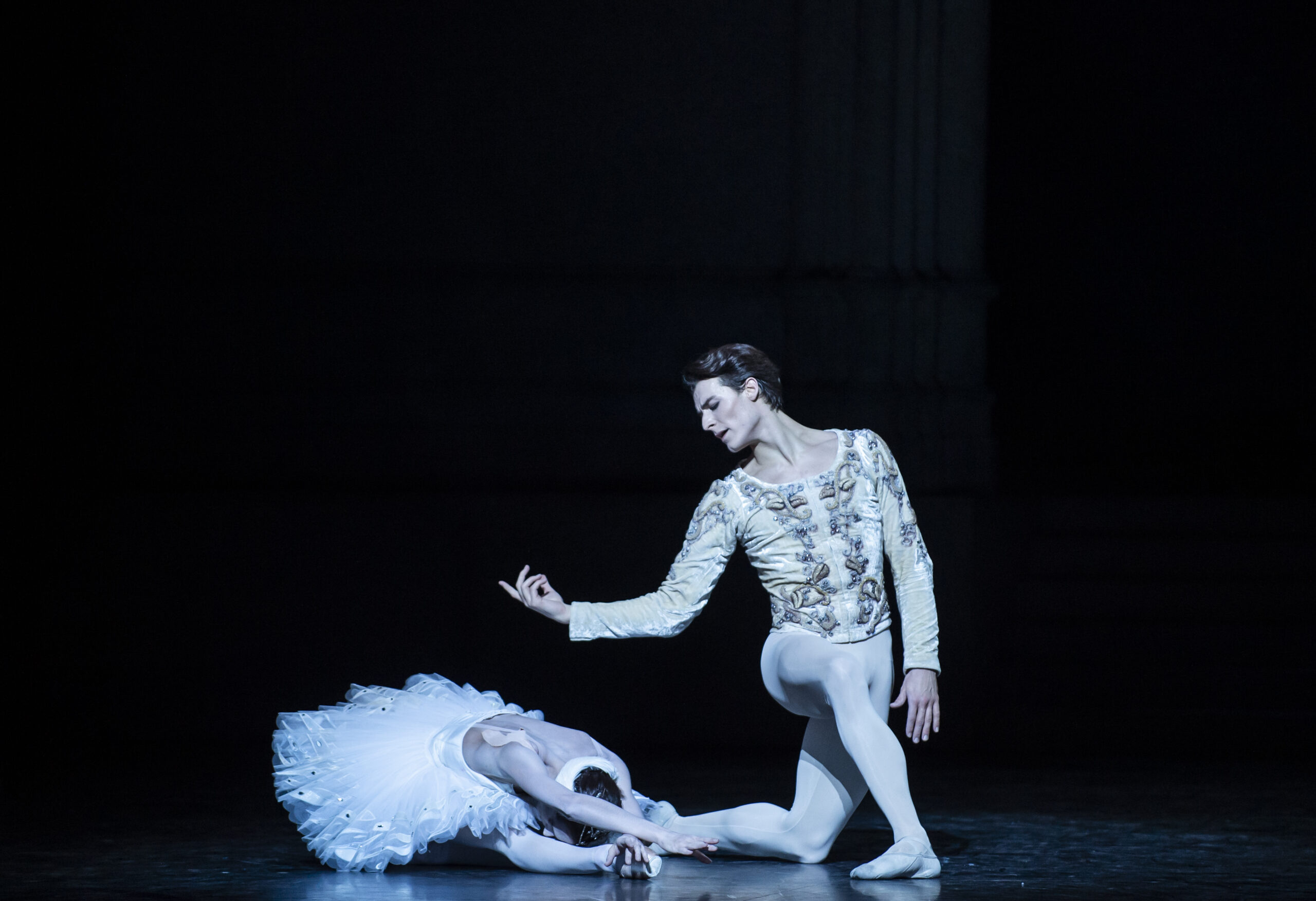
The haunting beauty of The Dying Swan followed, performed by Dorothée Gilbert, Danseur Étoile of the Paris Opera Ballet. This iconic solo remains one of ballet’s most profound expressions of vulnerability and artistry. Set to Camille Saint-Saëns’ Le Cygne from The Carnival of the Animals, the work depends not on grand movement but on the ability to communicate an entire emotional journey through the smallest gestures. Gilbert brought extraordinary delicacy, control, and emotional depth, creating a portrait of fragility and grace that seemed to suspend time. Every breath, extension, and trembling moment carried meaning, reaffirming why this brief masterpiece remains one of ballet’s most enduring achievements. Musical accompaniment from pianist Elena Bonnay and cellist Julie Sévilla-Fraysse was magnificent.
We all know the acoustics of the Walt Disney Concert Hall are superlative. Importantly, the placement of the Steinway grand piano upstage against a wall was clearly selected to showcase cello performance that might otherwise have been eclipsed by the piano forte.
À corps ouvert (choreo by Jean-Guillaume Bart) shifted the evening into a more contemporary realm, exploring the relationship between physicality, space, and emotional expression. The work revealed the dancers’ ability to move beyond classical vocabulary while maintaining the precision and clarity that define the Paris Opera Ballet. It was a reminder that this company’s strength lies not only in preserving tradition but also in embracing the evolving language of dance.
The dramatic intensity of Carmen Pas de Deux (choreo by Ronald Petit) brought passion and theatricality to the stage. Filled with sensuality, tension, and explosive character, the duet showcased the dancers’ commanding presence and their ability to tell a complete story through movement. The chemistry between the performers Hannah O’Neill and Antonio Conforti transformed the familiar Carmen narrative into a vivid exploration of desire, conflict, and attraction.
The evening’s emotional centerpiece was Angelin Preljocaj’s Le Parc, a masterful meditation on love, desire, and surrender. Created for the Paris Opera Ballet in 1994 and set to music by Wolfgang Amadeus Mozart, the ballet follows the evolution of a relationship from formal courtship and social restraint to complete emotional freedom. The celebrated final pas de deux, set to the Adagio from Mozart’s Piano Concerto No. 23 in A major, K. 488, remains one of ballet’s most unforgettable images. Known as the “flying kiss,” the scene captures the extraordinary trust between two dancers as they appear to transcend physical boundaries. Marchand and his partner brought exceptional tenderness and refinement to this moment, balancing technical brilliance with genuine emotional intimacy. A truly poignant experience that moved me to tears!
An intermission was necessary to compose oneself.
Sonatine by George Balanchine, set to music by Maurice Ravel, offered a study in precision, elegance, and musical architecture. Its refined choreography allowed the dancers’ exceptional control and musical intelligence to shine, demonstrating how restraint can be as powerful as virtuosity.
The romantic charm of Le rendezvous pas de deux (choreo also by Ronald Petit) celebrated the timeless beauty of classical partnering. With graceful lifts, intricate coordination, and effortless communication between dancers, the work highlighted the joy, elegance, and technical mastery that remain central to ballet’s enduring appeal.
Esprit du bleu (from Signes – choreo by Carolyn Carson) introduced a more atmospheric and contemporary sensibility, using movement to explore mood, color, and emotional resonance. Its fluid choreography created a dreamlike quality, revealing another dimension of the dancers’ expressive range.
One of the evening’s most exquisite moments was Hans van Manen’s Trois Gnossiennes, performed by Léonore Baulac and Hugo Marchand. Set to the mysterious piano compositions of Erik Satie, the duet was a masterclass in intimacy and restraint. Pianist Elena Bonnay brought extraordinary sensitivity to Satie’s spare, meditative score, creating a soundscape of quiet reflection and suspended time. Dancers Baulac and Marchand found poetry in the smallest details—a glance, a pause, a shift of weight, a gesture of trust. Van Manen’s choreography transforms partnership into a conversation, and the dancers’ extraordinary connection made every moment feel deeply human.
Marc Moreau’s Adage en blanc brought the evening to a luminous close with a celebration of classical ballet’s purity, elegance, and technical brilliance. Drawing inspiration from the tradition of the ballet blanc, the work highlighted the beauty of dancers moving in harmony through refined lines, sculptural poses, and intricate partnering. The choreography showcased the full vocabulary of classical adage: the women floated through sustained arabesques, développés, promenades, extensions, and beautifully controlled balances, emphasizing grace, musicality, and expressive line. The men brought strength and athletic brilliance through lifts, supported turns, expansive port de bras, and powerful traveling jumps, including soaring grand jetés and batterie, where their legs sharply crossed and opened in mid-air with a striking scissor-like precision before returning to the stage with remarkable control.
Moreau’s choreography balanced moments of individual virtuosity with the elegance of ensemble movement, revealing the extraordinary discipline and artistry of the Paris Opera Ballet dancers. Every extension, leap, and partnering sequence appeared effortless, transforming demanding classical technique into a vision of harmony and beauty. As the final work of the program, Adage en blanc was a fitting tribute to ballet’s enduring language, pure, refined, and unforgettable.
Walt Disney Concert Hall proved an inspired setting for this intimate showcase. What Hugo Marchand offered was far more than a showcase of exceptional dancers, it was a celebration of ballet as a living, evolving art form. In bringing these artists to Los Angeles, Marchand created a rare and unforgettable encounter with ballet at its highest level: technically flawless, emotionally generous, and profoundly moving.
Program:
Mixed repertory
Delibes Suite by Jose Martinez
The Dying Swan by Michel Fokine
À corps ouvert by Jean-Guillaume Bart
Carmen Pas de Deux by Roland Petit
Pas de Deux from Le Parc by Angelin Preljocaj
Sonatine by George Balanchine
Le Rendez-Vous Pas de deux by Roland Petit
L’Esprit du bleu from Signes by Carolyn Carlson
Trois Gnossiennes by Hans van Manen
Adage en blanc by Marc Moreau

 Terry Morgan