


 Terry Morgan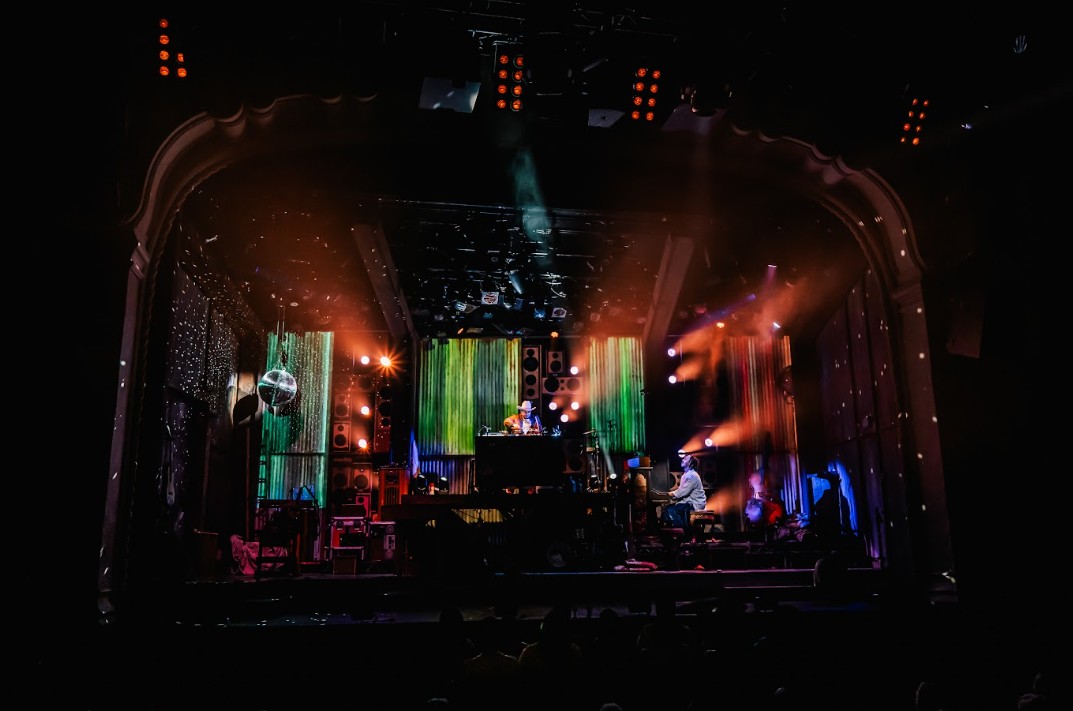
When I first read about the premise of the musical Mexodus, which was the statement that there was a lesser-known Underground Railroad that freed four to ten thousand enslaved people by getting them to Mexico between 1829 to 1865, I was surprised that I’d never heard this important history. Or, as the writer/performers of the play, Brian Quijada and Nygel D. Robinson remark during the show: “Did you know this shit? We didn’t know this shit!” That was a compelling enough reason to see the show, but it’s also quite a rare specimen in that it’s a “live-looped musical,” in which the two performers (with a near miraculous assist from a live sound mixer) create loops and beats that repeat and layer over each other to make the music for every song. None of this can entirely prepare you for the impact of experiencing this audacious production for the first time. I’ve never seen anything quite like it, and I can see why it’s won and been nominated for many awards.
In 1851 in Victoria, Texas, Henry (Robinson) is an enslaved person doing hard physical labor for a cruel master. In his youth he lived in Kentucky, where he was still enslaved but at least had the love and presence of his mother. But at eight years of age, he was sold and moved to the Haskins Estate and has felt that loss ever since. One day the master’s wife comes onto him, and he rejects her advances. The master finds out and nearly beats Henry to death, but Henry defends himself and kills his tormentor. He knows he’ll be executed for this, so he attempts to ford the treacherous Rio Grande to escape to Mexico, where slavery is outlawed. He barely survives the crossing and is saved by local farmer/ex-army medic Carlos (Quijada), who is battling his own demons of guilt. The two initially are wary of each other for many reasons but ultimately realize they need each other to help save themselves.
Robinson gives a charismatic and impressive performance as Henry. He’s blessed with a strong and clear singing voice, and his duet with Quijada on “Henry 2 Enrique” literally brought the show to a stop as the roars of audience approval wouldn’t stop for about two minutes – something I’ve rarely seen. Quijada is confident and excellent in his portrayal of Carlos, rapping at blistering speed and singing both in English and Spanish. His performance of “Herida” is lovely and emotional. I cannot emphasize enough that these two actors not only sing and dance throughout the show, but they also each play multiple musical instruments very well – they are the orchestra of their own musical.

Director David Mendizábal masterfully keeps all of the complex and disparate elements of the show balanced and successful and stages everything with energy and creativity (such as how he turns Henry and Carlos playing guitars into a symbol of their learning to work together in “The Aftermath”). Mextly Couzin’s lighting is chameleonic, changing colors swiftly and expertly to support or emphasize any quicksilver change of vibes. Mikhail Fiksel’s looping systems architecture and sound design is a true marvel, and seeing how the music is put together, piece by piece, for each song is one of the great pleasures of the production. Frankly, whoever was running the sound mixing board for the show deserves third billing in the credits (after the performers) for their amazing contributions.
Quijada and Robinson’s talents are vividly demonstrated in their composition of the book, music and songs. The writing is full of grace notes of intriguing detail (Carlos points out that Victoria, Texas used to be the city of Victoria, Mexico), symbolism (Henry floats across the river on a bale of cotton) and deeper meaning (the theme of the show is stated “Todos estamos juntos en esto” – “We are all in this together.”) My only quibble with the writing is that we never hear much more about this unheard-of version of the Underground Railroad than we do in the first several minutes of the show, and I was hoping to learn more about it.
Mexodus is an astonishing and entertaining production, a unique musical that builds itself from the ground up as you watch, and it’s a joy to experience.
Mexodus is presented by and at Pasadena Playhouse through August 2, 2026. Tickets are available at https://www.pasadenaplayhouse.org/





 Pauline Adamek