

 Pauline Adamek
“See me. Feel me. Touch me. Heal me.”
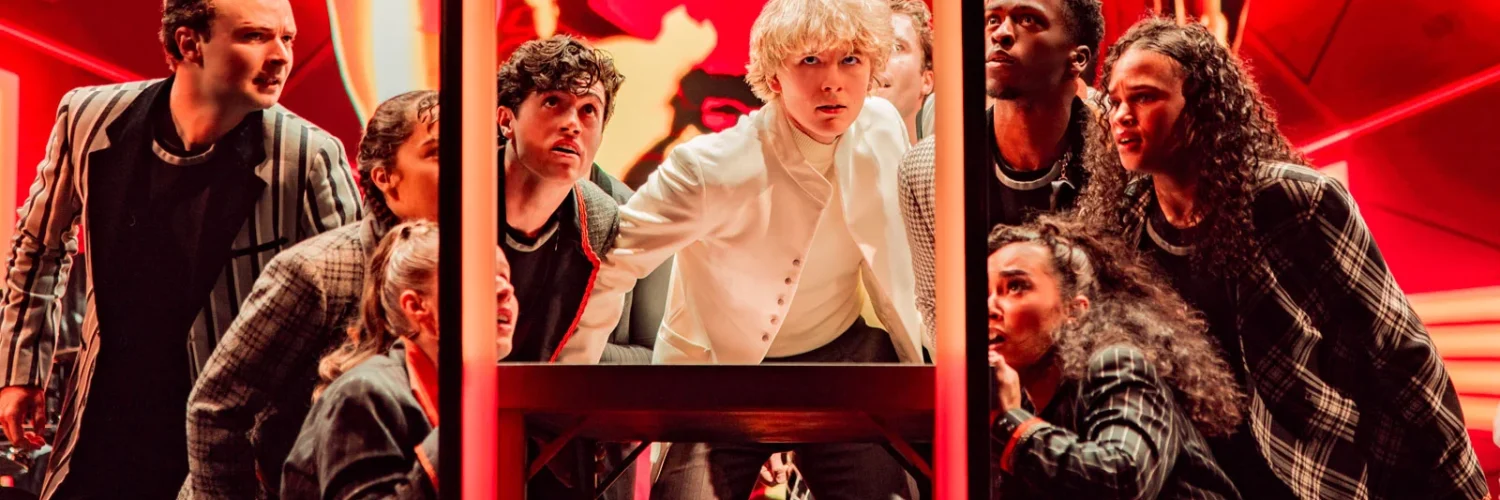
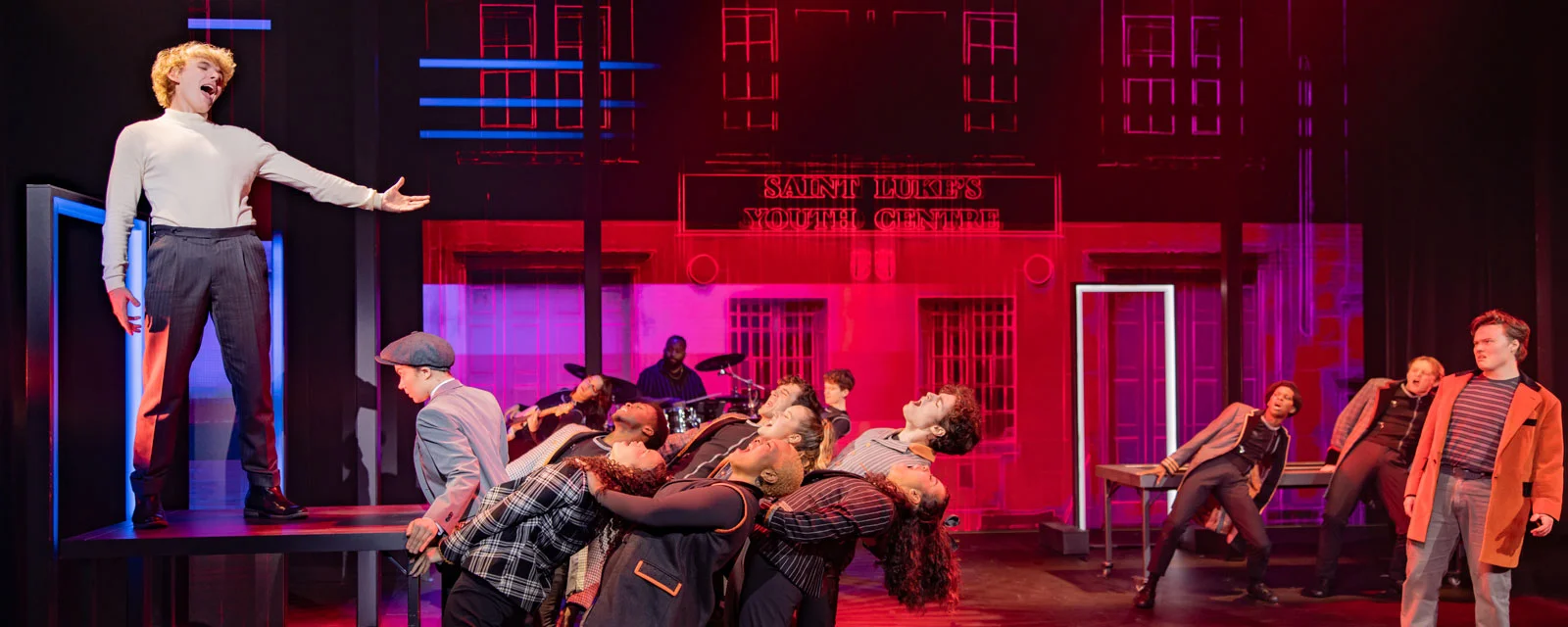
This haunting refrain is the essence of this iconic musical. Fluid staging, powerhouse performances and high-energy makes for an exhilarating night of musical theater. The touring production of The Who’s Tommy is now playing at the Hollywood Pantages Theatre. Renowned for being the work that established rock opera as a major genre, this fast-paced show delivers a powerful evening of rock-infused musical theater, driven by an exceptionally energetic cast and some impressive vocal performances.
The voices truly are a standout, moving effortlessly between the show’s soaring rock anthems, explosive ensemble numbers, to the show’s more emotional ballads. Director Des McAnuff demonstrates an excellent command of pacing, given how frenetic it is (for the most part). The performers bring tremendous intensity and commitment to their roles, balancing the vulnerability at the heart of Tommy’s story with the larger-than-life energy that defines The Who’s music. The ensemble is equally impressive, adding depth, precision and electricity to the production’s many musical moments. Together, the cast captures the spirit of this iconic rock opera while making the story feel immediate and alive. It’s a vocally exciting, visually dynamic performance that reminds us why Tommy remains such a distinctive and enduring piece of musical theater.
About the musical:
The Who’s TOMMY is an electrifying rock musical about trauma, isolation, the power of music, and the dangers of fame. Set in post-World War II England, the story follows young Tommy Walker, who witnesses a shocking act of violence involving his parents. Deeply traumatized, he retreats into a world of silence, becoming deaf, blind, and unable to speak. Despite his isolation, Tommy discovers an extraordinary talent for pinball. His remarkable ability turns him into an international celebrity, attracting devoted followers who begin treating him almost like a messiah. But fame doesn’t heal his emotional wounds… Tommy must ultimately find his own identity and discover what it means to be truly free.
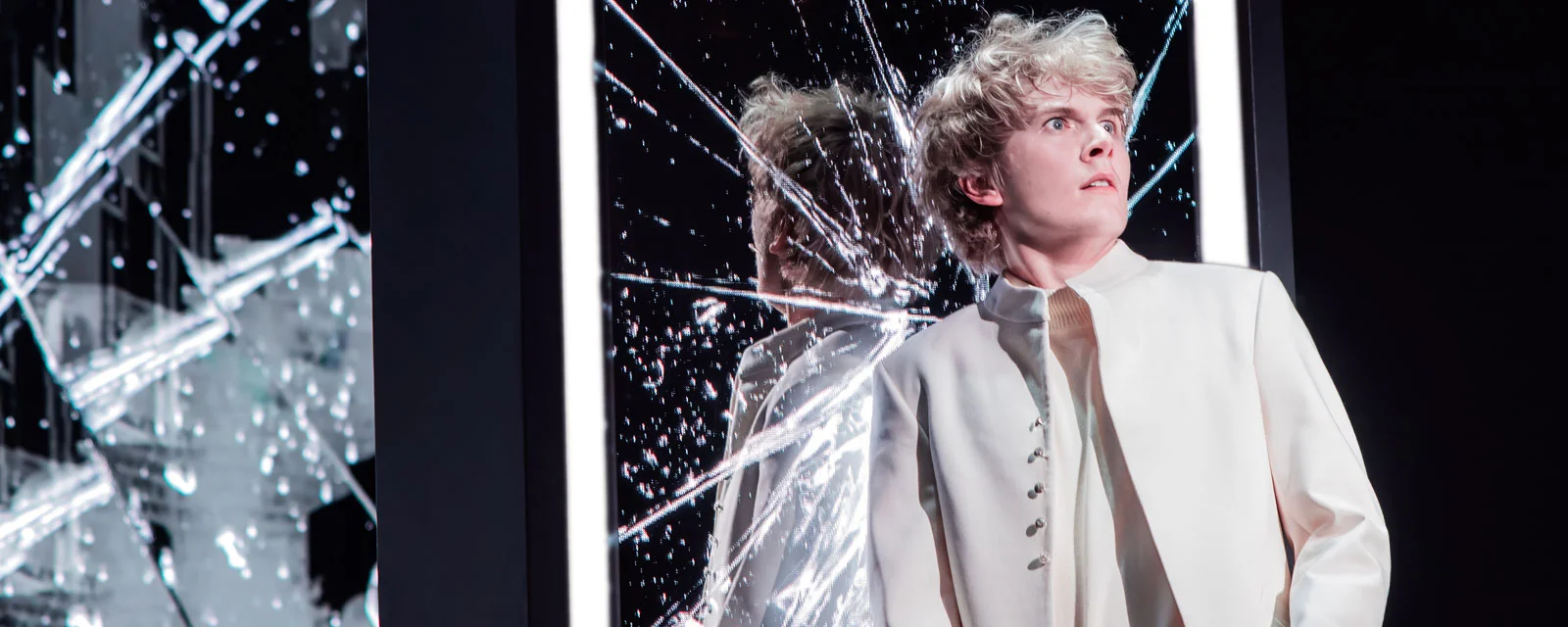
Leading the cast is Collin Matthew Flanagan as Tommy Walker, the central figure whose journey from traumatized, withdrawn child to celebrated pinball champion and spiritual phenomenon drives the story. The role requires a particularly expressive physical performance, as Tommy spends much of the early story communicating without conventional speech or movement. Flanagan’s challenge – to make that transformation compelling, ultimately carrying the emotional and musical weight of the production – was brilliantly achieved.
Mia Bergstrom playing Tommy’s mother, Mrs. Walker, brings an important emotional dimension to the story. In this complex role she has to navigate guilt, fear, desperation and ultimately forge a complicated relationship with a distant son she doesn’t fully understand and who she struggles to reach. It is one of the production’s most emotionally demanding roles, requiring both dramatic sensitivity and considerable vocal strength, and Bergstom has talent to burn.
Zach Fogel is fantastic as Captain Walker, providing the other half of this troubled parental dynamic. The father’s rash actions set the story in motion, and Fogel’s performance helps establish the tension and emotional conflict that reverberate throughout Tommy’s life.
There is a darker, more mischievous energy in Peyton Cassity’s portrayal of Uncle Ernie, a character who brings an unsettling theatrical presence to the story. Cassity has the opportunity to explore the show’s more eccentric and provocative side, adding a distinctly different color – if sinister and creepy – to the production.
Kyle McFalls as Cousin Kevin brings another dimension to Tommy’s difficult childhood. Kevin’s bullying behavior makes him an important part of Tommy’s isolation.
One of the production’s most anticipated appearances is Kris Lyons as the Acid Queen, a role made famous by Tina Turner in the 1975 film. It is a major opportunity to unleash the show’s darker, more psychedelic rock influences, with a demanding musical number that calls for a commanding voice, attitude and stage presence. Lyons virtually brought the house down with her piercing rock vocals. Sending chills down my spine, she was simply amazing – even besting the fabulous Tina Turner (if you can believe it!)
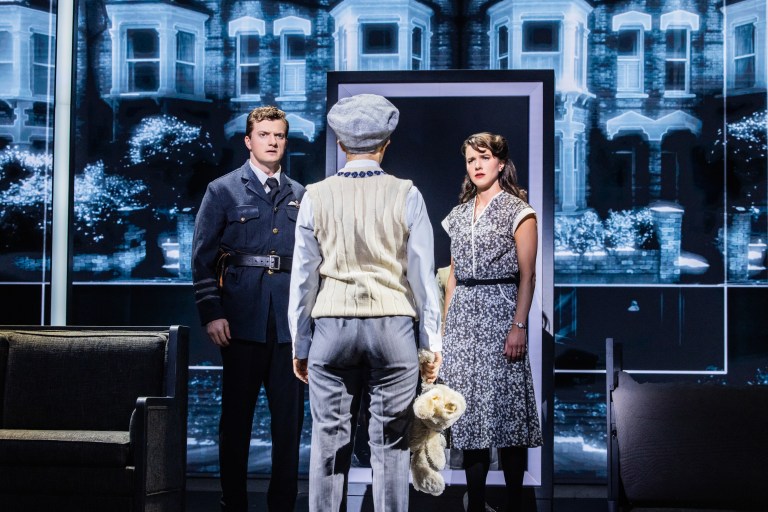
Mari Grossmann as Little Tommy establishes the emotional foundation of the entire musical. It’s the innocence and vulnerability of young Tommy make the events that follow all the more affecting. Her stage presence is haunting and eerie.
Beyond the principal performers, the ensemble deserves recognition for their tremendous energy and coordination required to sustain this production. With its rapid transitions, demanding choreography and layered musical arrangements, Tommy is an exceptionally collaborative undertaking.
One exciting aspect is the presence and energy of the onstage musicians strutting their stuff. Talia Rose on guitar, Cat Barker on bass and Kelvin Newell on drums – together they help convey the unmistakable rock-and-roll character of The Who’s original music.
Ultimately, the strength of this production lies in the combination of its principal performers, ensemble and musicians. It is an ambitious musical that asks a great deal of its cast, both vocally and physically, and the touring company brings the scale, intensity and theatrical spirit necessary to make this legendary rock opera come alive on the Pantages stage.
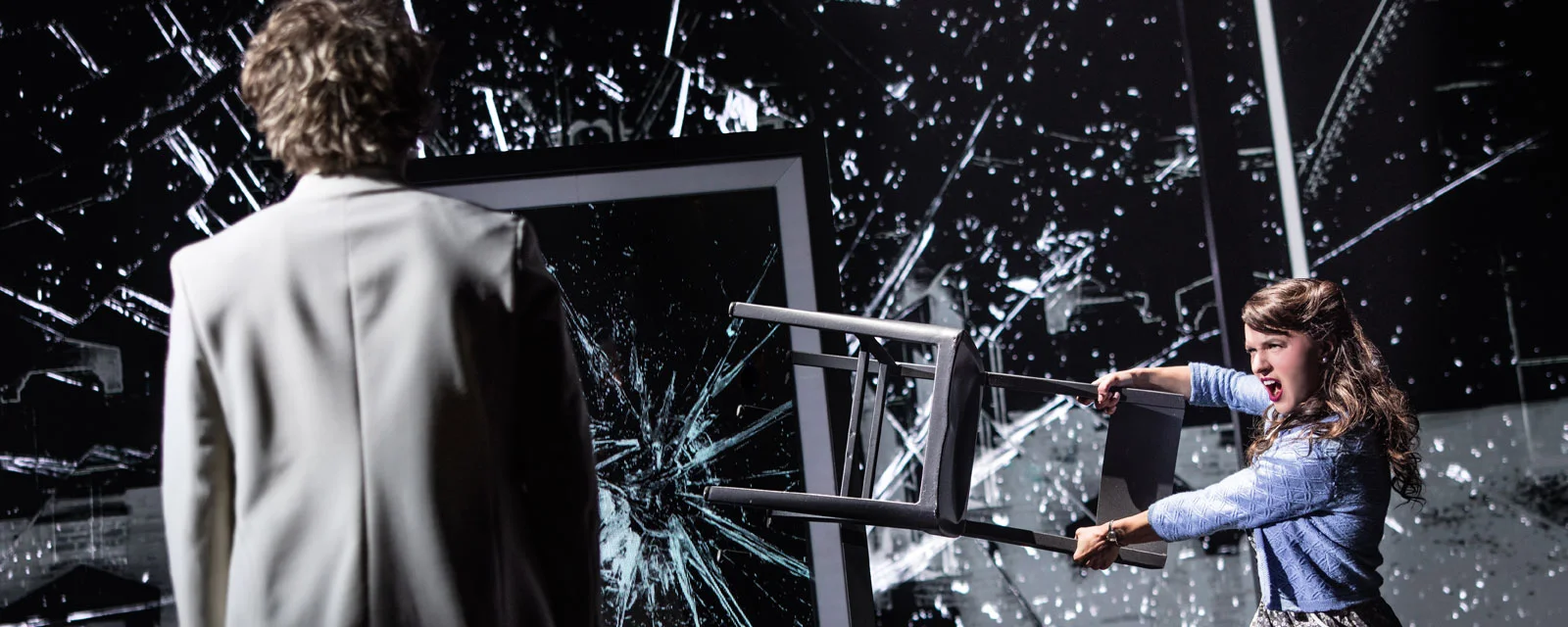
The Who’s Tommy – Hollywood Pantages Theatre
Address: 6233 Hollywood Blvd., Los Angeles, CA 90028
CONTENT AND AGE ADVISORY:
Includes depictions of bullying, substance abuse and scenes of war. This production includes loud music, non-firing prop guns, multiple gunshot sound effects, theatrical haze, strobe, and flashing and laser lighting effects.
Recommended for ages 16 and up.
Children under 5 are not permitted.
Children and teens under 14 are required to have an adult chaperone.
All persons entering the theatre, regardless of age, must have a ticket.
Ticket information: Buy tickets – Official Broadway in Hollywood website
November 2026 Performance calendar:
|
Date |
Performance times |
|---|---|
|
Fri, Nov 6 |
8:00 PM |
|
Sat, Nov 7 |
2:00 PM, 8:00 PM |
|
Sun, Nov 8 |
1:00 PM, 6:30 PM |
|
Tue, Nov 10 |
7:30 PM |
|
Wed, Nov 11 |
7:30 PM |
|
Thu, Nov 12 |
7:30 PM |
|
Fri, Nov 13 |
8:00 PM |
|
Sat, Nov 14 |
2:00 PM, 8:00 PM |
|
Sun, Nov 15 |
1:00 PM, 6:30 PM |
Buy tickets for this performance.
Show details:
-
Duration: Approximately 1 hour 40 minutes – no intermission
-
Recommended age: 16+ (minimum age 5).
-
Music and lyrics: Pete Townshend.
-
Features the classic rock anthems Pinball Wizard, I’m Free and See Me, Feel Me.
Background on the musical’s history – The Who’s Tommy: From Rock Opera to the Big Screen to Broadway
Few musical works have enjoyed a journey quite like The Who’s Tommy. What began as an ambitious rock concept album in 1969 evolved into a celebrated motion picture in 1975 and eventually became a Tony Award-winning Broadway musical. More than five decades later, its music and story continue to captivate new generations of audiences.
The Original Concept Album – 1969
The story of Tommy began with British rock band The Who, led creatively by guitarist and songwriter Pete Townshend. Released on May 23, 1969, Tommy was a groundbreaking double album that helped establish the concept of the rock opera. Rather than presenting a collection of unrelated songs, Townshend created a continuous musical narrative, using recurring themes and characters to tell a compelling story.
At its center is Tommy Walker, a young boy who witnesses a traumatic incident involving his parents. After being told that he neither saw nor heard anything, Tommy becomes deaf, dumb and blind, retreating into an isolated inner world. Despite his disabilities, he discovers an extraordinary talent for pinball, eventually becoming a celebrity and spiritual figure whose followers look to him as a messiah. Beneath the rock music and larger-than-life storytelling are themes of trauma, isolation, identity, celebrity and the dangers of blind devotion.
The album introduced some of The Who’s most enduring songs, including Pinball Wizard, I’m Free, See Me, Feel Me and We’re Not Gonna Take It. It was a landmark achievement in rock music, demonstrating that popular music could tell a complex, sustained dramatic story.
The Motion Picture – 1975
Six years after the album’s release, Tommy made its way to the big screen in a visually extravagant film directed by Ken Russell. Released in 1975, the movie starred Roger Daltrey, lead singer of The Who, as Tommy. Its extraordinary cast included Ann-Margret as Tommy’s mother, Oliver Reed as his stepfather, Elton John as the Pinball Wizard, Tina Turner as the Acid Queen, Eric Clapton as the Preacher and Jack Nicholson as the Specialist. Surprisingly, Jack Nicholson actually sang in the 1975 movie Tommy, and his vocals were included on the film’s official soundtrack album. The character he played – called The Specialist – is the psychiatric doctor who examines Tommy and tries to explain his baffling condition to his parents.
Russell transformed Townshend’s rock opera into a psychedelic cinematic spectacle, using elaborate sets, striking imagery including over-the-top costuming and musical performances to bring the story to life. Elton John’s memorable rendition of Pinball Wizard, complete with enormous platform boots, became one of the film’s most iconic sequences. Ann-Margret received an Academy Award nomination for Best Actress, further cementing the film’s place in musical cinema history.
The Broadway Musical – 1992–1993
The next major chapter in Tommy’s evolution came when Pete Townshend joined forces with theatrical director Des McAnuff to develop a full-scale stage musical. The production premiered at La Jolla Playhouse in California in 1992 before moving to Broadway in 1993, opening at the St. James Theatre.
The stage adaptation retained the original music and central storyline while expanding the narrative through theatrical staging, choreography, character development and visual effects. McAnuff’s direction and Wayne Cilento’s choreography helped transform the rock opera into a dynamic theatrical experience.
The Broadway production was a major success, winning five Tony Awards in 1993, including Best Original Score for Pete Townshend, Best Direction of a Musical for Des McAnuff and Best Choreography for Wayne Cilento. It demonstrated that a rock album could successfully make the transition to the Broadway stage without losing the energy and spirit of its original music.
The West End and Beyond
Following its Broadway success, The Who’s Tommy crossed the Atlantic, opening in London’s West End at the Shaftesbury Theatre in 1996. The production went on to receive three Olivier Awards in 1997, bringing further international recognition to the musical.
The show returned to Broadway in 2024 in a new revival directed once again by Des McAnuff, opening at the Nederlander Theatre. Its return underscored the enduring appeal of Townshend’s music and the remarkable staying power of Tommy’s story.
A Legacy That Continues
The journey of The Who’s Tommy is a rare example of one creative work successfully reinventing itself across three major entertainment forms: the concept album, the motion picture and the stage musical. Each interpretation brought something different to the story, but all retained the powerful music and central themes that made the original album so distinctive.
What started as Pete Townshend’s ambitious musical experiment has become an enduring piece of rock and theatrical history. For today’s audiences, seeing The Who’s Tommy on stage is an opportunity to experience a landmark work that has evolved for more than half a century while continuing to resonate with audiences of all generations.
Credits for the the team behind the touring production:
Music and Lyrics: Pete Townshend
Book: Pete Townshend and Des McAnuff
Director: Des McAnuff
Choreographer: Lorin Latarro
Music Supervisor and Additional Arrangements: Ron Melrose
Scenic Design: David Korins
Costume Design: Sarafina Bush
Lighting Design: Amanda Zieve
Sound Design: Gareth Owen
Projection Design: Peter Nigrini
Orchestrations: Steve Margoshes
Additional Orchestrations: Rick Fox
Wig and Hair Design: Charles LaPointe
Music Director: Calvin Hitchcock
Associate Music Director: Gregory Franz
Producer: Work Light Productions
General Management: Work Light Productions / Courtney King
Casting: The TRC Company / Merri Sugarman, CSA and Spencer Gualdoni, CSA
Tour Booking and Press Representation: Bond Theatrical


 Terry Morgan