
 Pauline Adamek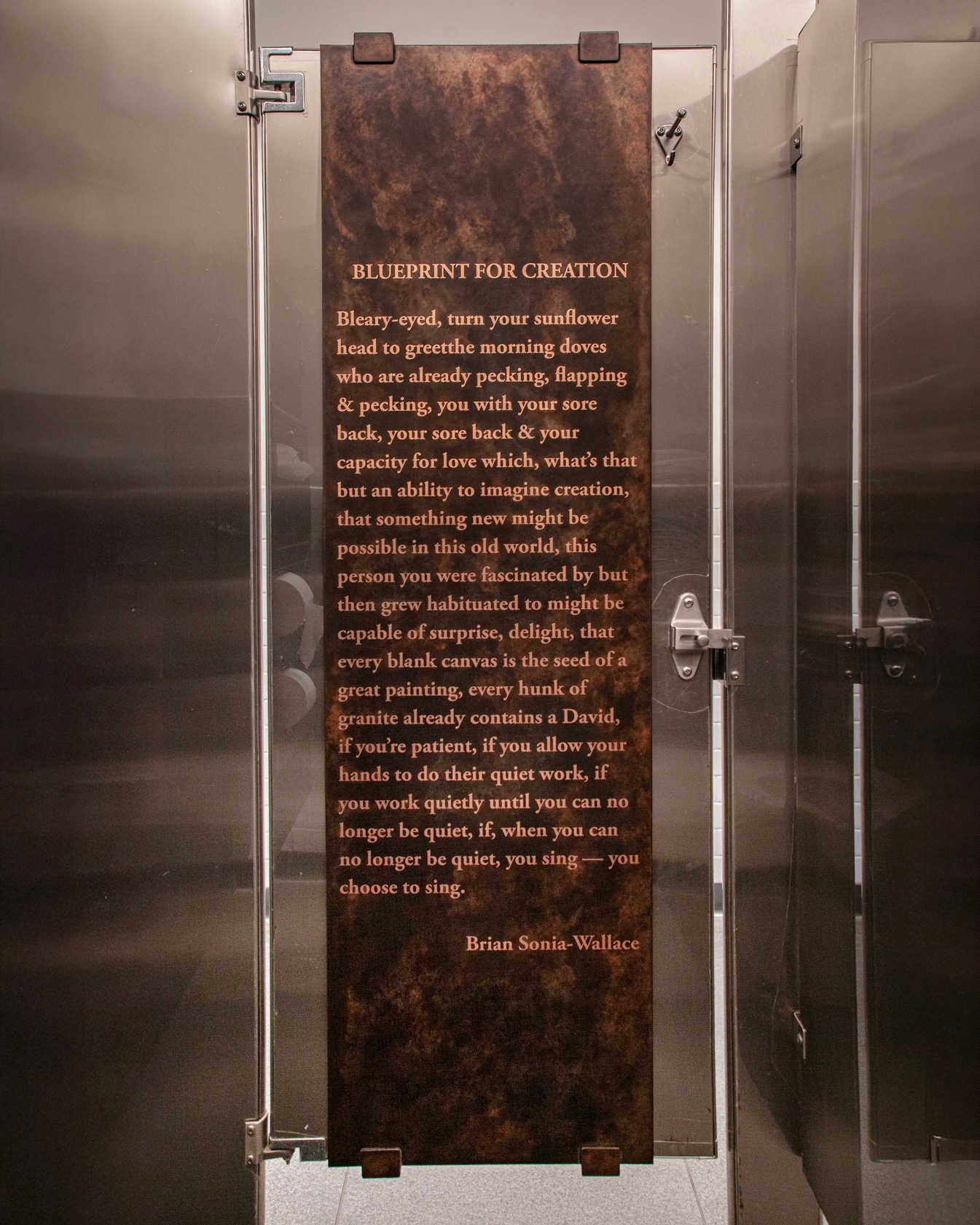
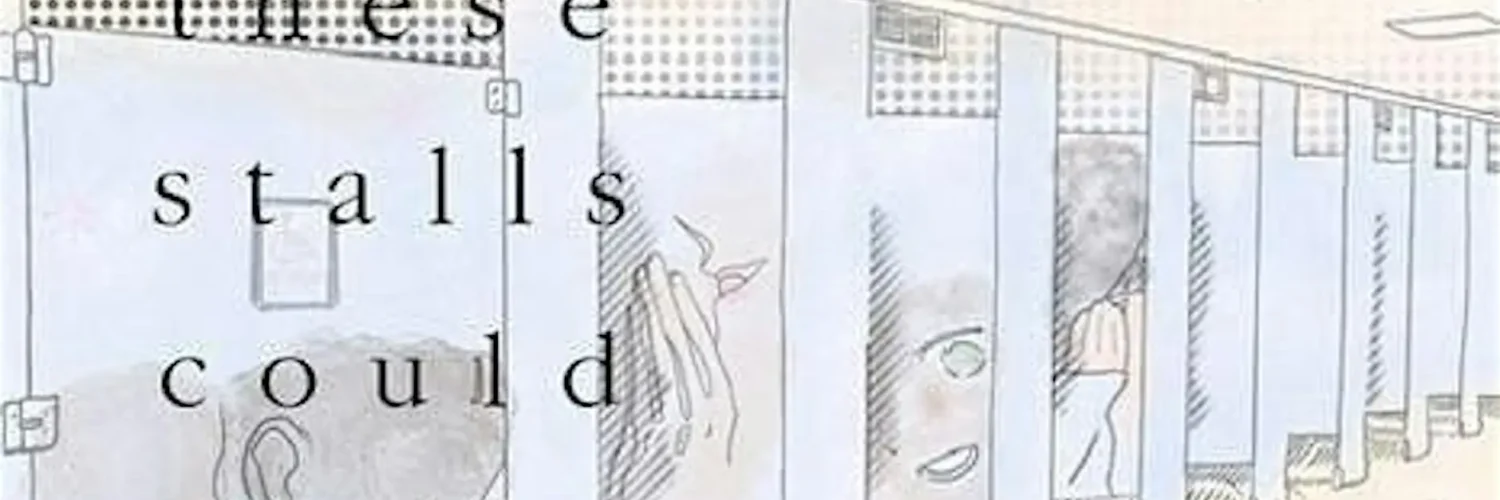
Newly installed Poet Laureate of Los Angeles Brian Sonia-Wallace today announced an art installation If These Stalls Could Talk, which will be available on Jerry Moss Plaza at The Music Center in Downtown Los Angeles. Located in the Lefton Family Restrooms on the plaza, the installation transforms a site of everyday privacy—the public restroom—into a shared confessional and a mirror for identity.
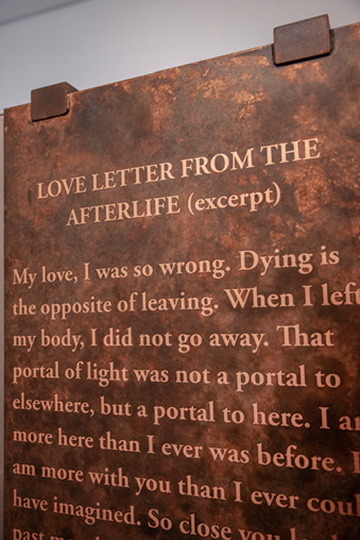
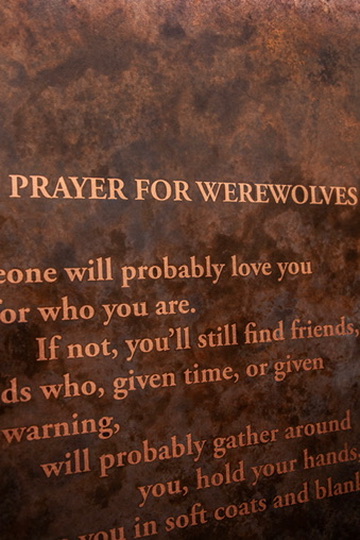
The project consists of six restroom stall doors etched with poems by queer and trans writers including Andrea Gibson, Stephanie Burt, Cameron Awkward Rich, féi iká shumari, Jennifer Espinoza, and Brian Sonia-Wallace. The engraved texts offer care, reflection, and quiet courage, reminding us that dignity is infrastructure — something lived, practiced, and shared. With poems selected from local and world-renowned LGBTQ+ leaders and poets, this chorus of intergenerational, intersectional voices will function as both message and memorial: a reminder that even in moments of solitude, we are never alone in our questions about self, safety, and becoming.
The installation will be launched with public readings at on May 15, 2026, from 7:00 p.m.-9:00 p.m. at the site, which will also feature a special issue of the zine, The Feminist Toilet, co-edited with poet Sammy Ginsberg.
Members of the public are invited to join for the launch RSVP here.
The installation will be open to the public from May 15 to June 15, 2026, with a second gathering on June 15 from 7:00 p.m.-9:00 p.m., which is also open to the public.
This project was commissioned by The Los Angeles County Department of Arts and Culture and developed and delivered by Dyson & Womack as part of the Public Artists in Development (PAID) Program. It was manufactured by GAD Art & Fabrication, Inc.
Brian Sonia-Wallace says, “I chose work from some of my favorite poets — idols and contemporaries — who happen to be trans. These are poems and poets I think everyone should know – poets who our government has legislated do not exist. So, we cast their words in copper against erasure. My goal is to shine a light on these writers who are currently the most threatened at every level globally, to inscribe their words in metal as a testament to their durability and the impossibility of censoring them, and to place them in bathroom stalls as both a private comfort and a provocation. Who gets to belong?”
One of the poems that you’ll find etched into the doors is below:
Meditations in an Emergency by Cameron Awkward-Rich
I wake up & it breaks my heart. I draw the blinds & the thrill of rain breaks my heart. I go outside. I ride the train, walk among the buildings, men in Monday suits. The flight of doves, the city of tents beneath the underpass, the huddled mass, old women hawking roses, & children all of them, break my heart. There’s a dream I have in which I love the world. I run from end to end like fingers through her hair. There are no borders, only wind. Like you, I was born. Like you, I was raised in the institution of dreaming. Hand on my heart. Hand on my stupid heart.
Copyright Credit: Cameron Awkward-Rich, “Meditations in an Emergency” from Dispatch. Copyright © 2019 by Cameron Awkward-Rich. Reprinted by permission of Persea Books, www.perseabooks.com. Poetry Foundation.
If These Stalls Could Talk is also an opportunity to educate people about California Civil Code § 51(b), under which business establishments, non-profits, and government agencies that serve the public cannot stop someone from using the restroom or other sex-segregated facility that matches their gender identity, or ask someone to provide ID to prove their gender in order to use a restroom or other sex-segregated facility, such as a dressing room or gym locker room. Sonia-Wallace says, “The work is also a challenge to visitors, who may engage with one or more poems but, to see them all, must themselves transgress the labels on the doors outside the restrooms and step into a moment of the same calculus and risk that trans people must confront every day.”
Brian Sonia-Wallace specifically chose to cast the stall doors in copper, a material historically reserved for permanence, authority, and memorialization, to counteract the efforts to erase trans people in what the Lemkin Institute and others are calling a genocidal threat. According to Sonia-Wallace, a former West Hollywood Poet Laureate and founder of LGBTQ+ group Pride Poets, “this archive requires something sturdier than paper if it is to survive.”
The installation is designed for prominent display over the course of one month in a high-visibility, high-foot-traffic area. Serving as both cultural marker and communal mirror, the piece celebrates and uplifts queer, trans, and gender-expansive communities whose presence in such spaces has too often been contested, erased, or criminalized. By elevating the restroom stall—a site of secrecy, safety, and resistance—into public sculpture, the project asserts belonging and visibility, offering a powerful statement that these stories deserve to be held, witnessed, and honored.
“At The Music Center, we believe the arts has the power to build bridges across L.A.’s diverse communities and help audiences see themselves, and each other, more fully,” said Rachel S. Moore, president and CEO of The Music Center. “At a moment when many are being challenged simply for existing authentically, If These Stalls Could Talk creates a powerful space for reflection, compassion and recognition—an affirmation that every Angeleno is worthy. The Music Center is honored to uplift artists and storytellers whose work expands empathy, sparks dialogue and uplifts the dignity of all Angelenos.”
To amplify the message of the art-installation, Sonia-Wallace co-edited a special issue of the zine The Feminist Toilet, in collaboration with Sammy Ginsberg, who has been publishing the zine annually since 2019. The Feminist Toilet believes that gender exists along a spectrum, and is accessible, unique, and mutable for everyone. As protections are stripped from our trans siblings, we stand with them in solidarity and demand the access to privacy and dignity that is so encapsulated in the physical space of the restroom.
Sonia-Wallace and Ginsberg put out a call for art and poetry by anyone who uses the restroom and received a powerful stream of responses from a large community that supports this mission. It starts with a foreword from previous Poet Laureate of Los Angeles Lynne Thompson with poems ranging in subject and tone from gas stations to gay sex, nursery rhymes to critical theory, bulimia to a first kiss. Our youngest contributor is three. Each poet is united by a shared experience — using the bathroom.
The public can access 200 limited-edition copies of the zine at local bookstores and libraries around Los Angeles, as well as at the opening gathering on May 15th.
About Brian Sonia-Wallace:
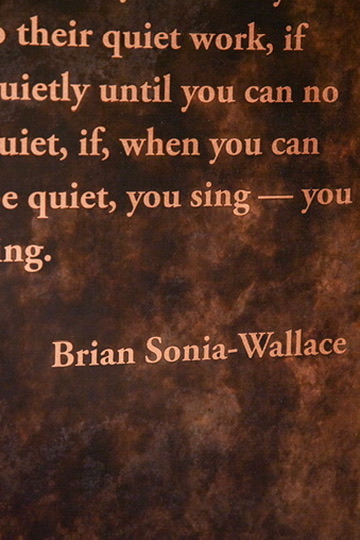
Brian Sonia-Wallace is the fifth Poet Laureate of Los Angeles and is a poet, educator, and public artist. The former Poet Laureate of West Hollywood, he is the author of The Poetry of Strangers (HarperCollins) and Maze Mouth. His work centers on creating art that bridges civic space, public memory, and lived experience, often collaborating with LGBTQ+ communities, youth, and elders to amplify voices that are rarely heard. Sonia-Wallace’s practice spans performance, writing, and participatory public projects that transform everyday spaces into sites of reflection, care, and dialogue. With a focus on intimacy and monumentality, he explores how poetry can function as infrastructure — shaping how we move through, inhabit, and witness the city. His projects have been presented in theaters, galleries, and public spaces across Los Angeles, always seeking to make the ordinary extraordinary, and to honor dignity as both a lived experience and a shared civic value.
About the Poets featured on Toilet Doors:
- Stephanie Burt, Harvard Professor, New Yorker Poetry Critic, author of We Are Mermaids (2022)
- Andrea Gibson, Colorado Poet Laureate, Sundance Festival Favorite, subject of Come See Me in the Good Light, author of You Better Be Lightning (2021)
- Cameron Awkward Rich, Amherst Professor, Cave Canem Fellow, author of An Optimism (2025)
- féi iká shumari, LA poet, DACA dreamer, Lambda Literary Fellow, author of Hood Criatura (2020)
- Jennifer Espinoza, LA poet, author of I Don’t Want to be Understood (2024)
About If These Stalls Could Talk (The Feminist Toilet #3):
The Feminist Toilet is a literary magazine that celebrates and raises awareness about public health issues, specifically the toilet. It is published by the Literary Pixie. This issue is co-edited by Brian Sonia-Wallace and Sammy Ginsberg with a forward from previous Poet Laureate of Los Angeles Lynne Thompson and contributions from Sean Pessin (lecturer at CSUN), Karla Lamb (host of Perverse 4 Verse), and Rhiannon Cielos Chavez (Development and Operations Assistant at Beyond Baroque Literary Arts Center). It is a special edition created specifically for the launch of If These Stalls Could Talk.
About the PAID Program:
The Public Artists in Development (PAiD) program’s Artist Council is an eight-member group of artists selected to provide recommendations to help shape the future of Los Angeles County’s public art policy and processes.
Over the course of a six-month long, two-part program of dialogue and art creation led by PAiD program art consultant Dyson & Womack, the Artist Council has engaged in a series of discussions about topics such as public art contracts, creating community engagement plans, project management, and working with subcontractors. Guest presenters have included public art administrators, other established artists, and subject area experts. At the end of their tenure on the Council, the artists will craft a set of recommendations that seek to address historical barriers to participation and expand support for artists working in the field of public art.
The group was also granted individual project budgets to create temporary public artworks to engage communities about their work and further the artists’ artistic goals. The projects include the creation of sculptural installations, pop-up events, and performance-based artworks, which will be on view late March through May 2026. You can read more about the artists and their projects on this page.